

More news on this day
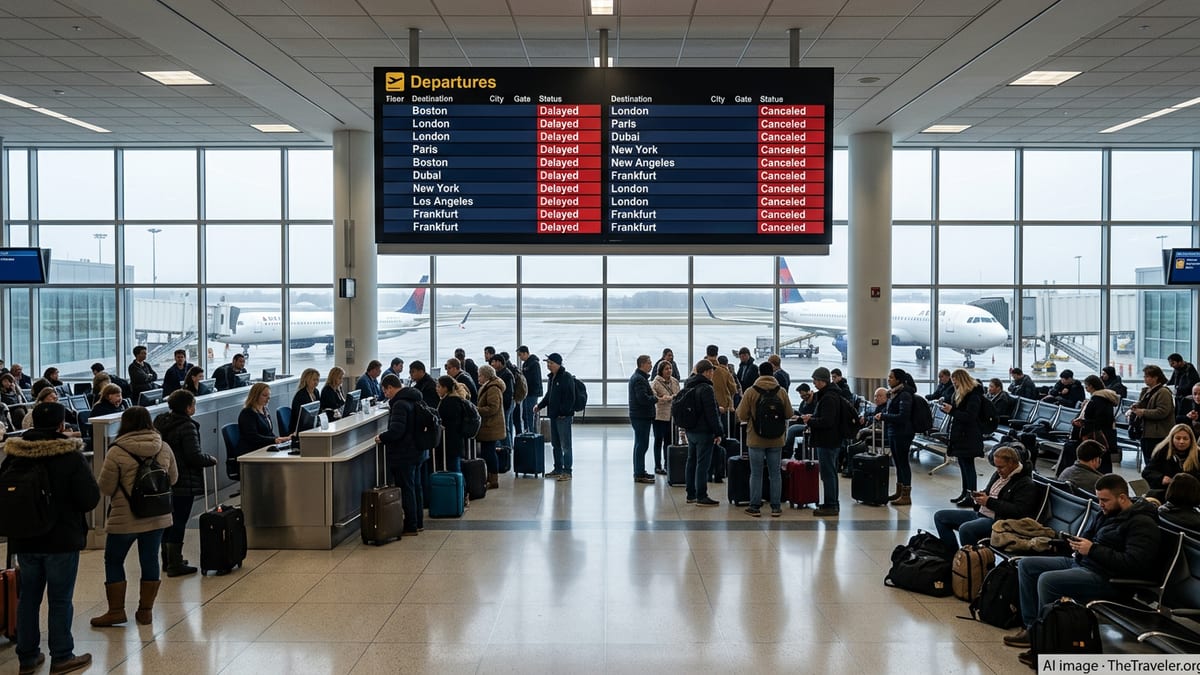
Travelers passing through Chicago O’Hare International Airport on March 6 faced a fresh wave of disruption as at least 42 flights were canceled and 621 delayed, with operational snags rippling across major routes linking the United States to Europe and the Middle East and affecting carriers from SkyWest and PSA Airlines to Qatar Airways, Volaris, United Airlines and American Airlines.
Ripple Effect Across Domestic and International Networks
The latest operational crunch at Chicago O’Hare International Airport quickly spilled beyond Illinois, triggering schedule knock-ons for passengers originating in or transiting through the hub. Short-haul domestic feeders operated by regional partners such as SkyWest and PSA Airlines bore the brunt of early disruption, with multiple departures to Midwestern and Southern cities pushed back or scrubbed from departure boards.
As delays mounted through the morning and early afternoon, long-haul services to Europe and the Middle East became increasingly vulnerable to missed connections and crew timing limits. Qatar Airways flights linking Chicago to Doha, as well as services by United and American to major European gateways including London, Frankfurt and Paris, experienced rolling delays as aircraft and crews arrived out of position from earlier legs.
Low cost carrier Volaris, which connects O’Hare to key Mexican markets with onward links into Latin America and transatlantic itineraries via partner networks, also reported schedule disruptions. While many of its flights eventually departed, revised departure and arrival times left passengers with tight or impossible connections onto overnight crossings to Europe or early morning departures from Middle Eastern hubs.
By late afternoon, the combined effect of regional cancellations, international delays and missed onward connections had created a patchwork of stranded travelers across concourses, with some customers forced into overnight stays as spare capacity at the already busy hub ran thin.
Structural Strain at O’Hare Meets a Busy Spring Travel Window
The latest day of disruption has renewed scrutiny of systemic pressures at O’Hare, one of the world’s busiest airports by operations. Construction projects, tight runway and gate utilization and an aggressive build-up of schedules by hub carriers have all been cited by airline and airport sources as contributing factors to the airport’s vulnerability whenever weather or operational hiccups arise.
In recent days, federal regulators have signaled concern that planned summer 2026 schedules could push the airport past what its runway and taxiway system can reliably handle at peak hours. The Federal Aviation Administration has already moved to cap daily operations at O’Hare during the upcoming summer season, warning airlines that proposed schedules would significantly exceed the airport’s practical capacity and heighten the risk of chronic delays and cancellations.
United and American, O’Hare’s two dominant hub operators, have been under particular pressure to recalibrate their flying plans. American executives have publicly criticized what they describe as overly dense scheduling by United, warning staff that without intervention the airport could face extended taxi times, persistent gate holds and cascading network disruptions when irregular operations strike.
Today’s wave of 42 cancellations and 621 delays provided a preview of how quickly conditions can deteriorate when those structural constraints collide with a busy travel day. Even in the absence of a major storm system, relatively localized bottlenecks on the airfield or staffing gaps in ground handling can quickly transform into widespread network disruptions for carriers relying on tight connection banks.
How Major Carriers and Their Partners Were Hit
Regional carriers SkyWest and PSA Airlines, which operate flights on behalf of major brands such as United and American, emerged as some of the most heavily affected operators. Their short-haul services feed passengers into O’Hare’s connection banks, meaning that an early cluster of delays or a handful of cancellations can break the rhythm of the entire operation, stranding travelers who would otherwise move swiftly onto transcontinental or transatlantic departures.
United Airlines saw a significant number of late flights as the day progressed, particularly on routes that rely heavily on regional feed. Customers connecting from smaller U.S. and Canadian cities found themselves rebooked onto later services to European and Middle Eastern destinations, with some itineraries pushed to the following day when minimum connection times could no longer be met.
American Airlines also reported knock-on delays across its domestic network, as late-arriving aircraft from O’Hare cascaded into schedule changes at downstream hubs and focus cities. While the airline tried to preserve its most time-sensitive international departures, limited spare aircraft and crew meant some long-haul flights left behind their original connection loads, triggering a scramble for hotel vouchers and meal assistance at O’Hare and at outstations.
Internationally, Qatar Airways and Volaris each faced their own operational headaches. Qatar’s Chicago–Doha service, already under pressure due to regional airspace and scheduling challenges, worked to accommodate passengers who had missed the carrier’s tightly timed onward connections to South Asia, Africa and the wider Middle East. Volaris, for its part, had to juggle aircraft utilization across Mexican and U.S. gateways to absorb delays while trying to maintain a stable operation for subsequent rotations.
Passenger Experience: Long Queues, Tight Connections and Rebooking Scrambles
Inside the terminals, the disruption translated into familiar scenes for frequent travelers. Lines at airline customer service counters stretched deep into concourses by mid-afternoon, as passengers whose flights had been canceled or excessively delayed sought rebooking options, hotel accommodation and meal vouchers. Self-service kiosks helped absorb some of the demand, but many travelers with complex itineraries, including multi-city trips or separate tickets, needed in-person assistance.
At the gates, departure boards cycled through rolling delays, with estimated times of departure nudged back in 30- or 60-minute increments as operations teams waited for inbound aircraft or crews to arrive. Some passengers experienced what is known in the industry as creeping delays, remaining at the gate for several hours as official departure times shifted repeatedly, only to see their flights eventually canceled when crew duty limits were reached.
For international passengers, the disruption carried added complications. Travelers heading to Europe and the Middle East often faced missed overnight connections, heightening the risk of being stranded without onward flights until the next day. Families traveling with children and those on tight schedules for work or events found themselves negotiating last-minute itinerary changes and extended airport stays, often in unfamiliar cities.
Airport staff and airline agents reported heightened frustration levels among passengers, though many also noted that frequent flyers who had experienced previous disruptions at major hubs appeared more prepared, arriving with backup plans, flexible hotel bookings and travel insurance that covered delay-related expenses.
What Travelers Should Expect in the Coming Days
While airlines worked through the backlog of disrupted flights, operations experts warned that residual delays could persist for at least another day as aircraft and crews returned to their planned positions in the network. Even once the immediate wave of cancellations and delays subsides, unexpected bottlenecks at O’Hare are likely to continue, particularly during peak morning and evening departure banks.
Travelers booked to or through Chicago over the coming days, especially those connecting onward to Europe or the Middle East, are being urged to monitor flight status frequently and to allow generous connection times where possible. Industry analysts also suggest that customers consider earlier departures in the day, which historically have a better chance of leaving on schedule and provide more opportunities for same-day rebooking in the event of disruption.
Looking further ahead, the FAA’s planned cap on daily operations and ongoing negotiations with carriers are expected to play a decisive role in shaping how resilient O’Hare will be during the busy summer season. If airlines scale back peak-hour flights and spread schedules more evenly throughout the day, the airport could regain some operational breathing room, reducing the likelihood that a single day of irregular operations spirals into the kind of network-wide disruption seen this week.
For now, however, Chicago O’Hare remains both an essential and fragile hub in the global aviation system, a critical connecting point for traffic between North America, Europe and the Middle East that can quickly become a chokepoint when weather, infrastructure limits and dense schedules converge on the same crowded runways.