


More news on this day
A new expedition cruise between Chile and Peru, developed under the SETI Institute’s “Explore Space at Sea” program with Swan Hellenic, is drawing attention as a case study in how Latin American countries are weaving space science into high-end tourism.
Get the latest news straight to your inbox!
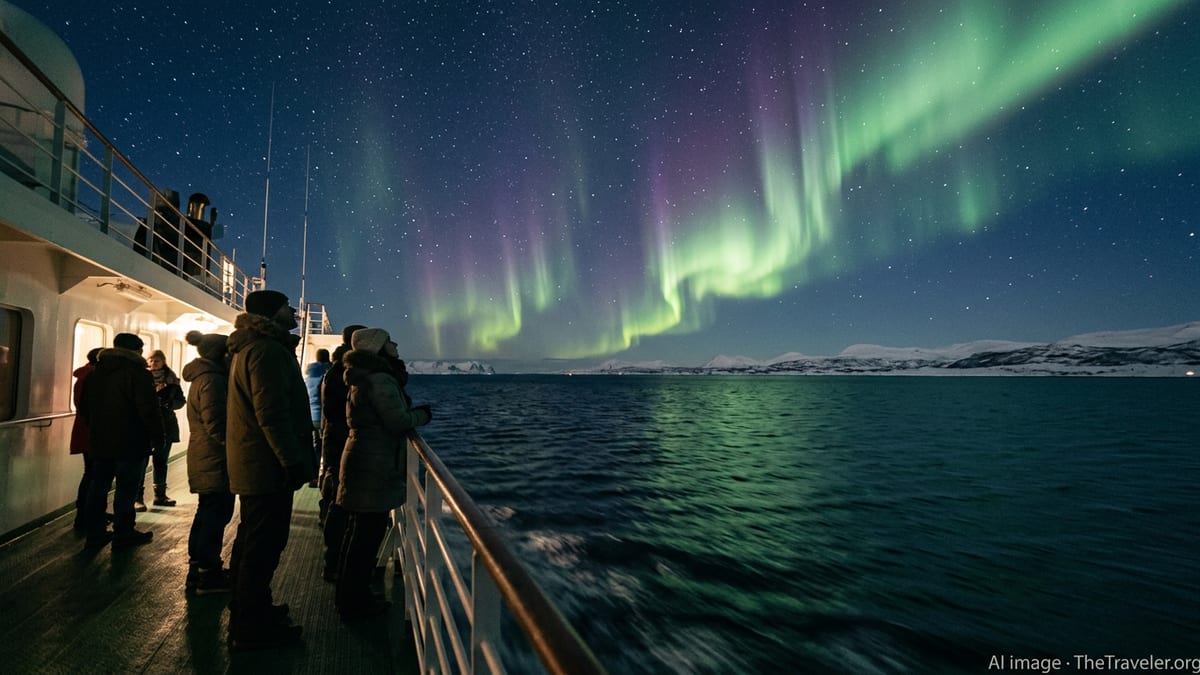
South American Route Becomes a Floating Space Classroom
The Chile to Peru sailing forms part of Swan Hellenic’s broader collaboration with the SETI Institute, a partnership first announced in late 2022 to bring astronomers and space scientists on board small expedition vessels. Publicly available information shows that the 2026 program features a South American series in which guests travel along the Pacific coast while attending lectures on the search for extraterrestrial intelligence and planetary science.
According to published cruise itineraries, the Chile–Peru leg stands out inside the 2026 lineup because it is scheduled to host two SETI Institute research astronomers rather than the usual one. Reports indicate that this is designed to make full use of the region’s famously dark and clear skies, particularly in northern Chile, long regarded as a hub for ground-based astronomy.
Marketing material for the series describes the voyages as “cultural expedition cruises” that delve into both remote terrestrial landscapes and the far reaches of space. On board, travelers are offered talks on topics such as exoplanets, the evolution of solar systems and the history of humanity’s search for intelligent life, while at night they participate in guided stargazing sessions using professional-grade instruments installed on the ships.
The Chile–Peru cruise is positioned as a bridge between coastal exploration and celestial observation. Ports along the way provide access to deserts, historic observatory sites and indigenous sky lore, while at sea the itinerary is paced to coincide with optimal observing conditions for deep-sky objects visible from the Southern Hemisphere.
Chile and Peru Leverage Established Astronomy Assets
Chile has spent decades building a global reputation as one of the world’s most important astronomy locations, hosting major observatories in the Atacama Desert that benefit from minimal light pollution and stable atmospheric conditions. The new cruise spotlighting Chilean skies aligns with that positioning, turning the country’s scientific infrastructure and natural conditions into added value for visiting travelers.
Peru, which also participates in regional space initiatives and has growing astronomy outreach programs of its own, gains exposure through the cruise’s northern routing. While the voyage remains primarily maritime, the inclusion of Peruvian ports links coastal tourism with wider narratives about Latin American involvement in space science and remote sensing.
Regional analysts note that both countries are already involved in cooperative space efforts through mechanisms such as the Latin American and Caribbean Space Agency, which seeks to coordinate satellite and scientific projects across the region. The Chile–Peru SETI cruise does not function as a government space mission, but it benefits from this broader ecosystem by drawing on local experts, observatories and dark-sky reserves that have emerged around national and regional programs.
The result is a product that markets South America not only as an adventure and cultural destination but also as an access point to the global space-science conversation. For tourism boards and port cities, being included on an itinerary associated with cutting-edge astronomy can help differentiate them in a competitive expedition-cruise market.
SETI Institute Brings Deep-Space Science to the Deck
The SETI Institute’s role on the Chile–Peru sailing is to translate complex research on life in the universe into experiences that can be understood by non-specialists. Program descriptions highlight lectures on the history of the search for extraterrestrial intelligence, the tools used to survey exoplanets and the ways in which missions to the outer solar system feed back into understanding Earth’s climate and habitability.
Published schedules for the wider Explore Space at Sea series show scientists from the institute accompanying cruises from the Arctic to the Canary Islands. The South American segment, however, taps into themes particularly relevant to the region, including how high-altitude deserts mimic Martian environments and how satellite observations are used to monitor fragile ecosystems along the Andes and Pacific coast.
On board, guests are offered demonstrations of portable deep-space telescopes and observing equipment developed with the institute’s input. These sessions are framed as opportunities to see stellar nurseries, star clusters and distant galaxies from some of the clearest skies accessible by sea. The dual-astronomer setup on the Chile–Peru voyage is presented as a way to offer parallel streams of content, from introductory sky tours to more advanced discussions of data analysis and signal detection.
By embedding working researchers on a commercial vessel, the program turns an expedition cruise into a moving science center. Organizers promote this as a way for travelers to participate in the broader cultural fascination with exoplanets and extraterrestrial life without needing to visit a laboratory or observatory complex on land.
Growing Trend: Space Themes in High-End Travel
Industry coverage of the Explore Space at Sea series frames it as part of a wider trend in which cruise lines and tour operators integrate astrophysics, planetary science and space history into premium itineraries. In recent years, expedition cruises have added polar research collaborations, eclipse-chasing voyages and astronaut-hosted sailings, reflecting strong demand for educational content that goes beyond conventional sightseeing.
The Chile–Peru SETI cruise illustrates how this trend is moving into Latin American routes, combining star-focused programming with visits to archaeological sites, desert landscapes and coastal communities. Travel analysts suggest that this represents an evolution from earlier “star party” trips on land, creating fully immersive weeks at sea in which night-sky observation shapes the tempo of each day.
For Latin American destinations, alignment with space-themed travel can support efforts to promote scientific literacy and STEM education. Public information about the cruises emphasizes that many talks connect space science back to Earth, explaining how techniques developed for observing distant planets are applied to climate monitoring, natural resource management and disaster response.
As more operators test similar concepts, competition may push itineraries deeper into remote regions and toward partnerships with additional research institutions. The Chile–Peru route’s focus on the interface between coastal cultures and the cosmos provides one model for how that expansion could look, using the cruise ship as a platform where frontier tourism and frontier science meet.
Implications for Chile, Peru and Future SETI Voyages
Observers see the new cruise as both a marketing opportunity and a policy signal. By foregrounding scientific content in a commercial product that passes through their ports, Chile and Peru are implicitly highlighting the value of their investments in observatories, dark-sky protections and regional space cooperation frameworks.
The voyage may also serve as a pilot for more elaborate Latin American routes that incorporate additional countries along the Pacific and Atlantic coasts. Brochures for upcoming seasons already outline South American loops that extend to Argentina and the Southern Ocean, indicating scope for SETI-themed experiences that touch multiple national jurisdictions and ecosystems.
From the SETI Institute’s perspective, expanding into Chile–Peru itineraries opens access to new sky windows and audiences. The Southern Hemisphere vantage point allows observation of constellations and deep-sky targets that are not visible from northern latitude cruises, while the mix of international and regional passengers places Latin American space ambitions in front of a global public.
As bookings progress for the 2026 series, further iterations of the concept are likely to depend on how travelers respond to the blend of expedition cruising, regional culture and frontier science. For now, the Chile–Peru SETI cruise stands as a prominent example of how countries can partner with research institutions and cruise operators to position their coastlines as gateways to the universe.