


More news on this day
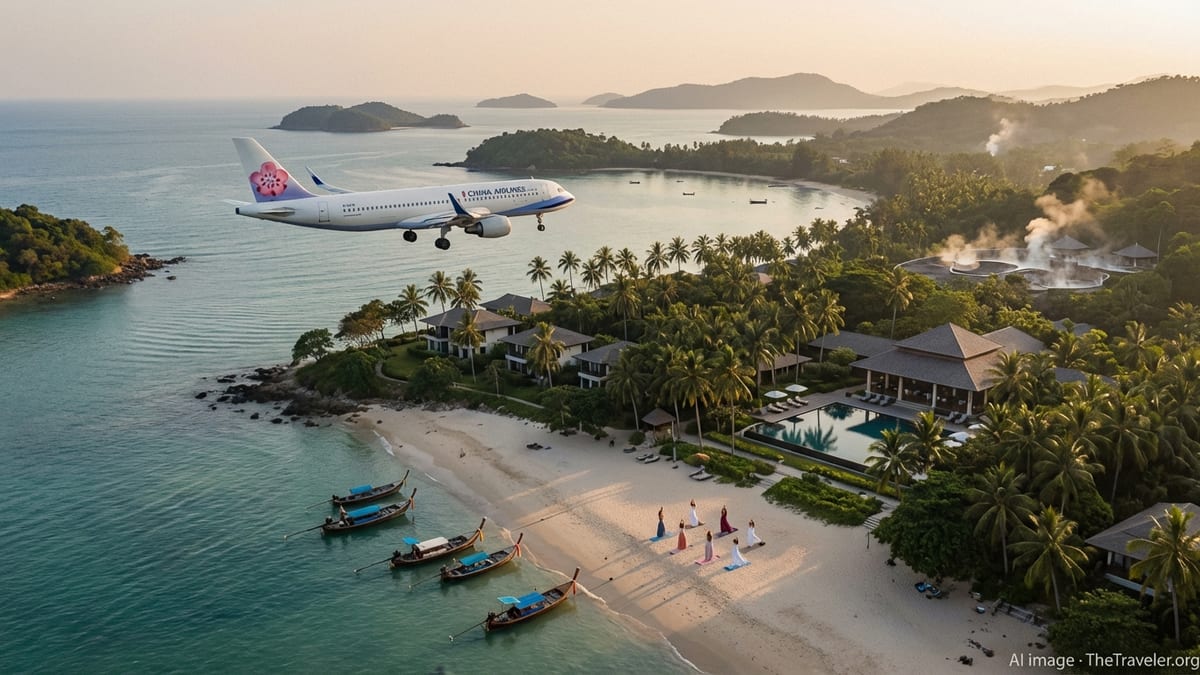
China Airlines and the Tourism Authority of Thailand are joining forces on a new 2026 promotion built around the slogan “Healing is the New Luxury,” combining discounted long-haul fares with wellness-focused itineraries designed to position Thailand as a global sanctuary for restorative travel.
Wellness at the Heart of Thailand’s 2026 Tourism Vision
The joint promotion aligns closely with Thailand’s broader 2026 tourism strategy, which shifts emphasis from sheer visitor numbers to higher-value, experience-led travel. Under a national vision that frames “value as the new volume,” officials are recasting the kingdom as a destination where emotional renewal, cultural immersion and environmental balance matter as much as beaches and nightlife.
Central to that repositioning is a global narrative that “Healing is the New Luxury,” a concept Thailand is now carrying into airline partnerships and international marketing. Rather than spotlighting only five-star resorts or shopping, campaigns are leaning into temple stays, slow coastal escapes, traditional medicine and community-based tourism as markers of modern luxury.
The China Airlines collaboration brings that message directly to long-haul travelers, especially from North America, who are increasingly seeking trips that promise mental reset and physical wellbeing. By packaging airfare with wellness themes and highlighting easy access via major North American gateways, the partners aim to translate Thailand’s new brand promise into actual bookings throughout 2026.
Tourism planners see wellness not as a niche, but as a pillar of Thailand’s future tourism economy. Spa traditions, herbal therapies, mindfulness practices and nature-based retreats are being framed as national strengths that can differentiate the country in an increasingly crowded regional market.
Details of the 2026 ‘Healing is the New Luxury’ Offer
The 2026 promotion brings together China Airlines’ long-haul network and Thailand’s soft-power branding into a series of limited-time deals targeting North American travelers. The centerpiece is a slate of discounted economy and premium cabin fares from cities such as Los Angeles, Ontario, San Francisco, New York, Seattle, Phoenix and Vancouver to Bangkok via Taipei, with travel windows that run into 2026.
While exact fare levels vary by origin and season, the campaign emphasizes added value rather than bare-bones pricing. Promotional material highlights flexible travel periods, competitive connection times through Taiwan and access to onward domestic flights in Thailand for travelers continuing to resort hubs such as Phuket, Chiang Mai or Krabi.
To reinforce the wellness angle, the offer is being marketed alongside sample itineraries that weave in spa days, temple visits, coastal retreats and culinary experiences tailored to rest and recovery. Travelers are encouraged to think of their ticket not just as transport, but as a gateway to a structured “healing journey” layered with local culture and nature.
The promotion window is designed to capture both early planners and last-minute bookers. Booking deadlines are positioned early in 2026, while travel validity stretches across multiple seasons, allowing visitors to choose between cooler months, shoulder seasons with fewer crowds or the green season when Thailand’s landscapes are at their lushest.
North America in Focus as Long-Haul Access Expands
The initiative underlines the growing importance of North American visitors in Thailand’s recovery and repositioning strategy. With visa-free entry available to U.S. and Canadian passport holders under prevailing conditions, Thailand’s tourism planners see long-haul markets as ripe for expansion, especially among travelers seeking longer stays focused on health and lifestyle.
China Airlines has steadily built a network of North American gateways that can funnel visitors into Southeast Asia via its Taipei hub, including major West Coast and East Coast cities as well as growing secondary airports such as Ontario and Phoenix. For Thailand, that network provides a ready-made pipeline of potential guests who might otherwise route through competing hubs in the Gulf or Northeast Asia.
By attaching a clear narrative to the fare deals and foregrounding wellness, both partners hope to lift Thailand above the broader noise of airfare promotions. The expectation is that North American travelers, already drawn to Southeast Asia for value and climate, will view Thailand not just as another sunny break but as a place to step away from burnout, deepen cultural understanding and invest in long-term wellbeing.
Industry observers say the collaboration also reflects a wider shift in long-haul tourism strategy. Airlines and destinations are increasingly working together to sell not just seats and hotel rooms, but themed travel experiences that meet specific emotional needs, from intergenerational bonding to personal reset.
Thailand’s Wellness Push and the ‘Healing’ Narrative
The “Healing is the New Luxury” message dovetails with a wave of wellness initiatives emerging across Asia and the Middle East as destinations compete for high-spending travelers in search of deeper experiences. Thailand’s approach leans heavily on its long-established spa culture, Buddhist heritage and coastal geography to frame the country as a place for physical and emotional repair.
Recent campaigns have showcased “healing journeys” that take visitors from urban wellness centers in Bangkok to forested temple retreats in the north and low-key island stays in the south. The aim is to stitch together disparate experiences into coherent narratives of ritual, rest and renewal, appealing particularly to younger travelers and professionals whose work patterns have blurred the line between office and home.
Thailand’s wellness offer also draws strength from its medical and aesthetic sectors, which have grown into regional leaders. High-quality clinics, integrative medicine centers and destination spas are increasingly designing packages that align with global trends toward preventative care, stress reduction and personalized health programs, supporting the pitch that true luxury is about how travelers feel when they return home.
By embedding this wellness-first thinking into airline partnerships, Thai tourism authorities hope to surface the healing narrative much earlier in the planning journey. Rather than discovering spa or meditation options after arrival, travelers encounter the promise of renewal at the moment they start searching for flights.
Fares, Flexibility and Competing in a Crowded Market
Competitive pricing remains a key element of the 2026 promotion, but both China Airlines and Thai officials are careful to frame the offer as more than a discount race. Basic promotional fares link major North American cities to Bangkok with limited-time reductions, while higher fare families provide added flexibility for travelers who want longer stays or built-in change options.
The campaign unfolds against a backdrop of intensifying regional competition. Airlines from China and other parts of Asia are adding substantial capacity into Thailand for February 2026 and beyond, increasing the number of seats and frequencies on routes to Bangkok, Chiang Mai and Phuket. That surge gives travelers more choices, but also raises the stakes for Thailand to stand out on quality, not just cost.
Thailand’s answer is to lean into differentiated experiences and to leverage the emotional pull of healing travel. While fares may be comparable across carriers, the combined messaging from China Airlines and Thai tourism officials seeks to make wellness the deciding factor, nudging travelers who might be choosing between multiple Southeast Asian destinations.
Flexibility is another selling point. The promotion is structured so that travelers can combine urban exploration with quieter breaks, tag on side trips to other Asian destinations via Taipei or align their journeys with festivals and cultural events in Thailand, all while keeping the overarching theme of rest and renewal.
From Temples to Coastlines: Experiences Framed as Therapy
On the ground, the promotion is anchored in specific experiences that illustrate what “healing luxury” looks like in practice. Marketing material highlights traditional Thai massage and herbal treatments at urban spas, sunrise or sunset visits to landmark temples along the Chao Phraya River, and curated food trails that guide visitors from street-side noodle stalls to contemporary Thai tasting menus.
Coastal escapes are presented less as party destinations and more as sanctuaries where travelers can slow down. In the Andaman and Gulf of Thailand regions, resorts and boutique properties are emphasizing yoga platforms overlooking the sea, sound-bath sessions, mangrove walks and low-impact water activities that bring guests into quiet contact with nature.
Inland, northern provinces are being promoted as havens for cooler weather, mountain air and culture-rich towns where visitors can participate in meditation retreats, handicraft workshops and community-based experiences that connect them with local ways of life. These offerings are framed as antidotes to digital overload, with itineraries encouraging device-free time and reflective practices.
By clustering such experiences into suggestion-led “healing routes,” Thailand aims to help travelers visualize how a two- or three-week stay might progress from jetlag recovery to deeper emotional reset, rather than being a series of unconnected excursions.
Positioning Thailand Within Global Wellness Travel Trends
The joint campaign is launching into a global travel landscape where wellness is one of the most closely watched trends for 2026. Analysts and travel editors point to a rise in trips centered on mental health, alcohol-free vacations, social bathhouses and retreats built around sleep, mindfulness and connection with nature.
Thailand’s bid to brand healing as luxury places it squarely within this movement, but with several built-in advantages. The country’s cost structure enables travelers to access spa treatments, boutique stays and bespoke wellness programs at price points often lower than in Europe or North America, even when flying long-haul. Its climate supports year-round outdoor activity, and its culinary scene naturally lends itself to fresh, produce-driven eating that aligns with wellness goals.
At the same time, Thailand is seeking to distance itself from older stereotypes by emphasizing sustainability, cultural respect and slower forms of travel. The partnership with China Airlines underlines that shift by inviting visitors to treat their time in Thailand not as a quick escape, but as part of a considered lifestyle choice that values balance over excess.
Industry experts suggest that if the “healing luxury” narrative resonates, it could help Thailand secure a larger share of high-yield travelers who return repeatedly and recommend the country to friends and family specifically for its restorative qualities.
Airline–Destination Tie-Ups Shape the 2026 Travel Landscape
The China Airlines and Thailand promotion also illustrates how airline–destination tie-ups are evolving in the post-pandemic era. Where previous collaborations often focused on co-branded advertising or simple fare sales, newer models are far more thematic and content-driven, with storylines built around wellbeing, exploration or heritage.
For airlines, such partnerships can lengthen trip duration and raise average spend by anchoring travel decisions in specific types of experiences rather than generic sightseeing. For destinations like Thailand, they provide direct access to airline marketing channels, loyalty programs and customer data, supporting more precise targeting of high-intent travelers.
The 2026 “Healing is the New Luxury” push is expected to be supported by a mix of digital campaigns, social content, trade training and possibly influencer collaborations, all aimed at embedding the idea of Thailand as a place for restoration in the minds of prospective visitors long before they set foot on a plane.
As more countries roll out their own wellness-focused tourism drives, the success of Thailand’s collaboration with China Airlines will be closely watched as a test of whether healing-led marketing can convert from a compelling slogan into sustained visitor demand and higher-value tourism.