


More news on this day
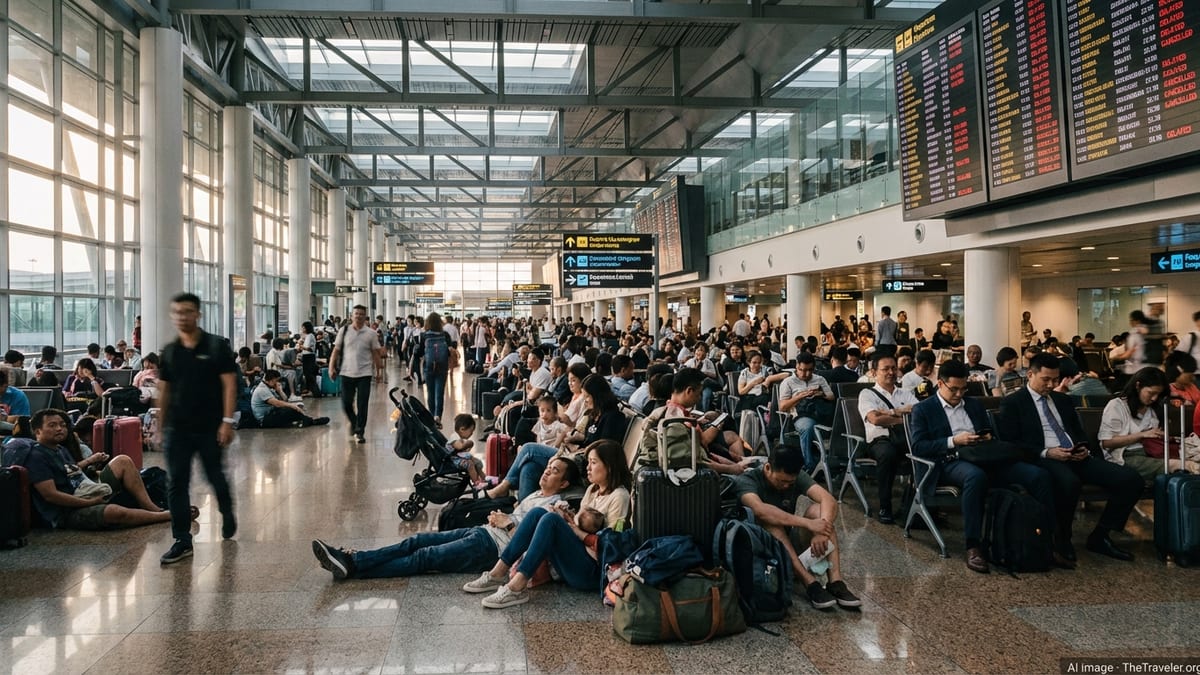
Travelers at Hangzhou Xiaoshan International Airport faced widespread disruption on May 21 as multiple Chinese carriers suspended or delayed flights, stranding passengers and disrupting major routes across southern China and nearby hubs.
Get the latest news straight to your inbox!
Airline Cancellations Ripple Across Key Domestic and Regional Routes
Publicly available tracking data and local media reports indicate that at least 15 flights operated by Air China, Shenzhen Airlines, XiamenAir and China Southern Airlines were suspended on Thursday, contributing to a sharp rise in delays at Hangzhou Xiaoshan International Airport. More than 100 flights across the day were reported delayed as schedules were adjusted, leaving passengers facing extended waits and missed connections.
The disruption has been most visible on high‑demand links between Hangzhou and southern and southwestern cities including Quanzhou and Guilin, as well as services connecting to the Pearl River Delta via Foshan. These routes are popular with both domestic tourists and business travelers, and form part of a dense network of short‑haul flights feeding larger hubs in Guangzhou and Shenzhen.
Hangzhou Xiaoshan, a primary gateway for Zhejiang province, has seen a steady build‑up of traffic under China’s post‑pandemic recovery and recent seasonal schedule changes. The airport’s growing role as a connector between eastern China and tourist centers such as Guilin means that schedule shocks have a wider impact, especially when multiple airlines on overlapping routes adjust operations on the same day.
While some suspended services were covered by alternative flights later in the day, the reduction in frequency on already busy routes made it harder for stranded travelers to secure new seats, particularly for last‑minute rebooking and same‑day onward connections.
International Links to Macau and Hong Kong Face Knock‑On Delays
The disruption also affected regional travel, with delays reported on routes between Hangzhou and key special administrative regions, notably Macau and Hong Kong. Data from aviation information platforms show that flights linking Hangzhou with Macau and Hong Kong were among those experiencing altered departure and arrival times, extending the impact of the day’s schedule changes beyond mainland China.
Routes to Macau and Hong Kong are critical for international connectivity, serving passengers transferring to long‑haul services as well as short‑stay visitors. Hangzhou’s international terminal handles all flights to these destinations, and any disruption there can create bottlenecks in security, check‑in and baggage handling as passengers adjust plans and queue for rebooking or refunds.
The timing is particularly challenging given the gradual ramp‑up of new and restored international services through Hangzhou in 2026. Recent additions and increased frequencies on regional routes have encouraged travelers to use the airport as an alternative to larger coastal hubs. When multiple carriers on these corridors encounter irregular operations on the same day, the margin to absorb delays diminishes significantly.
According to published coverage tracking China’s aviation recovery, links between eastern China, Macau and Hong Kong have been among the fastest to rebound, reflecting a sharp rise in leisure travel and cross‑border business trips. That growth has made these corridors especially sensitive to even short‑term disruptions.
Stranded Passengers Confront Long Queues and Uncertain Itineraries
Accounts shared on social media platforms and travel forums on May 21 described crowded departure halls, long queues at airline service counters and anxious passengers at Hangzhou Xiaoshan as cancellations and rolling delays accumulated. Some travelers reported difficulty obtaining timely information in English, while others highlighted challenges using airline apps during periods of heavy demand.
Passengers connecting onward to Quanzhou, Guilin and Foshan appeared particularly exposed, as many itineraries relied on tight domestic connections or late‑evening departures that left little room for rebooking. For travelers heading to Macau or Hong Kong for international flights the same day, disrupted segments from Hangzhou risked breaking complex multi‑ticket journeys, increasing the likelihood of missed long‑haul departures.
Travel advisories and user‑generated guidance circulating online urged affected passengers to monitor airline notifications closely, keep screenshots of booking details and explore rail alternatives where feasible. High‑speed rail links between Hangzhou and major hubs such as Guangzhou and Shenzhen, from which onward connections to Foshan, Macau and Hong Kong are available, were frequently cited as a practical backup for those unable to secure same‑day flights.
Standard passenger rights information in China indicates that travelers on canceled flights may request rebooking or refunds, though compensation practices vary by carrier and by cause of disruption. Many passengers focused first on securing any available seat to their destination, planning to address refund claims or itinerary changes only after leaving the airport.
Operational Pressures and Seasonal Demand Under Scrutiny
While no single overarching cause for the cancellations and delays at Hangzhou had been identified by Thursday evening, aviation analysts cited by regional outlets have previously highlighted a combination of factors affecting Chinese airports in the early summer period. These include seasonal storms, tighter airspace management, crew and aircraft rotations linked to new route launches, and congestion associated with peak travel dates.
Hangzhou’s role as a fast‑growing hub adds to these pressures. The airport serves as a focal point for both domestic tourism to destinations such as Guilin and business travel along the east coast and into the Pearl River Delta. As airlines add new connections and adjust schedules for anticipated demand spikes, even minor disruptions can cascade quickly into widespread delays.
Recent planning documents and industry commentary have also pointed to infrastructure upgrades and network expansions across the region, including new capacity in nearby Guangdong cities and additional long‑haul services via eastern Chinese hubs. These shifts are intended to ease long‑term congestion but can create short‑term complexity as airlines fine‑tune fleet deployment and crew scheduling.
The situation at Hangzhou on May 21 illustrates how rapidly conditions can deteriorate at a busy airport when several carriers encounter difficulties at once. As traffic levels move closer to or beyond pre‑pandemic benchmarks, pressure is likely to remain on airlines and airports to manage irregular operations more smoothly, particularly on heavily traveled domestic and regional corridors.
Advice for Travelers Using Hangzhou and Affected Routes
Travel specialists and frequent‑flyer communities recommend that passengers flying through Hangzhou in the coming days build extra time into their itineraries, especially when connecting to or from Quanzhou, Guilin, Foshan, Macau or Hong Kong. Allowing longer layovers and avoiding last‑flight‑of‑the‑day connections can help reduce the risk of missed onward segments if delays recur.
Travelers are also encouraged to complete online check‑in as early as possible, download airline apps for real‑time updates, and verify their flight status on independent tracking platforms before leaving for the airport. For itineraries involving multiple tickets or different airlines, having a clear backup plan, such as high‑speed rail alternatives, can be crucial if one segment is canceled.
Those already holding tickets on routes served by Air China, Shenzhen Airlines, XiamenAir and China Southern may wish to monitor carrier announcements over the next 24 to 48 hours for any rolling schedule adjustments. Given the interconnected nature of domestic and regional operations, residual delays and aircraft rotation issues can persist even after the most acute disruption has passed.
With demand for travel into and out of eastern China rising, the events at Hangzhou Xiaoshan serve as a reminder that even mature air corridors remain vulnerable to sudden operational shocks. For travelers reliant on tight timing to reach southern China’s tourism centers or onward flights from Macau and Hong Kong, a degree of flexibility and contingency planning is likely to remain essential.