


More news on this day
A sinkhole discovered near LaGuardia Airport’s Runway 4/22 during a routine inspection has forced the closure of one of New York City’s busiest runways, leading to widespread delays and flight cancellations across the domestic air travel network.
Get the latest news straight to your inbox!
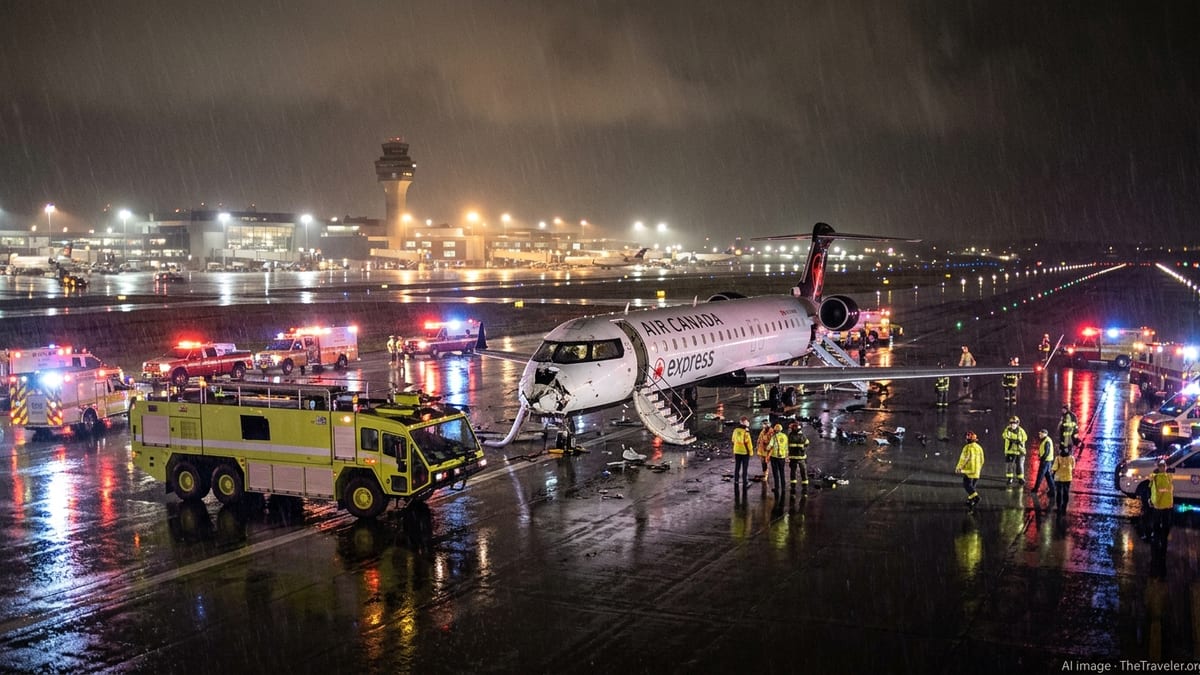
Runway 4/22 Closure Ripples Across National Flight Schedules
Publicly available information indicates that the sinkhole was identified late Wednesday morning during a daily inspection of LaGuardia’s airfield. The affected area is adjacent to Runway 4/22, a primary strip for domestic operations and one of only two main runways at the compact Queens airport.
Published coverage shows that the runway was taken out of service immediately so engineering and construction teams could assess the damage and begin emergency repairs. With LaGuardia already operating near capacity on normal days, the sudden loss of a major runway sharply reduced the number of arrivals and departures the airport could safely handle.
Reports from multiple outlets describe a mix of ground stops, rolling schedule adjustments, and re-routings as airlines attempted to balance safety constraints with heavy passenger demand. Some carriers consolidated flights, while others shifted select operations to other New York-area airports to work around the bottleneck at LaGuardia.
Travelers experienced knock-on effects in cities far beyond New York, including Chicago, Atlanta, Dallas, and other major hubs where LaGuardia-bound aircraft and crews were scheduled to rotate through the system.
Delays, Cancellations and a Difficult Day for Travelers
According to recent operational tallies summarized in news reports, hundreds of flights connected to LaGuardia were delayed or canceled in the hours after the sinkhole was discovered. Some analyses place same-day cancellations and significant delays well into the hundreds, once downstream effects at connecting airports are included.
Published coverage from national broadcasters and local New York outlets describes passengers facing departure pushes of one to three hours on average, with some flights ultimately scrubbed for the day. Social media posts and local reporting depict crowded terminals, long customer service lines, and travelers rebooking onto later flights or accepting alternate routings through other airports.
For flights still operating into LaGuardia, the reduced runway capacity meant extended taxi times and airborne holding patterns as air traffic controllers sequenced arrivals more conservatively. Outbound aircraft frequently waited for available departure slots, particularly during the evening peak when demand is typically strongest.
By late Wednesday and into Thursday morning, airlines were still working to reposition aircraft and crews that had been displaced by the disruption, prolonging the recovery period even as repair work on the runway advanced.
Ongoing Repairs and Uncertain Reopening Timeline
Reports from local television and national news outlets note that heavy equipment and engineering teams were deployed quickly to the affected section near Runway 4/22. Images published in coverage show excavation machinery working in an area cordoned off from active airfield operations.
Publicly available statements from the airport’s operator indicate that the runway will remain closed until emergency repairs and additional inspections are completed. Initial estimates suggest work would extend at least into Thursday morning, with some reports indicating a targeted reopening window later that day if structural conditions allow.
Even after the physical repair of the sinkhole area, aviation observers expect the airport operator to carry out detailed inspections to verify the integrity of nearby pavement and subsurface materials. That verification process is intended to reduce the risk of further disruptions and reassure airlines that full operations can resume safely.
Until the runway is fully cleared for use, LaGuardia is operating with constrained capacity, leaving airlines to manage schedules conservatively and travelers advised to monitor their flight status closely.
Infrastructure Vulnerabilities at a High-Density Urban Airport
The incident has renewed attention on the underlying challenges of maintaining critical infrastructure at LaGuardia, which sits on filled land along the Flushing Bay shoreline and handles dense short-haul traffic. Aviation analysts and prior planning documents have long noted that subsurface conditions and aging pavements can pose ongoing maintenance demands.
While investigations into the precise cause of the sinkhole are still in progress, experts cited in recent coverage point to factors such as water infiltration, soil settlement, and the cumulative impact of repeated freeze-thaw cycles as potential contributors to pavement failures at coastal airports.
The disruption also comes in the context of broader modernization efforts at LaGuardia, where terminal reconstruction and airfield improvements have been underway for several years. Federal reports on airport construction impacts have previously flagged that even planned runway work can produce measurable delays, underscoring how sensitive the system is to any reduction in capacity.
For New York’s broader transportation network, the sinkhole serves as a reminder that a localized infrastructure failure can quickly send shockwaves through one of the world’s busiest air corridors, affecting passengers and airlines far beyond city limits.
What Travelers Need to Know Now
Current public guidance from the airport and airlines emphasizes that passengers booked to or from LaGuardia should verify flight status before heading to the airport. With schedules in flux and recovery ongoing, same-day changes remain possible even for flights that appear to be operating.
Several major carriers have issued flexible travel policies or waivers, according to airline advisories summarized in news reports. These measures typically allow impacted passengers to rebook without additional fees within a defined time window or to reroute through other airports in the New York region, subject to seat availability.
Travel experts quoted in published coverage recommend that passengers transiting through LaGuardia build in additional buffer time for connections, consider carry-on baggage where feasible to simplify rebooking, and remain prepared for last-minute gate or timing changes as operations normalize.
As emergency repairs continue at Runway 4/22 and inspections proceed, the situation at LaGuardia remains fluid. For now, the sinkhole has offered a stark illustration of how a relatively small defect on a single strip of pavement can trigger a far larger test of resilience for the United States air travel system.