


More news on this day
Travelers across Europe and the United States faced significant disruption after Dublin Airport recorded 57 delayed departures and three cancellations in a single day, snarling traffic on busy routes to Amsterdam, Brussels, London and several transatlantic destinations.
Get the latest news straight to your inbox!
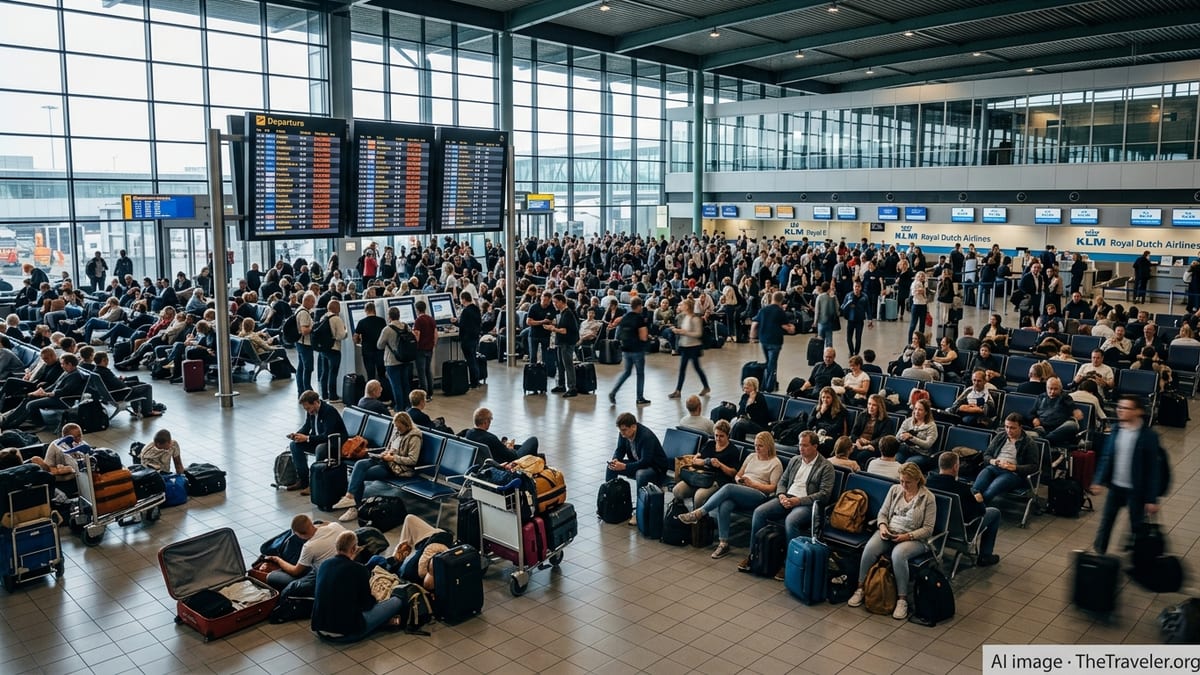
Knock-on delays ripple through European hubs
Operational data from flight tracking platforms and publicly available schedules show that short haul services from Dublin bore the brunt of the disruption, with flights to major European hubs such as Amsterdam Schiphol, Brussels and multiple London airports among those most affected. High frequency services on these routes are particularly vulnerable when early rotations run late, as delays compound throughout the day.
Reports indicate that departures to Amsterdam and Brussels operated by carriers including Ryanair and Aer Lingus experienced extended ground holds and later arrivals, which in turn compressed turnaround times. Even modest schedule slippage on these trunk routes can trigger a wave of missed connections for passengers heading onward to other European cities.
London services were similarly impacted, with flights between Dublin and Heathrow and between Dublin and Gatwick experiencing late operations after earlier rotations arrived behind schedule. London remains Dublin’s single busiest city pair, so any operational disturbance on these links tends to have an outsized effect on overall punctuality at the Irish hub.
While most affected flights ultimately operated, the accumulation of 57 delays in one day created crowded gate areas, longer queues at customer service desks and pressure on airport infrastructure already operating close to capacity during the spring travel period.
Three cancellations strand passengers and squeeze capacity
In addition to the dozens of delayed services, three departures from Dublin were cancelled outright, according to aggregated flight status data. The cancellations involved a mix of short haul European and longer haul services, including flights operated by Ryanair, Aer Lingus and United, reducing available capacity on routes that already run near full during peak hours.
For passengers booked on these flights, the immediate challenge was securing alternative seats on later departures out of Dublin or rerouting via other hubs. Given that carriers have trimmed some summer 2026 schedules in recent weeks, replacement options are not as plentiful as in previous years, particularly at short notice.
Publicly available information on recent schedule adjustments shows that Aer Lingus has already reshaped parts of its European timetable for the coming season, while Ryanair has announced cuts to a portion of its planned Dublin flying program amid ongoing debate over passenger caps and night flight limits at the airport. These broader capacity moves mean that, when irregular operations occur, spare seats across the network are tighter than usual.
United’s presence at Dublin, focused on transatlantic links to the United States, adds further complexity. When a long haul departure is cancelled or heavily delayed, there are typically fewer same day alternatives, forcing some travelers into overnight stays and making it more difficult for airlines to reaccommodate customers efficiently.
Structural strains at Dublin heighten impact of disruptions
The latest day of disruption comes at a time when Dublin Airport’s infrastructure and regulatory framework are under scrutiny. The airport is operating close to an annual passenger cap introduced as part of earlier planning approvals, just as demand for both European city breaks and North American travel continues to rise.
Recent statements and published commentary from airlines highlight concerns that the cap and separate limits on night flights constrain the airport’s ability to absorb irregular operations. With limited freedom to add extra sections or late evening recovery flights, carriers have less flexibility to clear backlogs after a day of delays and cancellations.
Ryanair and Aer Lingus, which both maintain substantial operations at Dublin, have pointed to this restricted operating environment in explaining planned capacity cuts for summer 2026. When schedules are already finely balanced, a cluster of delays on a single day can more easily disrupt rotation patterns, crew availability and aircraft positioning across multiple bases.
For passengers, the effect is felt in longer queues, tighter margins for connections and fewer backup options when things go wrong. The situation at Dublin reflects a broader pattern seen at constrained European hubs, where demand growth has outpaced incremental increases in runway and terminal capacity.
What affected travelers can do next
Travelers caught up in the latest wave of delays and cancellations at Dublin have a range of options, though their choices vary depending on the airline, route and ticket type. Publicly available guidance from carriers and consumer rights organizations emphasizes that passengers departing from or arriving into European airports may be entitled to assistance in the form of meals, refreshments and accommodation when disruption stretches into long delays or overnight stays.
In cases of cancellation, most airlines allow customers to choose between a refund or rebooking on the next available service, subject to seat availability. On busy routes between Dublin and cities such as London, Amsterdam and Brussels, this may mean accepting travel at a different time of day or routing via an intermediate hub to reach the final destination.
Given recent schedule adjustments and strong seasonal demand, experts routinely advise travelers to monitor their booking closely in the days leading up to departure and to check real time flight status on the day of travel. Building extra connection time into itineraries that link Dublin with onward flights in Amsterdam, Brussels, London or US hubs can also help reduce the risk of missed onward segments when delays occur.
For those with upcoming trips from Ireland, the latest disruption serves as a reminder that operational and structural pressures at Dublin are likely to persist into the peak summer months. Travelers who stay informed, allow generous buffers and remain flexible on routing will be best placed to navigate potential schedule shocks.