


More news on this day
Thousands of air travelers across China are facing hours-long delays, missed connections, and overnight airport stays after major hubs in Beijing, Shanghai, Shenzhen, Chongqing, and other cities reportedly delayed 5,313 flights and canceled 148, disrupting operations for carriers such as Air China, China Eastern, Spring Airlines, and several smaller operators.
Get the latest news straight to your inbox!
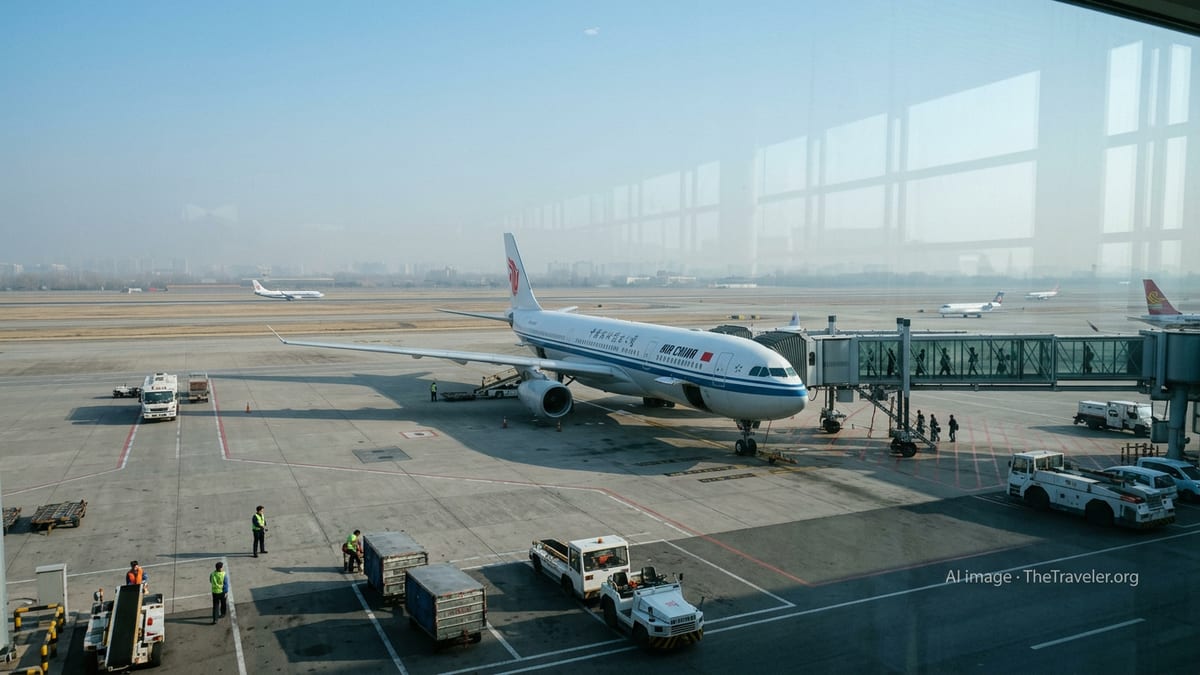
Wave of Delays Hits China’s Busiest Aviation Hubs
The latest disruption has rippled through China’s densest aviation corridors, with concentrated problems at Beijing’s dual-airport system, Shanghai Pudong and Hongqiao, Shenzhen Bao’an, and Chongqing Jiangbei. Publicly available flight-tracking dashboards and operational summaries show a pattern of high delay volumes clustered at these gateways on peak travel days, particularly in the late afternoon and evening departure banks.
Across these hubs, delay counts have reached into the thousands on several occasions in recent months, with comparable episodes seeing more than 5,000 flights pushed back from scheduled departure times and well over 100 outright cancellations in a single operating window. The current figure of 5,313 delays and 148 cancellations fits this emerging pattern of large-scale, short‑term disruption that strands passengers not only at origin points but also at secondary transfer airports throughout the domestic network.
Terminals at Shanghai and Beijing have been especially vulnerable to bottlenecks when rolling delays accumulate. Passenger-facing information from airport departure boards and third-party tracking platforms frequently depicts long queues at check-in, congested security lanes, and crowded boarding areas as airlines struggle to reshuffle aircraft and crew while remaining within regulatory duty-time limits.
Air China, China Eastern, Spring Airlines and Others Scramble
The operational turbulence has affected a broad cross-section of Chinese carriers. Flag carrier Air China and state-owned peer China Eastern, together with other major groups such as China Southern and Hainan Airlines, consistently appear among the airlines registering the highest number of delayed or canceled flights during these disruption spikes. Low-cost and regional airlines, including Spring Airlines and several smaller operators, have also recorded elevated irregular operations as congestion spreads through shared airspace and airport infrastructure.
Data compiled from recent disruption events indicates that no single airline is solely responsible for the current wave of problems. Instead, the network-wide nature of Chinese domestic aviation means that a delay or ground stop at one major hub can cascade rapidly across multiple carriers. Aircraft and crews operating tight turnarounds in Shanghai or Shenzhen can quickly fall out of position, forcing last-minute schedule adjustments and, in some cases, full cancellations on subsequent sectors.
For travelers, the practical effect is similar regardless of carrier. Reports from previous mass-disruption days highlight passengers facing missed connections on multi-leg itineraries, limited same-day rebooking options, and the need to secure overnight accommodation near airports when onward flights are full. Budget carriers with leaner schedules are particularly exposed, as fewer daily frequencies reduce the opportunity to reaccommodate affected customers.
Weather, Airspace Constraints and Capacity Mismatches
While precise causes vary by day, several recurring factors appear to be driving the scale of recent disruptions. Periods of heavy rain, thunderstorms, low visibility, and seasonal weather systems routinely trigger flow-control measures at major Chinese hubs. When these restrictions coincide with peak travel waves, such as weekend surges or holiday returns, airport slots become tightly constrained and departure queues lengthen sharply.
China’s tightly managed airspace also plays a structural role. Aviation analysts and frequent travelers have long noted that the proportion of airspace available for civil flights is limited compared with other major markets, which leaves less flexibility to reroute aircraft around storm cells or congestion. When a single storm affects central China, for example, knock-on delays can quickly reach coastal hubs like Shenzhen, Shanghai, and Beijing as aircraft are forced to hold or divert.
At the same time, demand for domestic and short-haul regional travel has rebounded strongly, with passenger volumes at or above pre-pandemic levels on many routes. Industry commentary suggests that capacity growth, infrastructure expansion, and air traffic management upgrades have not fully kept pace with this surge, creating a mismatch that becomes visible during any operational stress event. The result is that what might have once been a manageable weather delay can now escalate into a nationwide disruption involving thousands of flights.
Passengers Face Long Waits and Limited Remedies
The human impact of 5,313 delayed and 148 canceled flights is visible in crowded terminal halls across the affected cities. Travelers have described long waits at customer service counters, difficulty accessing clear information about revised departure times, and challenges securing replacement seats on already full services. Families with children, elderly passengers, and those with tight international connections are among the most vulnerable when on-the-day schedules unravel.
Chinese regulations set out broad principles for how airlines should assist passengers when flights are heavily delayed or canceled, including provisions for meals, refreshments, and rebooking support. In practice, however, implementation can vary according to the cause of disruption, the operating carrier, and whether the ticket was sold as part of a code-share or via a third-party platform. During major disruption days, the sheer scale of affected travelers often strains customer service resources, making it harder for passengers to understand their options in real time.
Travel forums and social media posts following earlier large-scale disruption events in 2026 point to a mix of experiences. Some travelers report being rebooked at no extra cost or offered hotel vouchers, while others describe lengthy waits and confusion about refund eligibility when cancellations are labeled as operational or weather-related. The latest episode, involving thousands more delays and nearly 150 cancellations, appears to be reinforcing calls from consumer advocates for clearer, more consistently enforced rules on compensation and care.
What Travelers Can Do To Navigate Ongoing Volatility
For those planning trips through China’s major air hubs in the coming weeks, recent disruption patterns underscore the importance of building flexibility into itineraries. Travel experts commonly advise allowing longer connection windows, particularly when transferring between separate tickets or between domestic and international segments routed through Beijing, Shanghai, Shenzhen, or Chongqing.
Monitoring flights via airline apps and independent tracking platforms can also provide early warning of schedule changes. In previous disruption waves, some passengers were able to secure earlier rebooking or alternative routings by contacting airlines as soon as delay patterns emerged, rather than waiting until they reached the airport. Travelers are also increasingly encouraged to keep digital copies of booking confirmations and any messages about delays or cancellations, which can help when seeking refunds or additional assistance later.
Given the frequency of large-scale disruption events across China’s aviation network in 2026, travel insurance with explicit coverage for delays and cancellations has become a more prominent consideration for both domestic and international passengers. Policies vary widely, but those that compensate for extended delays, missed connections, and unexpected accommodation costs may offer added resilience in an environment where thousands of flights can be affected in a single operating period.