


More news on this day
A Washington Metrorail Green Line train derailed near College Park during a searing Fourth of July weekend heat wave, drawing renewed attention to how extreme temperatures can deform rail infrastructure and upend travel across the capital region.
Get the latest news straight to your inbox!
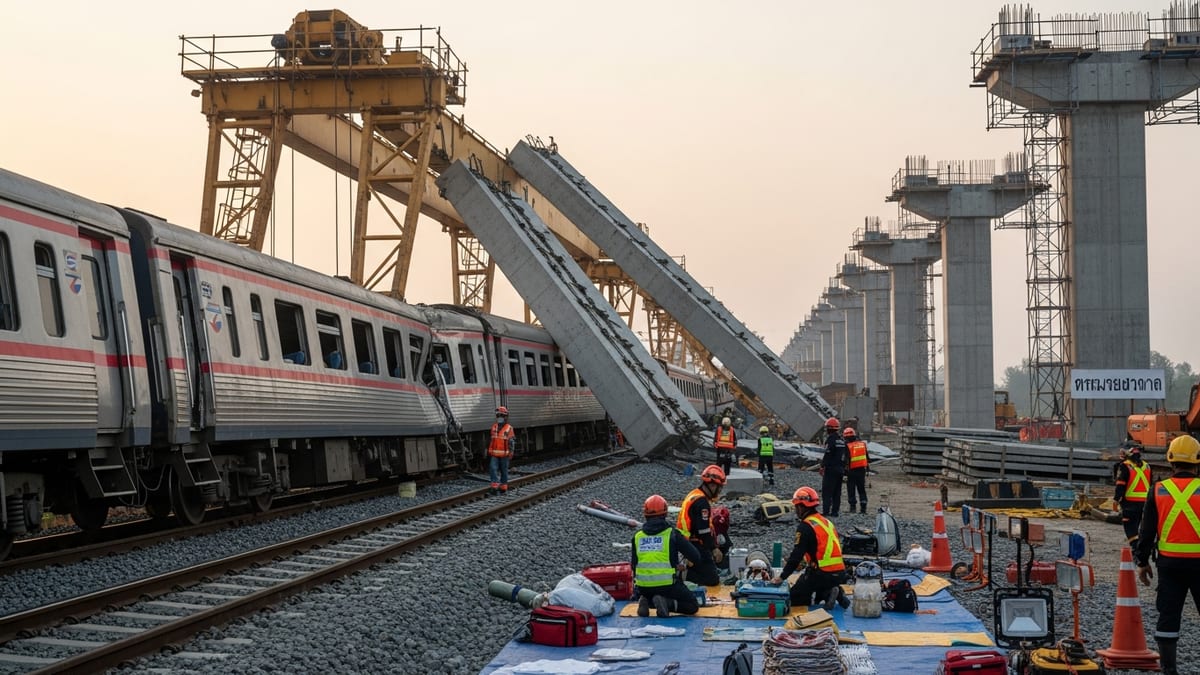
Green Line train leaves track amid record-breaking heat
Published coverage indicates that the derailment occurred late Saturday morning, July 4, just south of College Park station on Metrorail’s Green Line. The train was heading north when several wheelsets left the track, coming to a stop in the area of Calvert Road in College Park, Maryland.
Reports from local outlets describe a relatively low-speed incident in which at least one car partially derailed while remaining upright. Initial information from the scene indicates that the affected train was part of Metro’s older 3000-series fleet, which has been in service for several decades.
Transit alerts show that Green and Yellow line service through the area was immediately disrupted. Trains began single-tracking between Hyattsville Crossing and College Park while rail inspectors and maintenance crews accessed the site to assess track damage and stabilize the train for removal.
Passenger accounts gathered in local media and on social platforms describe a sudden jolt, a stop in the area outside the station and a prolonged delay while crews worked to evacuate riders and secure the scene in intense midday heat.
Heat kink suspected after rails buckle in extreme temperatures
According to published coverage and rider reports, early inspections point to a heat-related “kink” in the rail as the likely trigger for the derailment. In very high temperatures, continuous welded rail can expand and bow sideways, creating a lateral misalignment known in the industry as a heat kink or sun kink. If a train passes over that deformed section at the wrong moment, wheels can climb the rail and leave the track.
Technical guidance from rail safety agencies notes that these kinks become more likely when extreme temperatures follow sustained heat, especially where ballast, fasteners or track geometry have underlying weaknesses. In this case, the derailment occurred during one of the hottest stretches Washington has experienced in years, with triple-digit readings and an active extreme heat alert in effect for the region.
Publicly available safety audits of Metrorail have previously highlighted heat kinks as a known risk for older track segments. Historical incident summaries show that a southbound Green Line train derailed in Hyattsville in 2012 due to a heat-related rail kink, underscoring that the mechanism is not new to the system.
The latest derailment appears to follow a similar pattern, though a full technical determination will depend on formal investigation outcomes. For now, the incident is being widely framed as an example of how climate-driven temperature extremes are testing aging rail infrastructure.
Evacuations, minor injuries and ongoing service disruptions
Local news reports indicate that 11 riders were on board the derailed train, all of whom were evacuated without life-threatening injuries. Fire and emergency crews evaluated passengers at the scene, and at least one person was transported to a hospital for further assessment, while another reportedly declined transport.
Images and accounts shared online show riders walking along the right of way under supervision before being guided to a safe area near the station. The evacuation and track inspection process unfolded under dangerous heat index values, with emergency personnel, Metro staff and passengers exposed to high temperatures as they moved along the ballast and access paths.
Service disruptions extended beyond the immediate incident window. System status updates and rider reports on Sunday indicate that trains remained single-tracked, with bus shuttles replacing rail service between Hyattsville Crossing and Greenbelt while crews continued inspections, repairs and train removal operations.
The timing of the derailment compounded already strained holiday travel conditions. The Fourth of July weekend had drawn large crowds into central Washington, and social media posts from riders documented crowded platforms and extended waits as the network adjusted to both heat-related speed restrictions and an unexpected track closure on the Green Line.
Part of a broader pattern of heat stress on rail systems
The derailment near College Park is one of several weather-linked disruptions affecting rail operations along the East Coast during this early July heat wave. Regional commuter rail systems and long-distance operators have implemented temporary speed limits, shortened consists and, in some cases, canceled trains as rail, bridges and overhead wires expand in the heat.
Guidance from infrastructure and safety agencies explains that steel rail is designed for a particular “neutral temperature,” but prolonged exposure to temperatures far above that point increases internal stress. Without adequate ballast, fasteners and expansion management, track can shift laterally or vertically, which increases the risk of slow orders, broken components or derailments.
In the Washington region, this environmental pressure intersects with a system that is already undergoing extensive maintenance. Metro has multiple long-term construction projects on key lines this summer, and the heat-related derailment adds new urgency to discussions about resilience investments, including improved monitoring, better stress management in continuous welded rail and more frequent geometry checks during heat waves.
Transit advocates and transportation analysts have argued in recent years that climate adaptation for rail systems is no longer a theoretical concern but an operational necessity. The combination of record-breaking temperatures, high passenger loads during major events and decades-old infrastructure is producing more frequent, visible disruptions that are hard for riders to ignore.
What riders can expect in the coming days
Based on Metro advisories and rider updates posted through the weekend, travelers on the Green and Yellow lines should anticipate continued delays and modified operations while track inspections and repairs proceed near College Park. Shuttle buses are replacing trains on portions of the Green Line north of Hyattsville Crossing, and some Yellow Line trains are turning back before reaching the affected segment to reduce congestion.
Rail systems often maintain temporary speed restrictions for days after a heat-related kink is detected or repaired, both to protect workers in the right of way and to verify that the track remains stable as temperatures fluctuate. Riders may therefore see slower travel times even after through service resumes.
Commuters are being encouraged, through public alerts and transit agency updates, to build extra time into their trips, monitor service advisories and consider alternate routes or modes where feasible. For those who rely on the Green Line corridor between Hyattsville and Greenbelt, that may mean transferring to bus routes that parallel the rail line while the incident site remains under repair.
As the Washington region navigates another day of dangerous heat, the derailment serves as a visible reminder that transportation networks are operating closer to their environmental limits. For travelers headed into and out of the capital in the days ahead, the intersection of extreme weather and infrastructure vulnerability will remain a factor shaping how, and how reliably, they move.