


More news on this day
A freight train derailed in Repentigny, northeast of Montreal, sending around 20 cars off the tracks and triggering an extensive emergency response, but early reports indicate there were no injuries or hazardous material leaks.
Get the latest news straight to your inbox!
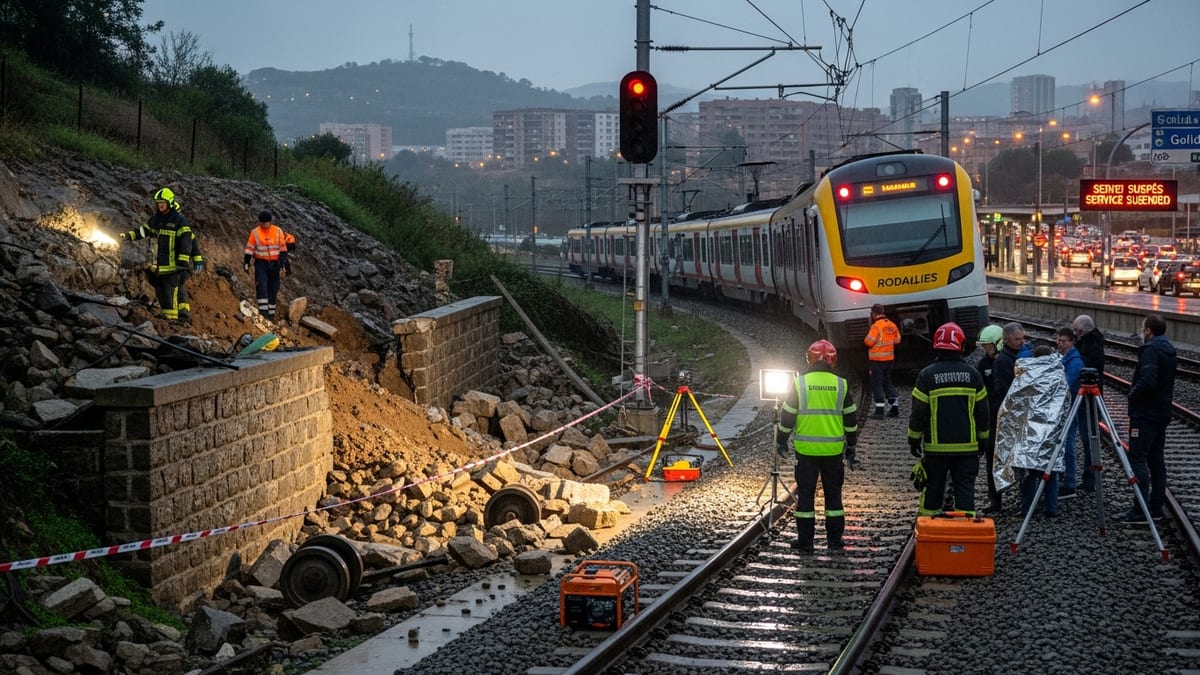
Derailment near residential sector Le Gardeur
The derailment occurred Sunday, July 5, in the Le Gardeur sector of Repentigny, a predominantly residential area on the north shore of the St. Lawrence River. Publicly available information indicates that the train left the tracks near a level crossing, where houses, small businesses, and local roads run close to the rail corridor.
Initial descriptions from local coverage suggest that roughly 20 cars on the long freight consist derailed in a chain reaction, with several cars leaning or piled at angles along the right of way. Photos published by Quebec news outlets show twisted rail, displaced ballast, and freight cars scattered beside the tracks, some resting only a short distance from nearby properties.
Municipal officials in Repentigny quickly advised people to avoid the immediate area while firefighters and police secured the perimeter. Rail crews and specialized contractors were later brought in to stabilize the cars and begin clearing operations, an effort expected to last into the early part of the week.
According to published coverage, an investigation into the cause began shortly after the tracks were secured. At this stage, no single factor has been formally identified, and rail safety specialists are expected to examine track conditions, train handling data, and the condition of the derailed rolling stock.
No reported injuries or dangerous goods leak
Local and regional media report that there were no injuries among train crew or residents, despite the scale of the derailment and the proximity to homes. Emergency responders conducted precautionary checks in the surrounding streets, but publicly available information indicates that no evacuations were required.
Early accounts also indicate that the train was not carrying dangerous goods that posed an immediate risk to the public. Coverage from Quebec outlets notes that the derailed consist appeared to be made up largely of standard freight cars rather than tankers loaded with hazardous materials, easing fears of fire, explosion, or toxic release.
The absence of a spill contrasts with several other recent freight derailments in North America where hazardous cargo prompted large evacuation zones and prolonged shutdowns. In Repentigny, responders were able to concentrate on physical stabilization of the rolling stock and the securing of the rail corridor, rather than executing large-scale public safety evacuations.
Residents in the area nonetheless reported significant noise and vibration as the cars left the tracks, followed by a visible plume of dust and debris. For many on Quebec’s north shore, the incident revived memories of previous rail accidents in the province and renewed attention to what passes daily through their communities by rail.
Rail traffic disruptions and local travel impacts
The derailment immediately interrupted freight traffic along the affected line northeast of Montreal, with rail operators rerouting or temporarily holding trains while track damage was assessed. According to publicly available information, passenger rail services did not appear to be directly involved, but some schedules in the greater Montreal region may experience knock-on effects as freight movements are rescheduled.
Road traffic in the Le Gardeur sector faced detours as crossings near the derailment were closed to vehicles and pedestrians. Local media coverage describes a visible increase in congestion on alternate routes, particularly during peak hours, as drivers navigated around barricades and emergency vehicles positioned near the tracks.
Railway work crews began arriving with heavy equipment to re-rail cars where possible and dismantle those too damaged to move. This type of operation typically involves large cranes, track repair machinery, and support vehicles, which can occupy adjacent streets and open areas for days after the initial incident.
Residents were advised through municipal communication channels to anticipate ongoing noise and nighttime lighting as work extended beyond daylight hours. While the derailment did not result in injuries, it is expected to cause several days of localized disruption to both rail and road users in and around Repentigny.
Investigation and questions about rail safety in Quebec
With the immediate emergency phase winding down, attention is turning to understanding how a modern freight train could shed around 20 cars in a built-up area without advance warning. Published coverage indicates that federal and provincial rail safety bodies, along with the railway company, will review data from the locomotive event recorder, inspect track components, and analyze the condition of the derailed cars.
The investigation will likely examine whether factors such as track geometry, subgrade stability, equipment defects, or operational issues played a role. It may also consider recent weather patterns and any maintenance work carried out along the corridor in the days and weeks before the accident.
In Quebec, where several high-profile rail incidents have taken place over the past decade, the Repentigny derailment is feeding into a broader public discussion about freight routes running close to homes, schools, and businesses. Community groups and residents have repeatedly raised concerns about transparency regarding what types of cargo are moving through their neighborhoods and how emergency planning is coordinated.
Although initial reports from Repentigny emphasize the absence of hazardous material leaks, the sight of dozens of freight cars off the tracks is likely to reinforce calls for stronger oversight and more visible communication around rail safety. Observers note that lessons from this incident could influence future infrastructure investment, inspection regimens, and risk mitigation strategies along key freight corridors in the Montreal region.
Broader context of recent derailments and preparedness
The Repentigny derailment comes amid a series of rail incidents across Canada and the United States that have drawn renewed attention to the condition of freight infrastructure and the movement of goods by rail. In several recent cases, derailments have caused extended service outages, highway closures, and, in some instances, hazardous material releases.
Publicly available reporting shows that rail companies and regulators have been emphasizing inspection technologies, such as track geometry cars and wayside defect detectors, as key tools for reducing the likelihood of such events. Yet the visible impact of incidents like the one in Repentigny continues to highlight the limits of current systems and the importance of rapid, well-coordinated emergency response.
Local governments along major freight routes are increasingly reviewing their emergency preparedness plans in light of these events. In communities such as Repentigny, this includes evaluating evacuation procedures, communication channels with rail operators, and training for first responders who may be first on the scene of a derailment.
As cleanup progresses and investigators sift through the evidence, Repentigny’s derailment is likely to become another reference point in national discussions about rail safety policy, infrastructure investment, and the balance between efficient goods movement and the protection of communities that live alongside the tracks.