


More news on this day
American Airlines is pushing further into the premium travel segment, advancing a sweeping cabin retrofit that adds more high-end seats, power at every seat and broader access to high-speed Wi-Fi across its mainline and regional fleets.
Get the latest news straight to your inbox!
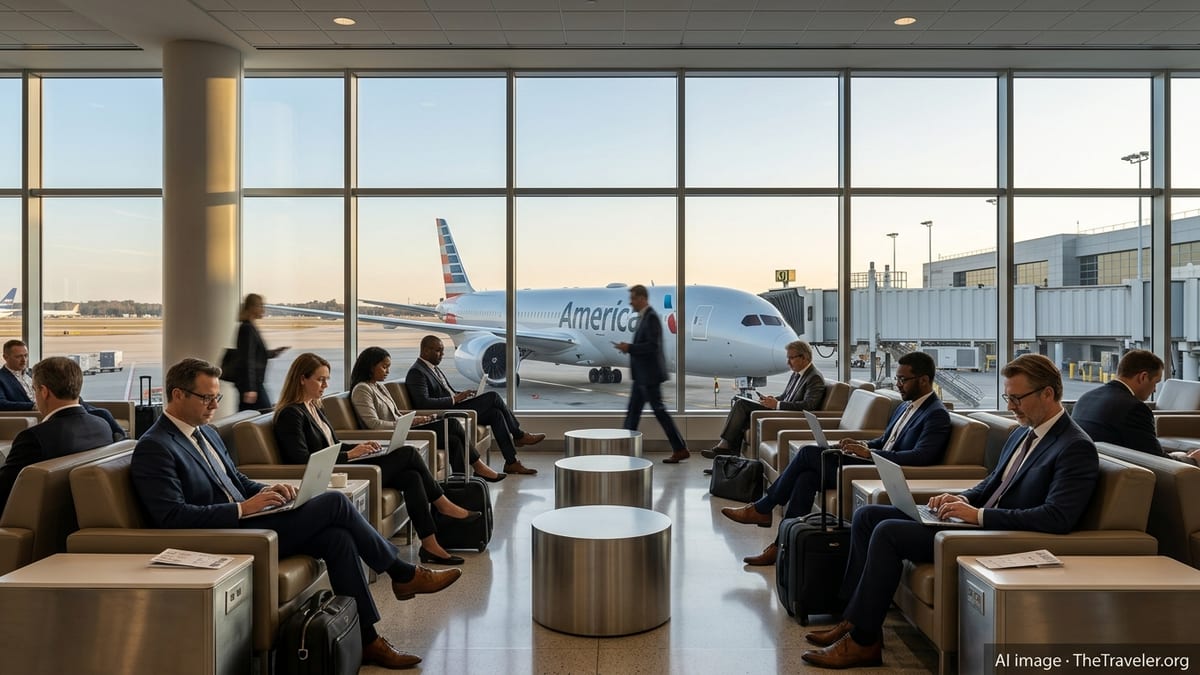
Retrofitted Cabins Target Growing Demand for Premium Travel
American Airlines is in the midst of a large-scale cabin refresh designed to capture stronger demand for premium travel on both domestic and international routes. Public filings and company presentations indicate that the carrier plans to grow its premium seating, including lie-flat and premium economy seats, by roughly 50 percent on long-haul aircraft by the end of the decade. The strategy places more high-yield seats at the front of the aircraft while keeping overall capacity broadly aligned with network needs.
Recent disclosures describe an upgrade program that touches much of the mainline fleet. American’s Airbus A319 and A320 aircraft are being retrofitted with new interiors that feature additional domestic first class seats, updated trim and finish, and larger overhead bins. Narrowbody jets remain the backbone of the airline’s North American network, and adding more premium seats on these routes is positioned as a key revenue initiative.
Widebody aircraft are also being reconfigured to align with this premium tilt. Existing Boeing 777-300ER and 777-200ER jets, as well as Boeing 787-9 aircraft, are receiving new interiors centered on the Flagship-branded long-haul business product and expanded premium economy cabins. Investor materials highlight plans for these aircraft to carry significantly more lie-flat and premium economy seats than earlier layouts, particularly on transatlantic and transpacific routes where premium demand has recovered strongly.
The retrofit campaign comes after what American has described in regulatory documents as one of the largest reconfiguration efforts in commercial aviation, involving hundreds of aircraft. The current phase extends that work, but with an even sharper focus on premium density and consistency across the fleet.
More Seats at the Front, Fewer Truly Basic Options
The upgrade program is reshaping the mix of seats available on many routes. On domestic Airbus narrowbodies, public information shows that American is increasing first class capacity, with A319 aircraft shifting to a 12-seat first class cabin and A320 aircraft moving to 16 first class seats. Similar trends are visible in the order book, where new Boeing 737 MAX 10 and Airbus A321neo deliveries are expected to arrive in higher-premium configurations.
Regional flying is also part of the premium push. American has committed to a dual-class regional jet fleet centered on Embraer 175 aircraft, which are being positioned as offering a more “mainline-like” experience. Company statements describe these jets as featuring premium cabins, high-speed satellite Wi-Fi and in-seat power, aiming to narrow the service gap between regional and mainline operations on shorter routes.
On long-haul aircraft, American is phasing out its traditional international first class and replacing it with an expanded business class footprint and, in some cases, a smaller, more exclusive front-row section within business. Materials outlining future cabin layouts on Boeing 777-300ER and Boeing 787-9 aircraft emphasize higher counts of lie-flat seats and a larger dedicated premium economy cabin, while maintaining a sizable main cabin.
This shift means fewer very basic seating options, particularly on routes where demand for extra space and amenities is strong. While standard economy remains the majority of capacity, more cabin real estate is being devoted to premium economy and extra-legroom main cabin sections that command higher fares than traditional coach.
Free and Flexible Wi-Fi Becomes a Core Selling Point
The cabin overhaul is tightly linked to expanded inflight connectivity. Publicly available information shows that American has completed satellite Wi-Fi installation across its domestic narrowbody fleet and is now layering new pricing and access models on top of that hardware investment. AAdvantage loyalty members can access complimentary high-speed Wi-Fi on most U.S. and select international flights, with connectivity available gate to gate on the majority of mainline aircraft.
Recent announcements detail an ad-supported model that allows customers on Viasat-equipped narrowbodies to browse the internet for free, as well as new options to redeem AAdvantage miles for Wi-Fi access. This approach is intended to integrate connectivity into the broader loyalty ecosystem, rewarding frequent flyers while keeping paid options available for non-members or those seeking ad-free service.
The airline is also positioning Wi-Fi as part of a broader digital experience. Investor and product materials point to a redesigned mobile app, expanded streaming entertainment, and, on future retrofitted aircraft, 4K seatback screens with Bluetooth audio and multiple charging options. On upcoming Boeing 787-9, 777-300ER and Airbus A321XLR interiors, passengers in all cabins are expected to have access to seatback entertainment in addition to high-speed wireless connectivity.
Connectivity upgrades extend to regional operations as well. American has indicated that its dual-class regional fleet will feature high-speed satellite Wi-Fi and power at every seat, narrowing the digital divide between smaller jets and larger mainline aircraft and making regional segments feel less like a step down in comfort.
New Premium Suites and Lounges Anchor the Long-Haul Product
At the top of the cabin, American is rolling out a new generation of long-haul premium seats. Announced Flagship-branded suites on incoming Airbus A321XLR and Boeing 787-9 aircraft, as well as retrofitted Boeing 777-300ER and 777-200ER jets, are designed with privacy doors, direct aisle access and greater personal storage. These suites are meant to compete directly with the latest products from transatlantic and transpacific rivals, particularly on routes to London, Tokyo and Sydney where premium demand is strongest.
Corporate presentations describe these jets as carrying significantly more premium seats than earlier configurations, with some widebodies expected to offer more than 100 combined business and premium economy seats. This higher premium density is intended to better match the revenue potential of key international markets where corporate and affluent leisure travelers are willing to pay for extra comfort and privacy.
The onboard product refresh is being matched by investments on the ground. Public documents outline plans to expand premium lounges in several hub airports, providing upgraded spaces for business and first class travelers as well as top-tier loyalty members. These lounges, coupled with upgraded long-haul cabins and complementary high-speed Wi-Fi access, form the backbone of American’s strategy to be seen as a “premium global airline” rather than a primarily domestic carrier.
While some elements of the premium cabin rollout have shifted timelines because of aircraft delivery delays, the overall direction of travel remains clear. More premium seating, paired with modern connectivity and entertainment, is central to how American aims to differentiate itself and justify higher fares on long-haul and high-demand domestic routes.
What Flyers Can Expect in the Coming Years
For travelers, the ongoing retrofit program will likely be most visible on board older narrowbody jets as they emerge from refurbishment with refreshed interiors. Passengers on Airbus A319 and A320 aircraft should see more domestic first class seats, larger overhead bins, new seat designs with power outlets, and consistent access to high-speed Wi-Fi. Over time, more regional flights are expected to feature dual-class Embraer 175 aircraft instead of smaller single-class regional jets.
On international routes, the biggest changes will come as newly delivered Airbus A321XLR and Boeing 787-9 aircraft enter service and as additional Boeing 777-300ER and 777-200ER jets complete their cabin overhauls. Flyers can expect more lie-flat business seats, expanded premium economy cabins, upgraded bedding and amenities, and a more modern entertainment and connectivity package across all cabins.
American’s own financial disclosures frame these moves as part of a premiumization strategy intended to drive higher revenue per seat while keeping operating costs in check through a more standardized, efficient fleet. For passengers, that translates into a network where more routes, including many domestic and short-haul international flights, offer a greater range of upgraded seating and Wi-Fi options than in the past.
As the retrofit cycle progresses, the airline’s ability to deliver a consistent premium experience will likely become a key factor in how it is perceived relative to domestic competitors. For now, travelers booking American can expect to see more front-cabin capacity, increasingly ubiquitous high-speed Wi-Fi and steadily modernizing cabins as the carrier’s fleet transformation continues.