


More news on this day
A freight train derailed in Repentigny, northeast of Montreal, on Sunday afternoon, sending roughly 20 railcars off the tracks near a residential area and triggering a major emergency response, according to local media reports.
Get the latest news straight to your inbox!
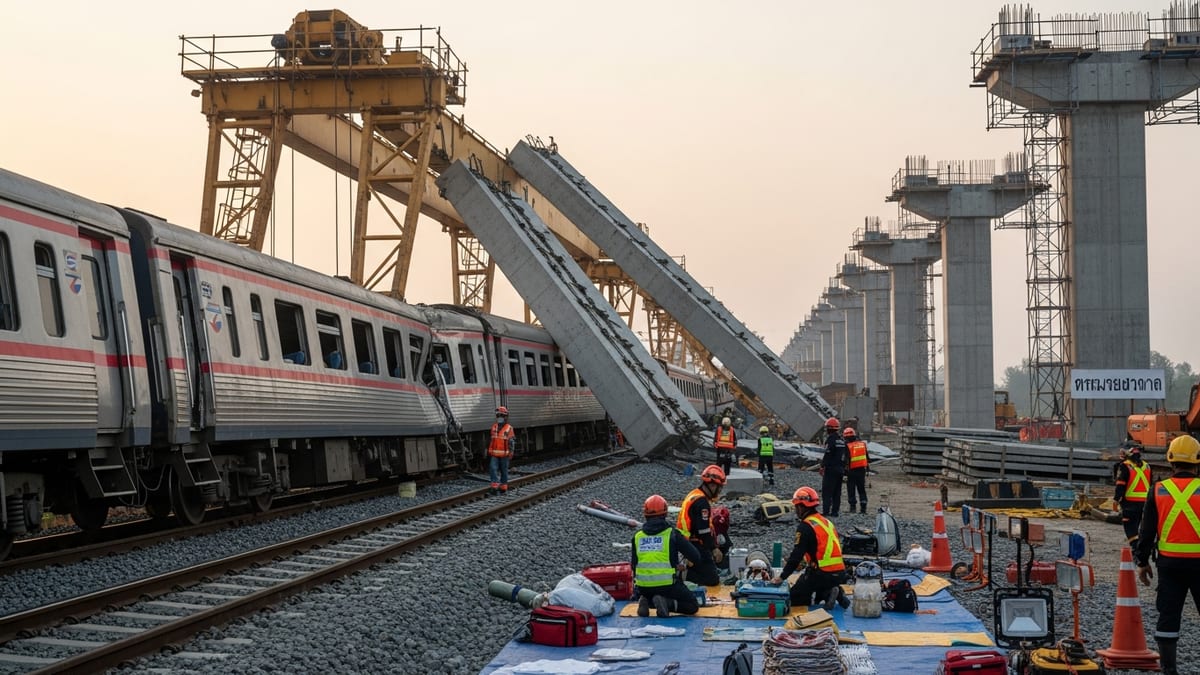
Derailment near residential streets north of Montreal
Reports indicate the derailment occurred Sunday 5 July 2026 in the Le Gardeur sector of Repentigny, a community on the north shore of the St. Lawrence River, just east of Montreal. Coverage from Quebec news outlets describes the incident site near the intersection of boulevard Le Bourg-Neuf and rue Émile-Genest, a mixed residential and commercial corridor where a freight line crosses local streets.
Initial information from publicly available municipal updates and news reports suggests that approximately 20 freight cars left the tracks. Images shared by local outlets show a long string of wagons jackknifed along the right of way and into the adjacent rail corridor, with some cars tilted but remaining largely upright. The locomotives appeared to stay on the rails.
Rail activity through the area was halted as crews moved in to secure the train and assess the stability of derailed cars. While the line does not carry intercity passengers, it is an important freight route around Montreal, so the disruption is expected to affect freight movements in the wider region.
The derailment took place in daylight hours, which made damage and safety assessments easier for emergency teams working around nearby homes, businesses and road intersections that sit close to the tracks.
No injuries and no indication of dangerous cargo
According to published coverage from Quebec media citing municipal communications, there were no reported injuries among the train crew or local residents. The lack of casualties is notable given the proximity of the derailment to a built-up neighborhood and busy local roads.
Local news reports also indicate that early information from the municipality did not point to the presence of dangerous goods among the derailed cars. Public updates referenced in Canadian press coverage stated that there was no information suggesting the train was carrying hazardous materials, easing fears of fire, explosion or toxic releases that often accompany high-profile rail accidents.
By early evening, images and video circulating in regional outlets showed no visible smoke or fire, and there were no reports of evacuations beyond temporary access restrictions close to the site. Residents in adjacent streets, however, experienced interruptions to power and were urged to avoid the area while emergency vehicles and rail crews operated near the tracks.
This incident comes in a province that still carries sharp memories of the Lac-Mégantic catastrophe of 2013, where a runaway oil train derailed and exploded in a small Quebec town. The absence of hazardous cargo indicators in Repentigny sharply differentiates the current event from that disaster, although both highlight how closely freight lines run to communities across the region.
Power cuts, road closures and rail disruption
Publicly available information from municipal channels and regional media indicates that a preventive electricity shutdown was ordered in the immediate sector around the derailment. Utility crews worked alongside firefighters to isolate power lines close to the tracks, reducing the risk of sparks or electrical hazards while heavy machinery moved into place.
Several local streets near boulevard Le Bourg-Neuf and rue Émile-Genest were temporarily closed to traffic to create a safety perimeter and allow access for emergency vehicles, cranes and specialized rail-recovery equipment. Road closures affected local circulation through the Le Gardeur sector and added delays for motorists traveling between residential areas and nearby commercial zones.
For rail operations, freight traffic through the north-of-Montreal corridor faced interruptions extending into the evening as inspectors examined the track structure, switches and signaling equipment for damage. Depending on the extent of track repairs needed and how quickly derailed cars can be removed, freight carriers using the line may need to re-route trains in the short term, potentially affecting supply chains that rely on the Montreal region as a key logistics hub.
Local media coverage notes that the scene remained active well after sunset, with rail teams beginning the complex work of lifting and repositioning cars. That process typically unfolds over many hours, involving track-side cranes, heavy trucks and careful sequencing to avoid secondary damage to infrastructure.
Safety investigation and infrastructure checks expected
While early reporting has focused on immediate safety and disruption, attention is expected to turn to the cause of the derailment and the condition of the rail infrastructure in Repentigny. In Canada, derailments of this scale normally prompt inspections of the track, ties and ballast, along with reviews of train handling, speed and any recent maintenance in the area.
Recent summaries of rail incidents in Canada, referenced in national transportation board material, show that freight derailments remain relatively frequent, though most involve a handful of cars, occur in yards or industrial sidings, and rarely cause major injuries. Events such as the Repentigny derailment tend to underline ongoing debates about how close heavy freight operations should run to dense residential districts, and what additional safeguards might be warranted.
Infrastructure specialists will be looking for signs of track defects, problems with switches or the railbed, or mechanical issues with individual cars. Weather conditions at the time, including recent rainfall and ground saturation that could affect the stability of the roadbed, are also likely to come under scrutiny as part of routine post-incident reviews.
For residents and travelers, the key questions in the coming days will center on how quickly rail and road links can be fully restored, and what measures rail operators and public agencies may introduce to reduce the risk of a similar derailment along this busy corridor north of Montreal.