


More news on this day
China’s sharp reduction in flights to Japan is rippling across Asian aviation, tempering Japan’s inbound momentum while accelerating a shift in Chinese outbound travel toward South Korea, Singapore and Southeast Asia.
Get the latest news straight to your inbox!
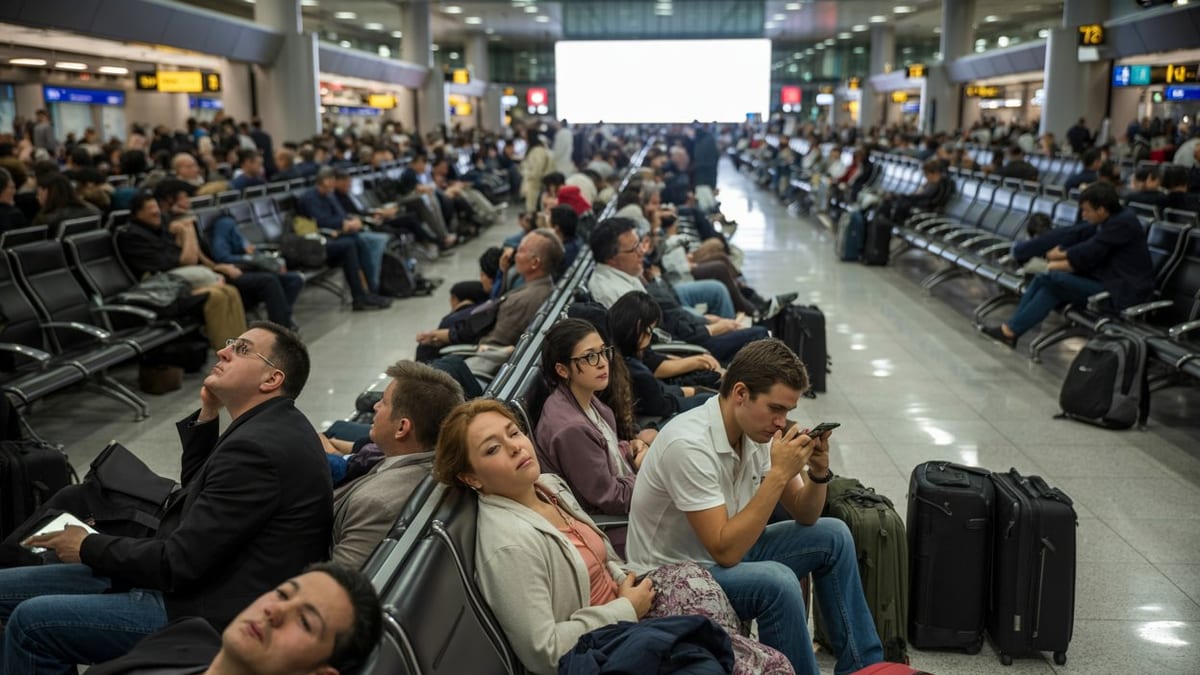
Coordinated Flight Cuts Hit China–Japan Corridor
Flight schedules between China and Japan have been repeatedly trimmed since late 2025, turning a political dispute into one of the most severe aviation disruptions in Northeast Asia since the pandemic. Data compiled from industry schedules shows Chinese carriers scrapping around 40 percent of planned services to Japan for December 2025, with more than 1,900 flights removed from timetables in a single month. Capacity reductions continued into early 2026 as airlines withdrew aircraft, cut frequencies and pulled entire routes linking Chinese cities with major Japanese gateways such as Tokyo, Osaka, Sapporo and Fukuoka.
Publicly available information indicates that at least several dozen routes have been fully cancelled for the northern winter 2025–26 season, including secondary-city links that had underpinned the rapid rebound in Chinese group and package travel. Aviation schedule data also points to a significant drop in weekly seats, particularly on trunk routes from Shanghai and Guangzhou, as airlines consolidate traffic onto a smaller portfolio of Japan services.
Reports from Chinese state and commercial media describe a wave of refund offers and voluntary cancellations on Japan-bound tickets following an official travel advisory in November 2025. Estimates from industry analysts cited in those reports put the number of cancelled Japan-bound air tickets from China in the range of roughly half a million within weeks, underscoring the scale and speed of the pullback.
Chinese regulators have also been reported to encourage carriers to keep capacity cuts in place at least through the end of March 2026, aligning with the industry’s winter schedule. This has effectively locked in a thinner China–Japan network for the current season, forcing both leisure and business travelers to reroute via third countries or abandon trips altogether.
Japan’s Inbound Boom Slows and Rebalances
The flight cuts have arrived at a delicate moment for Japan’s tourism recovery. Official statistics show that 2025 was a record year for total international arrivals, with more than 42 million visitors driven by strong demand from markets such as South Korea, Taiwan, the United States and Southeast Asia. Within that headline growth, however, the Chinese segment has started to lose share, even as the absolute number of visitors from China rebounded compared with 2024.
According to published data from Japan’s tourism authorities, Chinese travelers accounted for roughly 21 percent of inbound visitors in 2025, down from about 30 percent before the pandemic. Industry analysis notes that the combined share of visitors from China plus three other East Asian markets has also declined, a sign that Japan’s inbound base is gradually diversifying away from a historically heavy dependence on Chinese group tourism.
Regional destinations within Japan appear particularly exposed to the latest cancellations. Research from travel industry consultancies points to a double-digit rise in foreign visitors to regional areas in 2025 overall, helped by new routes and targeted marketing in markets such as South Korea. The sudden removal of Chinese capacity, especially from smaller Chinese cities to regional Japanese airports, threatens to slow that momentum and leaves local hotels, retailers and transport operators seeking replacement demand.
At the same time, national-level arrival figures through late 2025 and early 2026 suggest that the China-related shortfall is being partially offset by travelers from other markets. Monthly data released by Japan’s tourism board indicates that overall inbound growth remained in positive territory even after Beijing’s travel warning, although the pace of increase from China cooled sharply compared with earlier in the year.
Chinese Travelers Pivot to South Korea and Southeast Asia
As direct air links to Japan shrink, Chinese outbound travelers are redirecting their plans to nearby destinations that remain well served and politically less fraught. Booking and route data highlighted in regional media coverage point to resilient, and in some cases accelerating, flows from China to South Korea, Singapore and key leisure markets in Southeast Asia such as Thailand, Vietnam and Malaysia.
South Korea has emerged as a primary beneficiary. Tourism statistics from Seoul show foreign arrivals approaching or exceeding pre-pandemic levels, with Chinese visitors regaining their role as an important, though still recovering, segment alongside strong demand from Japan and Southeast Asia. Airlines in both countries have maintained dense connectivity on trunk routes like Beijing–Seoul and Shanghai–Incheon, and Chinese carriers appear to be redeploying some capacity from suspended Japan services into Korean markets where load factors remain high.
In Southeast Asia, tourism authorities report robust growth from China in 2024 and 2025, aided by visa-waiver arrangements and aggressive fare promotions. Carriers based in Thailand, Singapore and Malaysia have added frequencies on China routes, and several regional airlines that traditionally relied on Japan-bound fifth-freedom traffic now see more opportunity in direct China–Southeast Asia flows. Public data from airline financial reports indicates that some operators recorded significant year-on-year increases in passenger numbers on Southeast Asian routes during 2025, coinciding with the downturn in China–Japan traffic.
Singapore has also captured a rising share of Chinese transit and leisure demand. Although one low-cost carrier in the city-state is scheduled to wind down operations in mid-2025, full-service and remaining budget airlines continue to expand links with Chinese cities. Changi Airport’s role as a connecting hub means that some Chinese passengers who might previously have flown nonstop to Japan are now routing via Singapore to reach other parts of Southeast Asia or even Oceania.
Airlines Reshuffle Networks Across Asia
The China–Japan rift is forcing airlines across the region to rethink how and where they deploy capacity. Chinese carriers have moved quickly to trim unprofitable or politically sensitive Japan routes, while boosting frequencies to alternative destinations that can absorb widebody and narrowbody aircraft released from the Japan market. Industry analyses show increased focus on high-demand leisure corridors such as China–Thailand and China–Singapore, and on maintaining strong links to South Korea, which remains one of the most popular overseas destinations for Chinese tourists.
Japanese airlines, by contrast, face weaker feed from China just as they were rebuilding long-haul networks to North America and Europe. Some have responded by pivoting marketing efforts toward Southeast Asia and Oceania, where demand remains strong, and by deepening partnerships with regional carriers to backfill visitor flows. Capacity on Japan–Southeast Asia routes has been rising, with additional seats aimed at travelers from ASEAN states and at long-haul visitors using Bangkok, Singapore or Kuala Lumpur as gateways before continuing on to Japan.
Non-Chinese, non-Japanese airlines with extensive Asian networks, including carriers from Taiwan and Southeast Asia, are also adjusting. Corporate filings and route announcements show added flights from their home hubs to medium-sized Japanese cities and to Chinese secondary markets, effectively stepping into gaps left by the retreat of Chinese airlines on some sectors. These moves help preserve connectivity for business travelers and independent tourists willing to accept one-stop itineraries in place of former nonstops.
Low-cost carriers are playing a particularly flexible role, redeploying capacity in response to fare trends and airport incentives. As yields on China–Japan routes soften in the face of political headwinds, some budget airlines have shifted aircraft toward intra-ASEAN leisure routes, cross-strait markets and China–Korea links, where demand remains more stable.
Tourism Boards Race to Diversify Source Markets
The changing aviation map is accelerating efforts across Asia to diversify tourism source markets and reduce exposure to geopolitical shocks. Japan’s national and regional tourism organizations have already stepped up promotion in markets such as South Korea, Southeast Asia, India and North America, highlighting lesser-known destinations and shoulder-season travel to fill gaps left by fewer Chinese package tours. Campaigns launched in South Korea in 2025, for example, spotlighted smaller Japanese cities, aiming to spread visitors more evenly and mitigate overreliance on any single nationality.
Elsewhere in Asia, tourism authorities are seizing the opportunity created by the Japan-bound slowdown. South Korea continues to leverage the global popularity of its pop culture and food to draw repeat visitors from China and Southeast Asia. Thailand, Malaysia and Vietnam are marketing multi-destination itineraries that combine several countries in one trip, with improved air connectivity making it easier to route via regional hubs instead of Tokyo or Osaka.
Industry analysts caution that the present pattern could shift again if diplomatic conditions between Beijing and Tokyo improve and flight cuts are eventually reversed. For now, however, schedules filed for the northern summer 2026 season still reflect a significantly scaled-back China–Japan corridor compared with early 2025, suggesting that the current redistribution of capacity and traffic may persist in the medium term.
For airlines and tourism boards across Asia, the episode is reinforcing a familiar lesson: political risk can reshape travel flows almost overnight, while passengers, given enough alternatives, will quickly redraw their own maps, favoring routes and destinations that remain accessible, affordable and predictable.