


More news on this day
Starlink’s in-flight Wi-Fi footprint has widened to 48 airline partners worldwide, signaling a rapid shift in how carriers deliver onboard connectivity and how passengers expect to stay online at cruising altitude.
Get the latest news straight to your inbox!
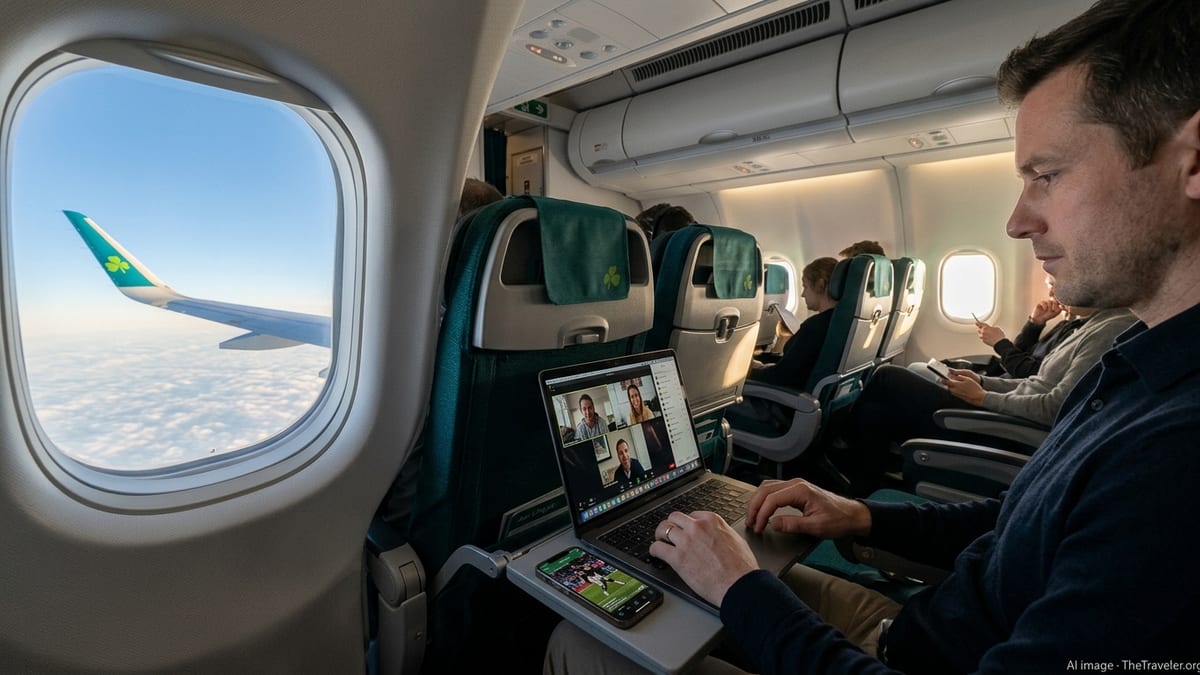
Starlink’s Airline Footprint Reaches New Milestone
Publicly available company progress reports and aviation industry coverage indicate that SpaceX’s Starlink has now secured in-flight connectivity agreements with 48 airlines, spanning major global network carriers, low cost operators, and regional specialists. The figure, cited in recent Starlink summary materials and cross-checked against airline announcements, marks one of the fastest expansions yet for a new inflight Wi-Fi provider.
The growth reflects a broader move by airlines to shift from older geostationary satellite systems to low Earth orbit constellations that can deliver higher speeds and lower latency. While several providers are competing in this space, Starlink’s approach of vertically integrated satellites, ground infrastructure and onboard hardware has allowed it to scale quickly across aircraft types from narrowbodies and regional jets to long haul widebodies.
Reports indicate that approvals now cover a wide range of Airbus and Boeing models as well as popular regional aircraft, enabling airlines to consider fleetwide rollouts rather than limited test programs. As more carriers activate service, passengers are beginning to see Starlink-branded portals appear on domestic hops, transcontinental routes, and intercontinental flights.
Industry analysts note that reaching dozens of airline partnerships in only a few years has shifted Starlink from experimental newcomer to a central player in the in-flight connectivity market, pressuring legacy providers to accelerate upgrades and rethink pricing.
Global Carriers Move Toward Fleetwide Rollouts
Major flag carriers in North America, Europe and the Asia Pacific region have been among the most visible adopters of Starlink in-flight Wi-Fi. Public documentation and airline statements show that large groups including United Airlines, Air France and Air New Zealand have begun activating aircraft, with plans that point toward full or near-full coverage of their mainline fleets over the coming years.
In North America, reports highlight that United is adding Starlink across both mainline and two class regional aircraft, supporting everything from short domestic hops to long haul international services. Similar moves are underway at Alaska Airlines and Hawaiian Airlines, which have equipped core Airbus fleets to provide high speed access on dense leisure and business routes over the Pacific and within the United States.
In Europe and the Middle East, coverage of aviation industry news shows that Air France, Scandinavian Airlines, Virgin Atlantic, flydubai and other operators have selected Starlink for at least part of their fleets. Several of these carriers have framed the investment as part of a wider digital strategy that includes free messaging or full free Wi-Fi for all passengers, using the added capacity of low Earth orbit connectivity.
Across Asia, published information points to airlines in South Korea and other markets signing up for future installations, with Starlink-compatible aircraft approvals already in place for common types operating within the region. As retrofits proceed and more new aircraft are delivered with the system installed from the factory, the number of daily flights with Starlink onboard is expected to rise sharply.
Performance Brings Home-Like Speeds to Cruising Altitude
Independent tests, academic research and crowdsourced speed measurements suggest that Starlink’s in-flight service can deliver speeds that are much closer to home broadband than earlier generations of airborne Wi-Fi. Reports from transatlantic and transpacific flights describe download speeds that in some cases exceed 200 megabits per second, with latency low enough to support video calls and cloud based work tools, subject to airline restrictions.
Researchers who have analyzed performance data from in-flight sessions and residential Starlink terminals have found that the aviation service inherits many of the advantages of the ground network, while contending with unique challenges such as rapid aircraft movement and frequent handovers between satellites. Their findings indicate that capacity and stability can vary by route and loading, but that the overall experience often surpasses legacy inflight systems.
For passengers, the shift is most visible in what they can do at 35,000 feet. Published accounts from travelers and aviation enthusiasts describe the ability to stream high definition video, join virtual meetings, upload large files and use social media with relatively few interruptions. On some airlines, the service is offered free of charge for all users, lowering the barrier to trying bandwidth intensive applications during flight.
At the same time, airlines and regulators continue to debate how to manage real time voice and video calling on board, balancing connectivity with cabin comfort. Some carriers have already moved to limit certain applications or features, while still promoting the overall speed and reliability of the service.
Free Wi-Fi Strategies and Competitive Pressure
The rapid expansion to 48 airline partners is also shifting the economics of onboard connectivity. According to coverage from technology and travel outlets, several Starlink equipped airlines now market free Wi-Fi as a standard amenity, absorbing the cost into ticket prices or loyalty programs rather than relying primarily on per flight fees.
This trend is most evident among full service carriers that view high quality connectivity as a competitive differentiator on key business routes. Free tiers for messaging, email and basic browsing are becoming more common, with some airlines extending complimentary full access on select aircraft or cabin classes to test passenger response and brand impact.
Low cost carriers and hybrid airlines are experimenting with different models, including flat rate pricing and bundled Wi-Fi within premium fare options. For them, the promise of Starlink lies in being able to sell a more consistent product than many earlier systems, which often struggled to deliver enough capacity on heavily traveled routes.
Analysts suggest that as more airlines sign agreements and more aircraft come online, pressure will build on competitors still using older satellite platforms to either upgrade or match aggressive pricing. The presence of other low Earth orbit providers, as well as upgrades from established geostationary players, ensures that the in-flight Wi-Fi market remains competitive even as Starlink’s reach grows.
What Expanded Coverage Means for Future Air Travel
The extension of Starlink in-flight Wi-Fi to 48 airlines arrives at a moment when passengers increasingly treat connectivity as essential rather than optional. Business travelers expect to remain reachable throughout long journeys, while leisure travelers often want to share trips in real time or rely on streaming entertainment instead of airline content libraries.
As more aircraft and routes gain access to low latency satellite networks, the boundary between time spent on the ground and in the air is likely to blur further. Industry observers note that airlines are already tying onboard Wi-Fi more closely to their broader digital ecosystems, from mobile apps and inflight portals to personalized offers and loyalty integrations.
For Starlink, the growing airline portfolio serves as a showcase for its satellite technology in one of the most demanding connectivity environments. For airlines, the partnerships offer a way to modernize their onboard product and meet rising expectations, while also testing new revenue and engagement models built around always on connectivity.
With 48 carriers now in the fold and additional aircraft approvals in place, the next phase of in-flight Wi-Fi development is expected to focus on scale and consistency. Passengers booking flights over the next few years are increasingly likely to encounter Starlink branding on seatback cards and Wi-Fi portals, turning a once rare amenity into a standard part of the flying experience.