


More news on this day
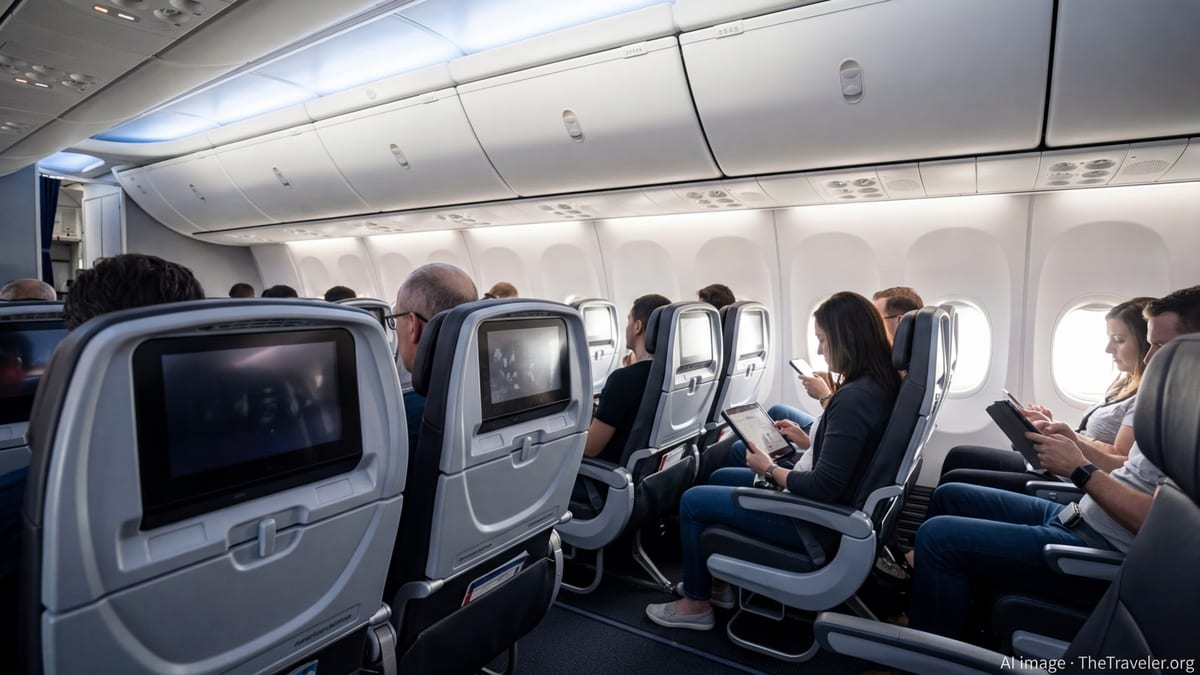
American Airlines is preparing a major overhaul of its domestic cabins, with plans to install seatback entertainment screens and add more premium seating across much of its narrowbody fleet, marking a sharp pivot from the bring-your-own-device strategy that has defined the carrier’s recent in-flight experience.
Get the latest news straight to your inbox!
Reversal From the Bring-Your-Own-Device Era
For several years, American’s approach to in-flight entertainment on domestic routes relied heavily on passengers using their own phones and tablets to stream content over onboard Wi-Fi. Most Boeing 737 and Airbus A321 aircraft were delivered or retrofitted without individual seatback monitors, even as competitors expanded those systems. Only a shrinking subset of Airbus A319s and premium A321 transcontinental jets retained built-in screens, and those were slowly being removed as cabins were standardized.
Recent information circulating in aviation and traveler communities indicates that the airline is now preparing to move back toward embedded systems on its narrowbody jets. A widely shared summary of an internal-focused announcement describes a plan to introduce modern seatback displays across new deliveries and future retrofits, with emphasis on larger, high-definition screens and improved connectivity. The move aligns American more closely with strategies pursued by United and Delta, which have both treated in-seat entertainment as a visible marker of a premium product.
Industry observers note that the shift also reflects changing expectations among travelers on domestic routes. While streaming to personal devices remains popular, complaints about small screens, limited device battery life and inconsistent Wi-Fi availability have remained persistent, particularly on longer flights. Installing dedicated displays at every seat gives American a way to deliver a more consistent experience regardless of the device a passenger brings on board.
Details of the Planned Seatback Screen Rollout
According to publicly available descriptions of the planned cabins, American intends to equip future narrowbody aircraft with what are described as state-of-the-art seatback systems at every seat. The airline’s upcoming Boeing 737 MAX 10 and Airbus A321neo deliveries are expected to feature the new hardware from the factory, while a portion of the existing fleet is slated for retrofit as aircraft cycle through heavy maintenance.
The envisioned systems focus on larger screen sizes than those found on many current domestic jets in North America, with high-resolution displays and integrated power at each seat. Reports indicate that new-generation units will consolidate electronics behind the screen rather than under the seat, which can help reduce weight and improve legroom. The design is expected to support Bluetooth audio pairing, allowing passengers to use their own wireless headphones without adapters.
The timeline for the rollout is expected to stretch over several years. Narrowbody aircraft in high-utilization domestic service typically undergo cabin overhauls in stages, meaning passengers will encounter a mixed experience during the transition. However, the inclusion of seatback entertainment as a standard feature on future deliveries suggests that over time, screens will become the norm again on American’s larger single-aisle jets rather than the exception.
Premium Seating Expansion Across Narrowbody Cabins
The entertainment upgrade is part of a broader cabin strategy that emphasizes more premium seats across American’s mainline fleet. In earlier filings and fleet presentations, the airline outlined plans to increase the number of domestic first class seats on its Airbus A319 and A320 aircraft through retrofits, as well as to configure incoming large narrowbody jets with expanded premium cabins. Those plans are now being tied more explicitly to the installation of enhanced in-seat technology.
Summaries of American’s latest cabin plans describe Boeing 737 MAX 10 aircraft entering the fleet with 24 first class seats, while Airbus A321neo jets are also expected to feature additional seats at the front of the cabin compared with some current configurations. Main Cabin Extra, the extra-legroom economy section, is set to be expanded on many aircraft, adding more rows with additional pitch, early boarding and dedicated overhead bin access.
By pairing more premium seats with modern seatback screens, American is positioning its narrowbody cabins as a step up from the high-density layouts that drew criticism in recent years. Industry commentary suggests that the airline is seeking to close a perceived gap with rivals that have invested heavily in in-flight comfort and entertainment, especially on key business and transcontinental routes where customer expectations are higher.
Competitive and Financial Context
American’s renewed embrace of embedded entertainment comes as major U.S. carriers use cabin investments to differentiate themselves in a crowded domestic market. United has pursued a large-scale retrofit program that adds seatback screens, Bluetooth audio and power to the majority of its mainline fleet, while Delta has long promoted in-seat entertainment as part of its brand. American, by contrast, had leaned on streaming to personal devices as a way to reduce weight and complexity.
Reintroducing seatback systems represents a notable capital commitment. Industry data shows that fitting a single aircraft with modern in-flight entertainment hardware can cost several million dollars once equipment, installation and downtime are considered. American’s decision to move forward suggests a belief that higher customer satisfaction, stronger loyalty among frequent flyers and a clearer premium identity will justify the investment over the life of the aircraft.
Financial disclosures and fleet planning documents in recent years have highlighted American’s focus on increasing the share of premium seats it sells, both domestically and internationally. Analysts have pointed to this “premiumization” strategy as a way to improve unit revenue without adding excessive capacity. In that context, embedding high-visibility enhancements such as larger screens, more comfortable seating and reliable power into narrowbody cabins is viewed as an important part of protecting yields on competitive routes.
What Passengers Can Expect in the Coming Years
For travelers, the most immediate change will likely appear on newly delivered aircraft entering service over the next few years. As those jets are assigned to trunk routes and business-heavy markets, passengers can expect to find a more technologically sophisticated cabin, with individual screens at every seat, USB and AC power within easy reach and expanded access to extra-legroom and first class seating.
Existing aircraft will transition more slowly, depending on maintenance cycles and retrofit capacity. Flyers booking well in advance may find it difficult to guarantee a particular configuration until American begins publishing more detailed fleet information reflecting the new layouts. However, observers anticipate that the airline will eventually promote seatback-equipped routes and aircraft types as selling points once a critical mass of the fleet has been upgraded.
As the project progresses, the carrier’s domestic experience is likely to look more familiar to passengers who have flown long-haul or on competitors in recent years, with a focus on screens at every seat and a clearer distinction between cabin classes. For American, the shift marks a significant course correction from its previous strategy and underscores how quickly expectations around in-flight comfort and entertainment can evolve in the U.S. market.