


More news on this day
American Airlines is embarking on one of its most sweeping cabin overhauls in years, unveiling plans to expand premium seating and bring back seatback entertainment screens across large parts of its fleet as it seeks to sharpen its competitive edge against Delta Air Lines and United Airlines.
Get the latest news straight to your inbox!
Strategic Pivot Toward Premium Revenue Growth
Publicly available investor materials and recent commentary from American Airlines leadership show a clear pivot toward premium revenue as a central pillar of the carrier’s strategy. After years focused on densifying cabins and steering customers toward streaming entertainment on their own devices, the airline is now emphasizing higher-yield seats, upgraded onboard amenities and a more consistent product across its network.
Documents filed with regulators and shared with investors outline plans for substantial growth in lie-flat business class and premium economy seats on long-haul aircraft over the next several years, alongside a notable increase in domestic first class and extra-legroom seating on narrowbody jets. Forecasts indicate that premium seating across the fleet is expected to grow significantly by the middle of the decade, building on aircraft orders announced in 2024 and subsequent reconfiguration programs.
The shift comes as American works to close a profitability gap with key rivals. Recent financial reporting and industry coverage highlight that Delta and United are generating stronger margins in part by selling more premium seats per flight. By aggressively expanding its own premium footprint, American is positioning itself to capture more high-spend leisure and corporate travelers, especially on competitive domestic and transatlantic routes.
Analysts note that the strategy also reflects broader industry trends. Airlines increasingly view cabin configuration as a primary lever to drive revenue rather than simply adding more flights. For American, investing in premium products, including revamped interiors tied to new aircraft deliveries, is emerging as a cornerstone of its effort to improve returns.
Cabin Reconfigurations Boost First Class and Extra-Legroom Seats
Fleet plans and retrofit diagrams shared in recent months point to noticeable changes for travelers accustomed to American’s current narrowbody layouts. On Airbus A319 and A320 aircraft, the airline is in the process of updating interiors with new powered seats, larger overhead bins and additional domestic first class capacity. Investor presentations describe higher first class seat counts on these models, along with expanded extra-legroom sections branded as Main Cabin Extra.
Similar adjustments are expected on upcoming Boeing 737 MAX 10 deliveries and select A321neo aircraft, where cabin layouts are being optimized to fit more premium seats without reverting to the highest-density configurations of earlier projects. Industry observers say this represents a shift away from the most controversial aspects of prior densification efforts, which reduced legroom and removed some passenger amenities.
Regional flying is also included in the premium push. Earlier aircraft orders and subsequent fleet updates indicate that American’s regional network will increasingly rely on dual-class jets equipped with first class, high-speed satellite Wi-Fi and in-seat power. Over time, the carrier expects nearly all regional capacity to feature some form of premium seating, narrowing the gap between mainline and regional products on key business and connecting routes.
While the full transition will take several years, the cumulative effect is expected to be a larger share of high-yield seats available for sale on both domestic and short-haul international services. For frequent flyers and corporate travel buyers, that means more opportunities to book or upgrade into premium cabins, particularly on routes that previously offered limited first class capacity.
Seatback Entertainment Returns to the Spotlight
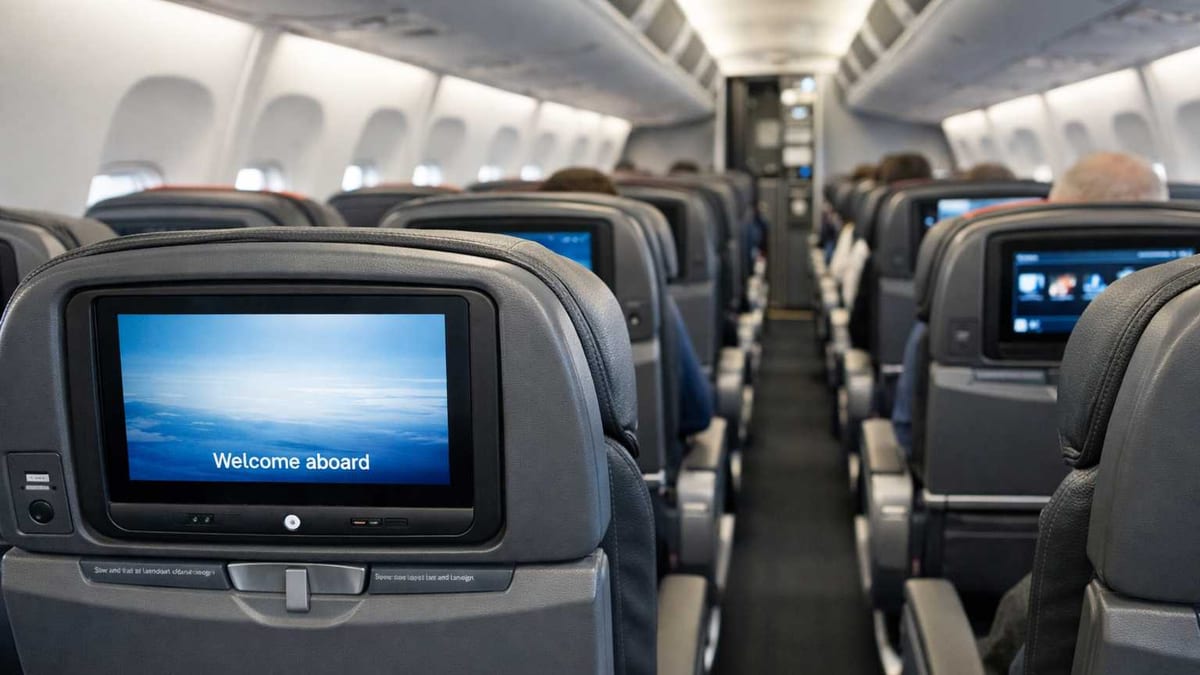
Perhaps the most eye-catching element of American’s latest plans is a reversal on seatback entertainment screens. After removing screens from many domestic narrowbody aircraft and promoting personal-device streaming as the preferred model, the airline now intends to install modern, high-resolution seatback systems across much of its narrowbody fleet over time.
Details circulating in industry reports and enthusiast communities describe a new generation of 4K-capable screens with Bluetooth audio, integrated power and improved responsiveness. These systems are expected to debut on future Airbus and Boeing narrowbody deliveries and subsequently appear on retrofitted aircraft, creating a more uniform entertainment offering for passengers who have long compared American unfavorably with rivals that maintained or expanded seatback options.
Widebody aircraft used for long-haul international flights already feature seatback entertainment in all cabins, and American has been promoting upgraded content and interfaces on these jets in recent years. The new narrowbody initiative would extend that experience to many domestic and transcontinental routes, aligning the carrier more closely with the in-flight entertainment strategies of Delta and United, both of which have been adding or refreshing seatback systems.
Consumer reaction has been closely watched, as the presence or absence of seatback screens has become a visible symbol of an airline’s approach to comfort and service. For American, committing to a new generation of embedded entertainment technology signals a willingness to invest in passenger-facing upgrades after a period when cost-focused modifications drew criticism from frequent travelers.
Competitive Pressures and Customer Expectations
The decision to expand premium seating and restore seatback screens is unfolding against a backdrop of intense competition among the largest U.S. carriers. Delta and United have both highlighted premium cabins, upgraded lounges and modern onboard technology as key differentiators, prompting scrutiny of American’s product choices and cabin layouts.
Travel industry coverage in mid-2026 points to a recognition within American that it must narrow the perception gap on comfort and amenities if it is to win more high-value customers. Improved Wi-Fi, refreshed cabins and more spacious seating are being framed as part of a broader effort to offer a more consistent, higher-quality experience, particularly for travelers who have multiple carrier options on key domestic and international routes.
Customer expectations have evolved as well. Even on shorter flights, many travelers now anticipate power at every seat, reliable connectivity and an intuitive entertainment interface. Seatback screens, once considered an optional extra, are increasingly viewed by some flyers as a baseline feature on full-service airlines. By reversing previous decisions and investing heavily in new hardware, American is acknowledging that differentiation on service and comfort can be as important as schedule or price.
Industry analysts caution that the transition will not be instantaneous. Installing new seats, reconfiguring cabins and rolling out advanced entertainment systems require aircraft downtime and significant capital. However, the carrier’s recently updated fleet and product roadmaps suggest that travelers will begin to see the changes materialize progressively across the network as new aircraft arrive and retrofits accelerate.
What Travelers Can Expect in the Coming Years
For passengers, the practical impact of American’s premium push and entertainment overhaul will vary by route and aircraft type, especially in the near term. Travelers on long-haul international flights will continue to see lie-flat business class and premium economy cabins, with incremental enhancements as refreshed interiors and new aircraft enter service.
On domestic and short-haul international routes, more aircraft are expected to offer larger first class cabins, additional Main Cabin Extra rows and upgraded seats featuring improved cushioning, power outlets and modern styling. Over time, a growing share of narrowbody flights should also include seatback entertainment, giving customers the choice between streaming to personal devices and using the built-in screen.
Industry observers note that American has tied much of this transformation to its broader digital and loyalty strategies. Better cabin hardware supports higher-value fare products, branded seating options and more personalized offers to members of the airline’s frequent-flyer program. As the new layouts and entertainment systems roll out, the carrier is likely to refine how these products are marketed and priced across booking channels.
While the full scope of the changes will take years to be fully realized, the combination of expanded premium seating and a renewed commitment to seatback entertainment marks a notable course correction for American. For travelers watching the evolution of the big three U.S. carriers, it signals that the battle for premium-minded passengers will increasingly be fought on the quality, not just the quantity, of seats in the sky.