


More news on this day
China Southern Airlines has opened its first dedicated cargo route to Norway, establishing a new air bridge between Oslo and Shanghai that is set to carry up to 200 tonnes of Norwegian salmon to China every week.
Get the latest news straight to your inbox!
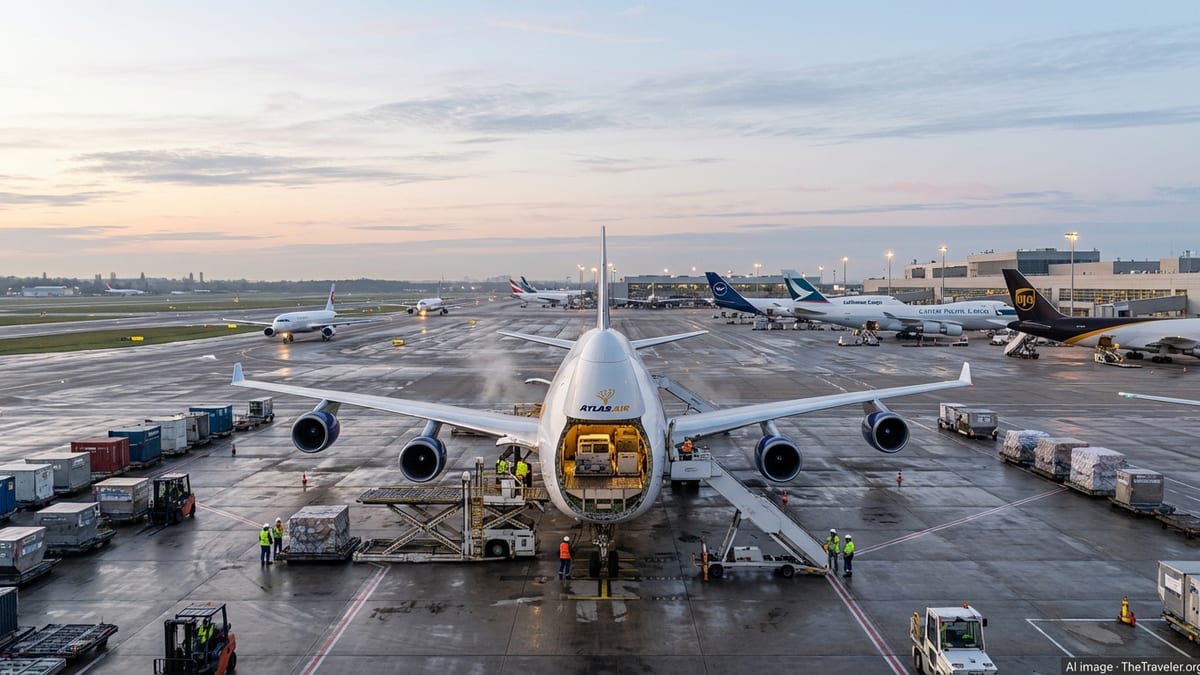
First Scheduled China Southern Service into Norway
The new cargo connection began operations on 19 August 2026, linking Oslo Airport Gardermoen with Shanghai Pudong via a nonstop freighter service. Publicly available information shows that the route is operated twice weekly with Boeing 777F aircraft, each offering around 100 tonnes of cargo capacity per flight.
According to published coverage, this is China Southern’s first regular scheduled service to Norway, marking a milestone in the airline’s European cargo network. The launch gives Oslo its first direct dedicated China Southern freighter link to mainland China, strengthening the airport’s role as a Nordic hub for long-haul air freight.
Reports indicate that the inaugural flight received the traditional water salute on arrival at Gardermoen, underscoring the strategic importance of the service for both the airline and the Norwegian cargo market. The operation is handled at Oslo by Oslo Seafood & Cargo Center, which already manages substantial seafood volumes through the airport.
By entering the Norwegian market with a point-to-point freighter route, China Southern is adding new capacity on one of the fastest-growing corridors for temperature-sensitive exports. The focus on Norway’s seafood industry positions the carrier to benefit from rising Asian demand for premium protein products.
New Salmon Air Bridge to China’s Consumer Market
Norwegian salmon is at the heart of the new operation. Avinor and other published sources indicate that during the initial phase, the Oslo–Shanghai service is expected to carry about 200 tonnes of fresh Norwegian salmon to China each week, using the two weekly Boeing 777F departures.
Short transit times are critical for the high-value seafood trade, and the direct Oslo–Shanghai link removes intermediate stops that previously added hours to the journey. Public information from Norwegian logistics and aviation outlets highlights that the new routing is designed to get salmon from production regions, via Gardermoen, into Chinese distribution networks while maintaining maximum freshness.
China has emerged as one of the most important growth markets for Norwegian seafood, with salmon accounting for a major share of export value to the country. Trade data cited in recent aviation coverage note that Norway shipped well over 100,000 tonnes of seafood to China in 2025, and industry expectations point to continued volume growth as urban consumers increase their intake of imported fish.
By branding the service around fresh salmon and other chilled seafood, China Southern is effectively creating a specialized air bridge between Norway’s aquaculture sector and Chinese wholesalers, retailers, and food-service buyers. This reinforces Norway’s position as a leading global supplier of farmed Atlantic salmon to Asia’s premium segments.
Boost for Oslo’s Role as a Nordic Cargo Hub
The launch of the China Southern route further consolidates Oslo Airport’s status as a central logistics platform for Norwegian seafood exports. Avinor’s cargo statistics show that a significant share of Norway’s air freight volumes already originates from seafood, much of it consolidated at dedicated facilities near the runways at Gardermoen.
With the addition of the twice-weekly 777F operation, the airport gains up to 200 tonnes of extra weekly widebody capacity directly into East Asia. Industry reports describe this as a competitive advantage for Norwegian exporters, who now have more direct options when choosing how to reach Chinese buyers, especially during peak seasons around holidays and promotional campaigns.
Norwegian logistics media also emphasize that more point-to-point cargo routes reduce dependence on intermediary hubs in continental Europe or the Middle East. This can translate into shorter lead times, more predictable handling, and potentially lower spoilage risks for fresh products such as fillets and high-end whole fish.
For Oslo, the China Southern service aligns with a long-term strategy to attract international freighter operators and strengthen connectivity for Norway’s export industries. Additional long-haul cargo offerings can also support other outbound commodities and balance inbound flows of consumer goods and e-commerce shipments destined for the Nordic region.
Strategic Expansion of China Southern’s Cargo Network
The new Oslo–Shanghai cargo route reflects a broader expansion of China Southern’s international logistics footprint. Company disclosures and regional media reports describe the airline’s current strategy as focused on building high-capacity corridors between China and key trading partners, including Europe’s northern markets.
By choosing Norway for its first dedicated cargo route into the country, the airline is tapping into a niche but high-yield segment centered on cold-chain logistics. The Boeing 777F fleet, among the largest dedicated freighters in commercial service, is well suited for moving dense, temperature-controlled loads such as seafood over long distances between Asia and Europe.
Coverage from Chinese and Norwegian outlets indicates that the carrier views the Oslo route as a platform for broader cooperation with Scandinavian exporters and logistics providers. The direct air bridge to Shanghai, a major Chinese gateway for both domestic distribution and onward connections in East Asia, could eventually support additional commodities beyond seafood.
In parallel, the route strengthens Shanghai Pudong’s position as a key hub for perishables moving into China’s metropolitan areas. Consolidated salmon imports via air freight can be transferred quickly into cold storage, processing facilities, and regional distribution networks serving major cities along the eastern seaboard.
Implications for Norway–China Trade and Seafood Logistics
Industry analyses suggest that the China Southern service may have wider implications for Norway–China trade patterns. A more robust direct air link can encourage exporters to prioritize the Chinese market for premium product lines, while also giving Chinese buyers greater confidence in supply reliability.
Trade publications highlight that tariffs and changing market access conditions in other destinations have increased the relative importance of Asia for Norwegian salmon producers. Additional dedicated capacity to Shanghai could therefore help diversify risk and support long-term sales contracts with Chinese partners.
The route also underscores the ongoing shift toward specialized cold-chain infrastructure at key Nordic airports. Facilities such as Oslo Seafood & Cargo Center, which is responsible for handling the new China Southern flights, are designed to manage large volumes of temperature-sensitive goods efficiently, from arrival at the terminal through to aircraft loading.
Looking ahead, sector observers note that sustained demand for fresh salmon and other seafood in China could encourage further growth in direct freighter capacity from Norway. The success of the Oslo–Shanghai operation will likely be watched closely by both competing airlines and other Nordic hubs seeking to capture a greater share of the seafood logistics value chain.
Avinor: New cargo route will carry 200 tonnes of Norwegian salmon to Shanghai every week
Aviation.Direct: China Southern Airlines connects Oslo with Shanghai
TravelWires: China Southern launches Oslo–Shanghai cargo route
NewsGD: China Southern launches cargo route to Norway, bringing Norwegian seafood to China