


More news on this day
Japan’s tourism industry is facing fresh headwinds as a Chinese government advisory discouraging travel to Japan ripples through flight schedules, airline policies and trip planning for major destinations such as Tokyo, Kyoto and Osaka.
Get the latest news straight to your inbox!
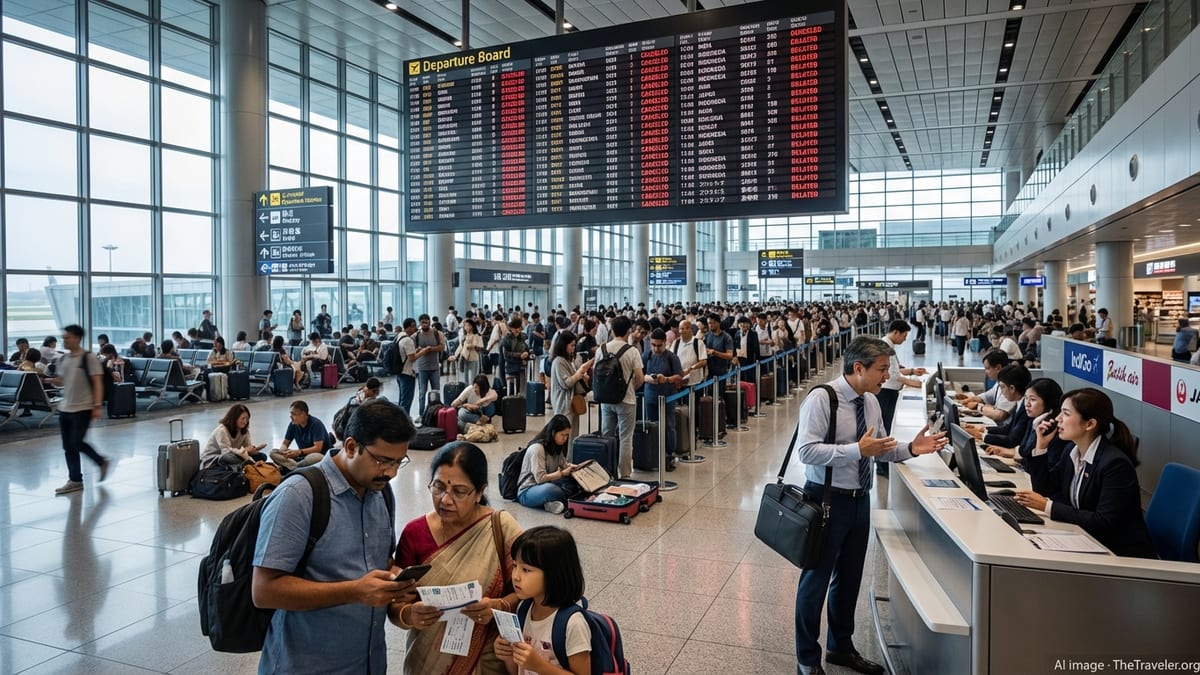
Sharp Drop in China–Japan Flights Hits Key Gateways
Publicly available aviation data and industry analysis indicate that capacity between mainland China and Japan has contracted sharply through early 2026. Platforms tracking airline schedules show that in some recent months more than one third of all planned flights on China–Japan routes were canceled, with several reports pointing to cancellation rates approaching or exceeding 40 percent on certain days. The reductions have been particularly visible during high-demand periods such as the spring cherry blossom season and the May Day holidays, when Chinese travelers would normally fill aircraft and hotels across Japan.
The impact is especially acute at Kansai International Airport near Osaka, a key entry point for travelers combining Osaka with Kyoto, Nara and Kobe. Route-level breakdowns referenced in regional business media describe entire links from secondary Chinese cities to Kansai being temporarily wiped from schedules, leaving only a reduced core of services from major hubs such as Shanghai and Beijing. While airports in Tokyo have retained more connectivity, they too are experiencing elevated disruption compared with typical pre-crisis patterns.
Analysts note that these cancellations come after a period in which China was viewed as the cornerstone of Japan’s inbound travel recovery. Before the pandemic and the current diplomatic tensions, visitors from mainland China were not only the largest source market by volume, but also among the highest spenders per trip. The sudden contraction in flights is therefore being interpreted as a significant setback for tourism operators that had been banking on renewed Chinese demand.
At the same time, some observers highlight that Japanese and third-country carriers continue to operate a substantial share of remaining seats. Travelers who are willing to connect via Seoul, Hong Kong, Taipei or Southeast Asian hubs still have options, but these routings often come with higher fares and more complex itineraries, complicating travel planning for both Chinese residents and international visitors using China as a transit point.
Airlines Respond With Refunds, Rebooking and Route Cuts
Major mainland Chinese airlines have responded to the advisory and weakened demand by rolling out unusually flexible refund and change policies for Japan-bound tickets. Reports in regional newspapers and travel trade publications describe how the country’s three largest carriers extended free refund and rebooking offers for itineraries covering much of 2026, initially through late March and then further into the northern summer schedule. These policies apply in particular to flights purchased before the escalation of diplomatic tensions.
In parallel, schedule data compiled by aviation analytics firms and summarized in business outlets shows that dozens of China–Japan routes have been fully suspended, while others operate at significantly reduced frequency. Some analyses speak of more than 50 individual routes being taken offline over recent months, amounting to a cut of well over half of Chinese-operated capacity on the corridor at certain points. Smaller regional airports in Japan appear to be bearing a disproportionate share of these suspensions, losing direct links that had been important for inbound group tours.
The dynamic has practical consequences for travelers. Online discussion forums and consumer media are filled with accounts of passengers receiving late notice of cancellations on Chinese carriers, then seeking rebooking on Japanese or other Asian airlines at short notice. In many cases, travelers report obtaining full refunds but facing higher prices or longer routings on alternative flights. Travel advisors suggest that passengers heading to Tokyo, Osaka or other major cities increasingly prefer to book with non-Chinese airlines to minimize the risk of politically driven schedule changes.
For the airlines themselves, the downturn in China–Japan traffic is prompting a reorientation of capacity. Public information on booking trends indicates that some Chinese carriers are redeploying aircraft to other international markets, including Southeast Asia and parts of Europe, where demand is more resilient. Japanese airlines, meanwhile, are working to fill seats with travelers from other source markets, though replacing the scale and spending power of Chinese tour groups remains a challenge.
Tourism Hubs from Tokyo to Kyoto Feel the Slowdown
The cutback in Chinese visitor numbers is being felt on the ground in Japan’s best-known tourist centers. Coverage by Japanese and Chinese media alike points to a pronounced decline in arrivals from the mainland from late 2025 into 2026, with some estimates suggesting a drop of more than 50 percent year on year in early 2026. This retreat is particularly evident in areas that historically relied on group tours, duty-free spending and shopping excursions tailored to Chinese travelers.
In Tokyo, retailers in popular districts such as Ginza, Shinjuku and Asakusa have reported softer sales that coincide with the timing of the advisory and subsequent flight cancellations. Public comments from department store operators and hospitality companies referenced in business reporting link weaker performance partly to a falloff in Chinese tour groups, even as visitors from other Asian markets and Western countries continue to grow.
Kyoto and Osaka are experiencing similar patterns. Local tourism boards and city-level statistics, as summarized in regional coverage, show that hotel occupancy tied to Chinese tour operators has slumped compared with other source markets. Businesses serving large groups, from coach companies to restaurants near major temples and attractions, are described as facing more volatile bookings and shorter lead times. Some have started pivoting to independent travelers from Europe, North America and Southeast Asia to fill gaps left by organized tours from China.
Smaller destinations that had become fashionable among Chinese travelers during the pre-pandemic boom, such as hot spring towns and regional cultural sites, are also adjusting. Reports indicate that some local governments are stepping up marketing in South Korea, Taiwan and Southeast Asia, as well as promoting domestic tourism, in an effort to cushion the blow from reduced Chinese demand.
Visa Rules, Safety Messaging and Trip Planning Uncertainty
While China’s advisory discouraging travel to Japan is at the center of the downturn, visa policies and safety messaging on both sides are adding additional layers of complexity for travelers. Statements published by Chinese cultural and foreign affairs bodies cite a deteriorating security environment for Chinese citizens in Japan and point to political disputes, including tensions over Taiwan and criticism of Japan’s policies related to treated water releases from Fukushima, as reasons to exercise caution.
Japan has not introduced new visa barriers targeting Chinese tourists in response, and its broader policy continues to emphasize the importance of inbound travel for economic recovery. However, publicly available travel guidance from both Chinese and Japanese authorities has led many prospective visitors to reassess itineraries, particularly group organizers responsible for large tour movements. Travel agencies in mainland China, according to domestic media reports, have been trimming or postponing Japan packages in favor of destinations perceived as less politically sensitive.
These developments are affecting trip planning far beyond those traveling on Chinese passports. International travelers who had intended to route through Chinese hubs on their way to Japan are now contending with heightened uncertainty about schedules, as evidenced by a proliferation of rebooking stories on travel forums. Industry commentators advise checking whether tickets are on a single booking reference and, where possible, choosing airlines and routings with stronger records of operational stability on Japan services.
In this environment, both Japanese and Chinese travel businesses are recalibrating expectations. Forecasts by research institutes and bank economists cited in recent reports suggest that a meaningful rebound in Chinese arrivals to Japan may be unlikely in the next six to twelve months unless there is visible improvement in bilateral relations and a relaxation of the advisory. For tourism operators in Tokyo, Kyoto, Osaka and other popular destinations, the near-term focus appears to be on diversification of source markets and careful cost management while waiting for political winds to shift.