


More news on this day
China’s countryside, long overshadowed by the country’s futuristic skylines, is emerging as a powerful new magnet for international travelers as rural tourism, slow-paced country walks and heritage-rich village stays reshape how visitors experience the world’s second-largest tourism market.
Get the latest news straight to your inbox!
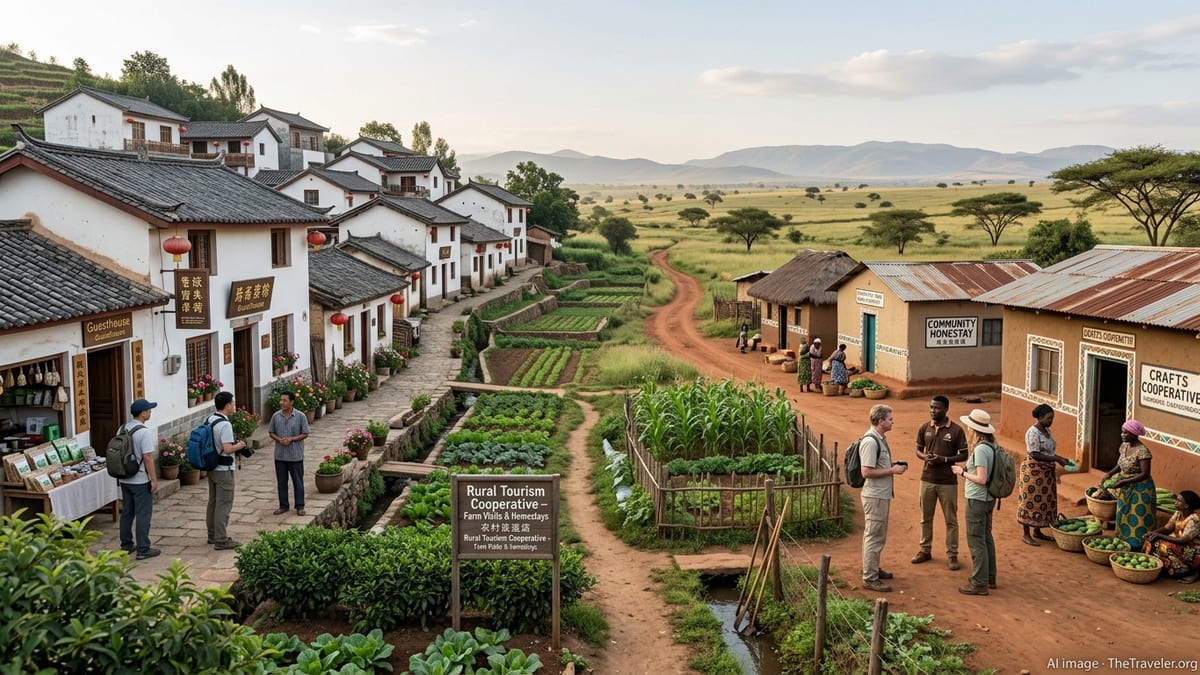
Rural Tourism Surges on the Back of Domestic Revival
China’s broader tourism rebound is creating fresh momentum for rural destinations, as millions of domestic trips spill beyond familiar city circuits and into the hills, river valleys and historic market towns that once lay far from the travel map. Official data for 2024 show strong double-digit growth in domestic trips, underscoring a solid foundation for lesser-known regions now competing for attention alongside Beijing, Shanghai and Shenzhen.
Published information from China’s Ministry of Culture and Tourism indicates that rural tourism has become a strategic pillar within national efforts to upgrade the sector, diversify destinations and spread tourism income more evenly. Policy frameworks linked to the country’s rural revitalization drive have encouraged investment in small-scale lodging, cultural programming and infrastructure that can support higher visitor numbers without overwhelming fragile landscapes.
Industry analysis suggests that this wave of domestic interest is steadily influencing international travel behavior. Global tour operators increasingly package countryside overnights, tea-terrace strolls and village walking routes into China itineraries that once focused almost exclusively on imperial landmarks and urban skylines. Travel trade reports point to growing demand from Europe and Asia-Pacific for slower, experience-led trips that combine marquee cities with at least a few days in the countryside.
Observers note that this shift is part of a wider trend in global tourism, where travelers seek immersive, place-based experiences in smaller communities. In China’s case, the change is especially striking given the dominance of its megacities in the country’s international image over the past two decades.
Homestay Boom Rewrites the Village Economy
One of the most visible signs of the countryside’s transformation is the rapid expansion of rural homestays, which range from simple family guest rooms to carefully restored courtyard houses and design-forward lodges in former farmsteads. Reports from provinces such as Hebei, Zhejiang and Anhui describe once-poor or sparsely populated villages where renovated homes now host a steady flow of visitors drawn by terraced fields, tea mountains and vernacular architecture.
Case studies compiled by Chinese and international media outline how this model has reshaped local economies. In mountain hamlets around Huangshan and in lakeside communities in Jiangsu, idle houses have been converted into guest accommodation, cafes and studios for crafts, turning underused assets into income-generating spaces. Rural households that previously relied on seasonal factory work or farming now supplement earnings by hosting visitors, guiding walks or cooking regional specialties.
Academic research on rural tourism and homestay development in China notes that these projects often go beyond straightforward lodging. Many combine agricultural experiences, such as tea picking or bamboo shoot harvesting, with cultural workshops and seasonal festivals. This integrated approach aims to keep visitors longer, deepen their connection with local traditions and reduce pressure on headline scenic spots by spreading footfall over a wider area.
International travelers benefit from a more intimate window into everyday village life, while local communities gain incentives to maintain historic houses, stone pathways and traditional irrigation systems that might otherwise fall into neglect. Analysts caution, however, that success depends on careful planning to avoid overcommercialization and ensure that rising land values and property conversions do not edge out long-term residents.
Country Walks and “Slow Lanes” Appeal to Global Wanderers
Alongside homestays, curated country walks and multi-day hiking routes are helping to position rural China as a destination for travelers seeking quiet paths, fresh air and unhurried encounters. Across eastern and southwestern provinces, local governments and tourism operators have upgraded old village trails, field paths and tea-horse routes into marked walking circuits designed for independent travelers and small groups.
Travel features in international and Chinese media highlight Zhejiang’s wooded hills, the misty villages of Anhui and the rice terraces of Yunnan and Guizhou as rising stars for low-intensity hiking and photography. These regions are increasingly marketed as “slow lanes” where visitors can trade traffic and neon for early-morning bird calls, open-air markets and evening gatherings in ancestral courtyards.
Industry observers point out that such offerings fit a broader global interest in soft adventure, where the emphasis lies not on extreme sports but on extended time outdoors combined with cultural immersion. In China, this often means half-day walks linking clusters of villages, with stops at small museums, farmhouses or family-run tea workshops. Some itineraries now weave in visits to nationally recognized “beautiful leisure villages” and destinations highlighted in international programs showcasing best practices in rural tourism.
Travel planners note that accessibility has improved markedly. High-speed rail links and upgraded country roads have shortened travel times between major gateways and remote valleys, making weekend village escapes feasible for urban residents and simplifying logistics for foreign visitors who once faced long bus journeys to reach the countryside.
Heritage Villages Step Onto the World Stage
China’s traditional villages, with their stone alleys, wooden drum towers and whitewashed courtyard homes, are increasingly central to the country’s international tourism narrative. Historic settlements in provinces such as Anhui, Zhejiang, Yunnan and Sichuan have been featured in global rankings and awards that spotlight rural destinations balancing cultural preservation with visitor welcome.
Published compilations from tourism bodies list several Chinese villages among leading rural destinations worldwide, citing their efforts to safeguard intangible heritage, from Hui-style architecture and Hani rice terrace culture to Miao and Tibetan craft traditions. Many of these places have established small-scale museums, cultural halls and seasonal performances that help visitors contextualize what they see in village streets.
Chinese-language policy documents show that thousands of villages have been identified as key sites for rural tourism and cultural protection, with funding allocated for the repair of ancestral halls, stone bridges and historic irrigation works. In some Jiangnan water towns and southwestern minority villages, planners have favored “micro-renovation,” updating interiors and utilities while preserving weathered facades and street patterns that convey a sense of continuity.
For international visitors, these heritage-focused villages offer an alternative to reconstructed “old streets” in big cities. Travel writers note that while tourism inevitably shapes local life, many countryside destinations retain working farms, active temples and family homes, offering a layered experience where past and present overlap rather than standing apart as museum pieces.
Balancing Authenticity, Environment and Visitor Growth
The rapid rise of countryside tourism in China also raises questions that resonate globally about authenticity, environmental impact and the limits of growth. Commentaries in travel and academic publications observe that some villages risk becoming highly commercialized, with souvenir streets and standardized facades that blur distinctions between regions.
In response, planners and researchers increasingly stress the importance of landscape protection and community participation. Recent studies on rural tourism in China argue that visitors respond strongly to authentic rural scenery, traditional farming practices and intact village layouts, and that preserving these elements can support repeat visitation as effectively as new attractions.
Environmental considerations are gaining prominence as well. Mountain villages near popular hiking areas and scenic lakes face pressures on water resources, waste management and fragile ecosystems. Publicly available guidelines encourage smaller-scale developments, green building practices and caps on visitor numbers in ecologically sensitive zones, in line with broader national goals for low-carbon and nature-friendly tourism.
For international travelers, these debates may not be visible in day-to-day itineraries, but they shape what is on offer, from the number of guest rooms in a valley to whether rice terraces remain actively farmed rather than purely decorative. The direction of policy and investment suggests that China’s countryside will continue to play a larger role in the country’s travel story, providing quieter, slower alternatives that complement the spectacle of its megacities rather than competing with them.