


More news on this day
Canadian National Railway and federal transportation investigators are examining a train derailment near Thorold, Ontario, that disrupted Welland Canal operations and Niagara-region rail service but resulted in no reported injuries, according to local and national coverage.
Get the latest news straight to your inbox!
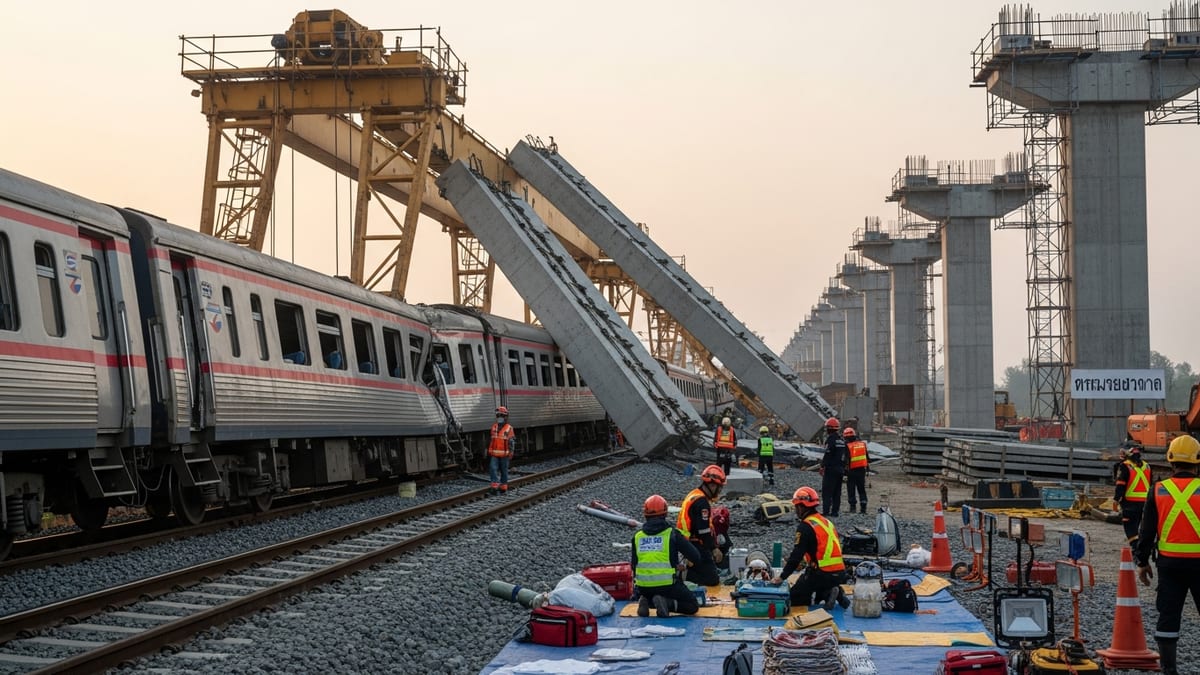
Derailment near Welland Canal snarls traffic and shipping
Reports indicate that several CN freight cars derailed on March 30 near the Welland Canal corridor between St. Catharines and Thorold, affecting both rail and road movements through one of southern Ontario’s key transportation bottlenecks. Coverage from regional outlets describes rail cars left stranded on a bridge above one of the canal locks, forcing the closure of nearby routes for vehicles and pedestrians while crews stabilized the site and assessed damage.
Publicly available information shows that the derailment occurred close to locks used by commercial shipping on the Welland Canal, part of the St. Lawrence Seaway system that connects Lake Erie and Lake Ontario. While canal traffic continued under controlled conditions, images and local reports suggest that operations at one of the twin flight locks were significantly constrained while rail equipment remained positioned over the structure.
CN indicated through statements referenced in news reports that trains were halted in the area while safety checks and repairs were underway. The incident also added pressure to a busy multimodal corridor where marine, rail, and road traffic intersect in tight proximity, heightening public concern about rail safety in the Niagara region.
CN and Transportation Safety Board launch parallel inquiries
According to published information from the Transportation Safety Board of Canada, a team of investigators was deployed to the Niagara area following the derailment of a CN freight train in the St. Catharines–Thorold corridor. The deployment signaled that the event met the federal threshold for a detailed safety investigation, focused on identifying causal and contributing factors rather than assigning blame.
Coverage citing CN statements notes that the railway has opened its own internal investigation into the derailment. Company investigators typically review train handling data, track inspection records, equipment maintenance histories, and operating conditions at the time of the incident. Although specific details for the Thorold-area derailment have not yet been released, similar past cases have examined issues such as track geometry, wheel and rail wear, and train make-up.
Publicly available TSB guidance indicates that the field phase of such an investigation usually involves securing the scene, photographing and documenting the position of rolling stock, and collecting physical evidence for further analysis. Investigators may later conduct simulations or technical studies before publishing findings and, where warranted, safety recommendations.
Rail and commuter disruptions ripple across Niagara region
Regional news coverage shows that the derailment had an immediate impact on passenger and freight movements through Niagara. GO Transit service on the Lakeshore West line, which connects Niagara Falls to the Greater Toronto and Hamilton Area, experienced cancellations and modified operations following the incident, with replacement buses used on some segments while the CN main line remained partially blocked.
Local reports describe extended closures along the Welland Canals Parkway and nearby crossings, limiting access between St. Catharines and Thorold for residents, truck traffic, and visitors. Detours added time and complexity for commuters and commercial drivers, particularly those serving industrial facilities and port operations clustered around the canal.
CN indicated through public statements cited in news articles that crews were working to restore operations as quickly as safety would allow. Within days, partial rail service resumed through the area, though some restrictions reportedly remained in place while engineering assessments of track, bridges, and signaling infrastructure continued.
Community concerns highlight broader rail safety debate
The Thorold-area derailment has renewed discussion about freight rail safety in communities built closely around legacy rail corridors. Residents and local commentators have questioned how derailments near waterways, bridges, and urban neighborhoods fit into national standards for risk management and emergency planning.
Across Canada, the TSB’s publicly available reports on earlier CN derailments have pointed to a range of recurring risk factors, including track defects, extreme weather effects on rail infrastructure, train handling practices, and equipment failures. Safety advocates in Niagara have linked the Thorold incident to these wider patterns, arguing for stronger oversight in corridors that share space with passenger trains and marine infrastructure.
Municipal leaders in the region have previously raised questions in open forums about rail capacity, dangerous goods routing, and emergency access near the Welland Canal and adjacent communities. While there is no indication from current coverage that hazardous materials were released in the Thorold derailment, the incident has contributed to ongoing calls for transparent risk assessments and clearer communication with nearby residents.
Next steps in the investigation and possible safety measures
According to TSB practice in similar main-track derailments, the Thorold investigation is likely to extend over many months, moving from on-site evidence collection to detailed technical analysis. Once completed, the board typically releases a public report outlining what occurred, why it happened, and what safety action could reduce the likelihood of recurrence.
Potential outcomes may include recommendations on track inspection frequency in high-consequence areas, guidelines for train speed and length near critical infrastructure such as canal bridges, or changes to how freight and passenger movements are coordinated through shared corridors. CN, federal regulators, and local stakeholders would then be expected to respond to any recommendations directed at them.
For now, traffic on the Welland Canal and CN’s Niagara line has largely resumed, but the derailment near Thorold remains under scrutiny as investigators piece together the sequence of events. The findings will be closely watched by municipalities along the canal, tourism and logistics operators that depend on reliable transport links, and travelers moving through one of Ontario’s most important gateways between the Great Lakes and the Toronto region.