


More news on this day
Operations at Nashville International Airport are stabilizing after a commercial power outage triggered a Federal Aviation Administration ground delay program on Saturday, with power now restored and flights gradually returning to normal schedules.
Get the latest news straight to your inbox!
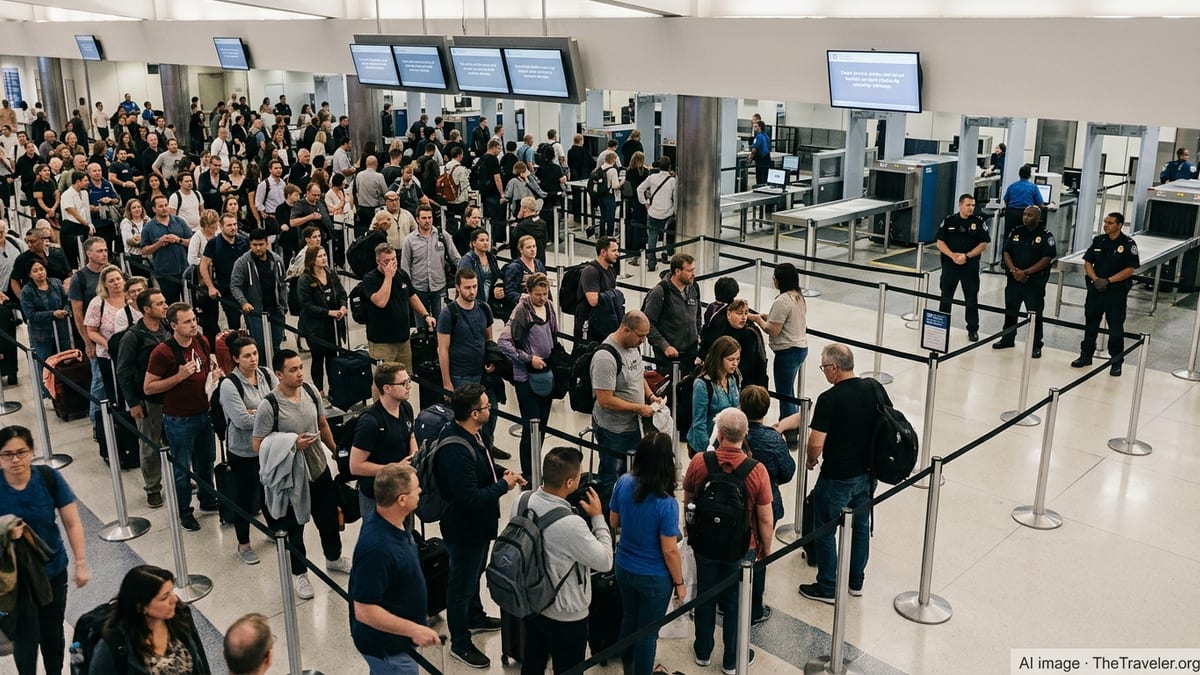
Power outage triggers ground delay at BNA
A commercial power outage in the Nashville area led to significant disruption at Nashville International Airport on June 27, prompting federal traffic managers to put a ground delay program in place for the airport. Planning advisories from the national air traffic control system indicated that the program was initiated as local controllers shifted airspace responsibilities and contingency procedures were activated to manage inbound traffic.
The ground delay program meant that many departing flights bound for Nashville were held at their origin airports, while some aircraft already en route were sequenced more slowly into the region. Publicly available aviation data and airport monitoring platforms showed extended arrival times and a buildup of delays across a number of major domestic carriers serving Nashville.
While runway infrastructure remained available, the combination of the electrical disruption and temporary changes to how the surrounding airspace was managed led to a reduction in the rate at which aircraft could land. As a result, even flights not directly affected by the outage itself experienced knock-on delays.
Ground delay lifted as systems and air traffic flows recover
The ground delay program affecting Nashville was listed as active through the early evening hours before being lifted once power was restored and air traffic capacity improved. Updated planning advisories showed Nashville removed from the active program list, while other major hubs continued to manage their own weather and capacity constraints.
Live airport tracking services for June 27 show Nashville handling several hundred scheduled arrivals, with the majority operating, albeit with scattered delays. Flight boards reflected a mix of on-time operations, late arrivals, and some longer disruptions as airlines worked through the backlog that had built up while the ground delay was in place.
Even after a formal program ends, delays often persist as airlines reposition aircraft and crews and as ramp operations adjust to surges of arriving and departing flights. Observed data for Nashville on Saturday suggested that recovery was under way through the evening, with the spread of significant delays narrowing as the schedule absorbed earlier disruptions.
What the outage means for travelers
For passengers, the temporary ground delay translated into longer waits both at origin airports and within the Nashville terminal. Travelers heading into Music City encountered rolling departure time changes as flights were held to avoid overloading the constrained arrival flow into Nashville during the outage.
Travel information platforms that aggregate airport performance data indicate that Nashville, a rapidly growing mid-sized hub, has seen an uptick in delay pressure during peak travel periods. When a sudden event such as a power interruption occurs, the network has less spare capacity to absorb shocks, which can turn a brief local issue into hours of knock-on disruption for connecting itineraries.
Passengers with later departures on June 27 were more likely to see relatively minor schedule changes compared with those with flights scheduled in the first hours of the outage and ground delay. Industry guidance emphasizes that travelers should monitor airline apps and departure boards closely when ground delay programs are announced, as estimated times can shift repeatedly while air traffic controllers and carriers adjust to changing conditions.
Nashville’s growth and vulnerability to disruptions
Nashville International has been in the midst of a major transformation program, adding gates, expanding the terminal and reworking ground transportation and parking facilities to handle record passenger growth. Public documents detailing the airport’s capital program describe multi-year construction across the airfield and terminal complex, aimed at increasing long-term capacity and improving reliability.
At the same time, regional infrastructure has come under strain from severe weather and power reliability concerns in the broader Nashville area, with past storms and outages highlighting how quickly essential services can be affected. When local electrical interruptions occur near an airport, even short-lived events can interfere with terminal systems, support equipment and some navigation or communication services, depending on the scope of backup power coverage.
A combination of construction, high traffic volumes and regional power challenges can magnify the impact of a single outage. While the latest event at Nashville was resolved within hours, it underscores how closely air travel depends on resilient local utilities and carefully coordinated contingency plans between airport operators, utilities and the national air traffic system.
What travelers should watch in the hours ahead
With the ground delay now lifted and power restored, publicly accessible flight data for Nashville suggests that operations are trending back toward a more typical pattern, but residual delays may persist into the late evening as carriers reposition aircraft and crews. Passengers with flights into or out of Nashville in the next several hours are likely to see more stable departure times than those who traveled during the height of the disruption.
Analysts note that once a ground delay has ended, the key indicators to watch are the number of cancellations, the depth of remaining long delays, and whether new programs are issued for the same airport. As of early Saturday evening, available federal traffic summaries and airport status tools pointed to no ongoing nationwide restriction specific to Nashville, suggesting that the airport is moving into the recovery phase of the day’s disruption.
For travelers planning trips over the rest of the weekend, the episode at Nashville illustrates how quickly operational conditions can change and why building extra time into itineraries is advisable, particularly when connecting through busy hubs during summer travel season. While the airport appears to be returning to regular operations after the outage, industry observers view the event as another reminder of the tight margins under which the U.S. aviation system often operates.