


More news on this day
A Canadian National freight train derailed Sunday in the Le Gardeur sector of Repentigny, northeast of Montreal, leaving a jagged line of overturned railcars beside homes and arterial roads, and offering a stark visual reminder of how closely heavy industry and suburban life intersect along Quebec’s north shore.
Get the latest news straight to your inbox!
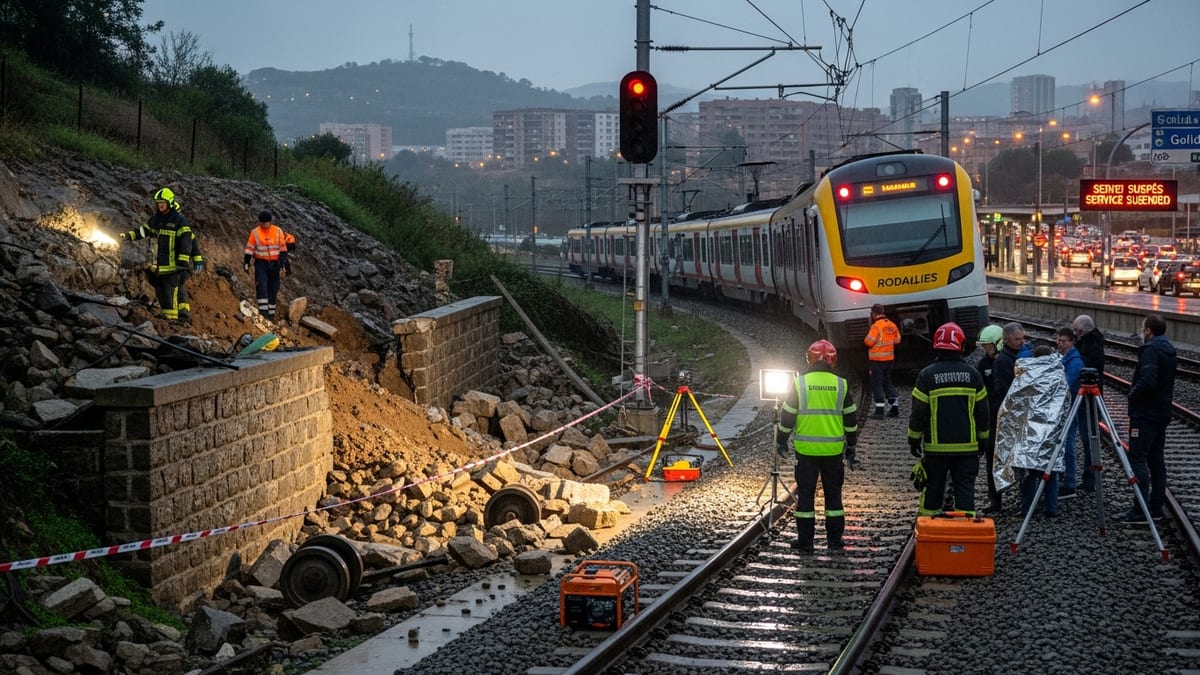
Twisted railcars beside quiet suburban streets
Early images from the scene show a long string of CN railcars lying at sharp angles to the tracks, some tipped on their sides, others leaning precariously against one another in an accordion of steel. The derailment occurred on July 5 at the intersection of boulevard le Bourg-Neuf and rue Émile-Genest in the Le Gardeur district of Repentigny, where the main line threads through low-rise homes, small businesses and local parks.
Photographs and broadcast footage highlight the contrast between the violence of the derailment and the calm suburban setting. Gravel from the ballast has spilled across adjacent service roads, couplers and wheelsets are visible in the dirt, and maintenance crews can be seen inspecting underframes and axles. Nearby, rows of single-family houses and manicured lawns appear just beyond the safety fencing, underscoring how little buffer exists between heavy freight operations and residential streets.
Reports from local and national outlets indicate that around 40 to 45 cars left the rails, with the derailed section stretching across several hundred metres. The line runs parallel to neighbourhood streets and local commercial strips, meaning the incident quickly became visible to residents and travelers passing through the northeast edge of the Montreal metropolitan area.
Despite the dramatic visuals, publicly available information shows that the train was largely composed of standard freight cars rather than tankers loaded with hazardous materials. Municipal updates and media coverage note that there were no fires, no leaks of dangerous goods and no serious injuries reported, a fact that shaped both the emergency response and the initial tone of public reaction.
Emergency cordon, heavy equipment and a race to clear the line
Scenes from the hours after the derailment focus as much on the response as on the damaged cars themselves. Road closures severed local access near the tracks, with barriers and patrol vehicles positioned at key junctions to keep residents and passing motorists away from the site. A visible perimeter formed around the most heavily damaged section of track as responders assessed the stability of leaning cars and checked surrounding properties.
Heavy equipment rapidly became part of the landscape. High-capacity cranes, hi-rail trucks and specialized maintenance vehicles lined the right of way as crews began the long process of re-railing cars, cutting damaged components and rebuilding the track structure. Spotlights and portable lighting rigs were brought in to support overnight work, creating a stark, industrial glow against the low-rise skyline of Repentigny.
Publicly available information from the Transportation Safety Board of Canada indicates that investigators were deployed to the site to document the position of the derailed cars, inspect the rails and switching apparatus and collect data needed to determine what led the train off the tracks. While that work proceeds, images show workers marking rail heads, measuring flange marks in the ballast and photographing wheelsets, all steps that typically precede a full technical report.
The visual footprint of the operation extends beyond the immediate site. Stockpiles of fresh ballast and replacement ties, strings of undamaged cars waiting on adjoining tracks, and temporary work zones along nearby roads all reinforce that the derailment has become a short-term infrastructure project in the heart of a commuter belt community.
Travel disruption for a key corridor into Montreal
Although the line is primarily used for freight traffic, the derailment has surfaced in travel advisories and regional coverage because of its location along a key corridor feeding into the Montreal area. Published reports note that freight movements through the sector were halted while wreckage was cleared, with rail operators rerouting or delaying trains that normally move through Repentigny toward the island of Montreal and further east.
For drivers, aerial and ground-level images show traffic detours where boulevard le Bourg-Neuf crosses the right of way, with vehicles redirected onto parallel streets and access points. Digital road signs, temporary cones and an increased presence of service vehicles add to the impression of a neighborhood temporarily reorganized around a rail emergency.
For visitors passing through greater Montreal, the scenes from Repentigny illustrate how a freight incident can ripple through a wider trip even without impacting passenger rail directly. Travel reports suggest that the immediate effects are concentrated on local road access and freight operations rather than on intercity passenger services, but regional congestion and slower freight flows can still influence delivery times, bus connections and drive times on the north shore.
In the days ahead, the most visible signs of disruption are likely to be the continuing work trains and engineering crews on site, followed by a period of reduced speeds once the line reopens. These speed restrictions, designed to protect newly repaired infrastructure, can have knock-on effects across a rail network that visitors may notice as minor delays or schedule adjustments.
A community on edge, but spared the worst
Images circulating from Repentigny capture not only the physical damage but also the proximity of rail operations to homes, schools and local businesses. Residents are seen standing behind tape lines and along sidewalks, watching cranes and work trains move slowly through the site. The tableau reflects a mix of curiosity and unease familiar from other rail incidents where neighborhoods have developed within sight of long-established freight corridors.
Context from previous accidents in Quebec, including the 2013 Lac Mégantic disaster, often frames public reaction when new derailments occur in the province. While the Repentigny incident did not involve hazardous materials or fire, the sight of derailed cars beside residential streets revives long-standing questions about what might happen if circumstances were different, particularly in dense suburban districts on the fringe of a major city.
Municipal updates and media coverage stress that no evacuations were required, no fuel spills were detected and the train’s cargo did not present an immediate toxic threat. That message, repeated in coverage across Quebec, has helped temper initial concern, even as images of crumpled metal and torn-up track continue to circulate widely.
For visitors staying in or near Repentigny, the derailment has quickly become a reference point in conversations about local safety and infrastructure. The damaged stretch of line sits close to residential streets and commercial strips that travelers may use to access the north shore’s parks, riverfront paths and highway network, making the visible cleanup effort a prominent feature of the local landscape.
Rail safety and urban growth under renewed scrutiny
The visual impact of the Repentigny derailment arrives at a time when rail safety across Canada is already under sustained attention. Publicly available corporate and regulatory documents show that major freight operators, including CN, have been emphasizing safety performance metrics and infrastructure investment, even as traffic volumes and urban development continue to grow along key corridors.
Scenes from this incident in Le Gardeur illustrate the practical challenge of operating long, heavy freight trains through communities that have expanded toward the tracks over decades. Backyards back onto rail rights of way, arterial roads cross the line at grade or over short bridges, and recreational paths often run within sight of trains, bringing residents, commuters and visitors into daily proximity with heavy rail activity.
For travelers planning routes through the Montreal region, the derailment highlights the value of monitoring local news and municipal advisories when itineraries involve driving or staying near major freight lines. While published information indicates that the Repentigny incident has not caused widespread passenger service disruption, temporary closures and detours can still affect hotel access, driving times and logistics for road trips that follow the north shore.
As investigators work through the technical causes and rail operators restore normal service, the enduring images from Repentigny are likely to be those of bent rails and toppled cars framed by residential streets and suburban skies. For a traveling public that increasingly expects seamless mobility, they serve as a reminder that even routine freight movements can, on rare occasions, reshape the landscape of a neighborhood in a matter of seconds.