


More news on this day
Colombia’s already fragile air travel network has been hit by another wave of disruption as more than a dozen additional flights involving United, Avianca, Spirit and other carriers are cancelled across Bogotá, Medellín, Cartagena and Cali, squeezing capacity on key routes to Newark, Fort Lauderdale, Barranquilla and beyond.
Get the latest news straight to your inbox!
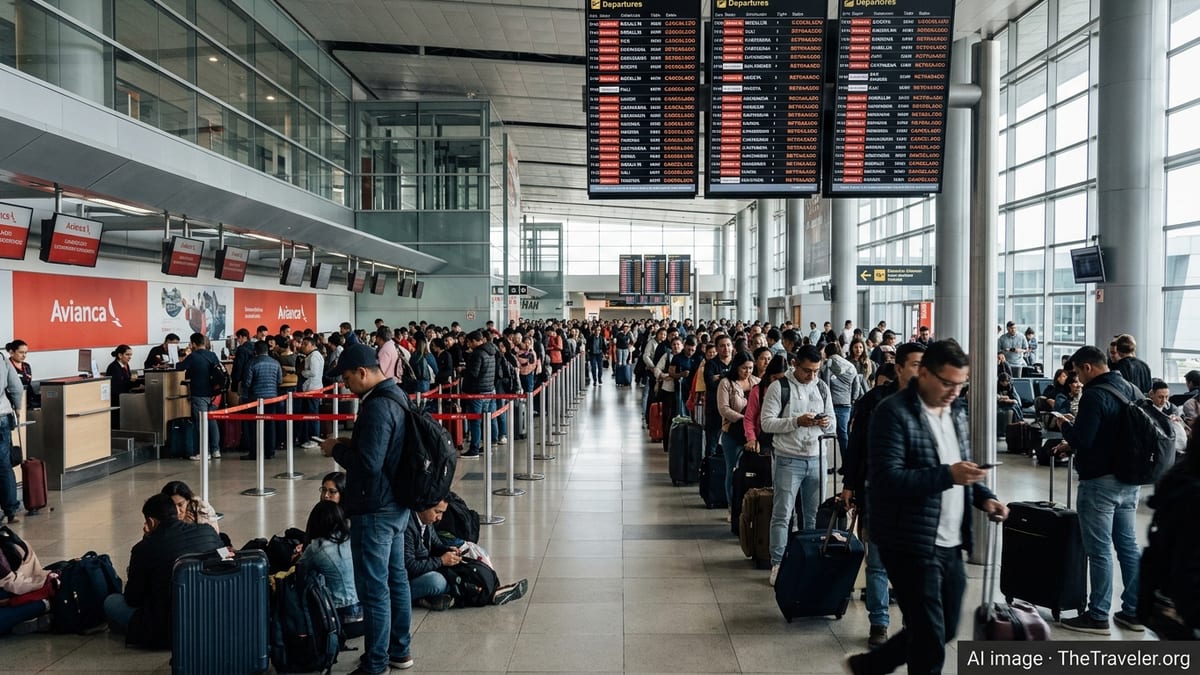
Fresh Cancellations Hit Key Colombian Gateways
The latest round of schedule changes and cancellations reported in early May comes on top of several weeks of instability across Colombia’s main airports. Publicly available tracking data and published coverage point to a cluster of scrubbed services involving both domestic and international legs, including flights touching Bogotá’s El Dorado International Airport, Medellín, Cartagena and Cali.
While exact daily tallies fluctuate, the pattern shows more than a dozen newly cancelled flights concentrated over a short window, with knock-on effects that stretch far beyond the individual routes. Travelers aiming to connect through Colombia’s hubs to coastal destinations such as Barranquilla and Cartagena, or onward to the United States, are encountering tighter seat availability and fewer same-day alternatives.
The disruption is particularly sensitive because Colombia relies heavily on air links to knit together its domestic tourism and business corridors. Cancellations on trunk routes among Bogotá, Medellín, Cartagena and Cali can quickly cascade, affecting itineraries that include long-haul sectors to North America and beyond.
Airline operations in the country were already under scrutiny after earlier schedule adjustments around late March and April. The new wave of cancellations underscores how fragile the current balance remains, even as carriers attempt to redesign their networks for the peak mid-year travel period.
Spirit’s Global Shutdown Tightens the Squeeze
The turbulence is unfolding just days after Spirit Airlines terminated operations globally on May 2, a decision that removed a budget-focused player from Colombia’s international market. Prior to the shutdown, Spirit connected several Colombian cities with the United States, including services that linked Cartagena and other destinations with Fort Lauderdale and additional Florida hubs.
Published coverage from Colombian outlets notes that Cartagena, in particular, loses direct low-cost access to Fort Lauderdale following Spirit’s exit. The airline had already trimmed its Colombia schedule over the past year, but the abrupt end of all flights has now eliminated remaining frequencies that price-sensitive travelers relied upon for access to South Florida and onward connections.
The loss of Spirit capacity is being felt not only on direct U.S. links but also on itineraries that fed domestic Colombian destinations via connections. With the airline’s routes erased from schedules, passengers who once used Fort Lauderdale as an affordable bridge to cities such as Barranquilla, Cali and Medellín are being pushed toward more expensive or less convenient itineraries on remaining carriers.
In the immediate aftermath of the shutdown, other airlines have sought to capture displaced demand with promotional offers and capacity shifts. Even so, the sudden disappearance of a carrier that once held strong market share in Fort Lauderdale creates a structural gap that will take time for competitors to absorb.
United and Avianca Adjust Networks Between Newark and Colombia
Amid this volatility, United and Avianca are recalibrating their own networks between the United States and Colombia, with a particular focus on Newark and other major U.S. gateways. Flight-tracking tools show United continuing to operate its Newark to Bogotá service, with codeshare arrangements enabling Avianca-marketed seats on some departures and returns.
These joint operations are helping to preserve a vital corridor between New Jersey and the Colombian capital at a time of heightened uncertainty. However, the broader pattern of cancellations across the country means that travelers connecting beyond Bogotá to cities such as Medellín, Cali and Cartagena still face elevated risk of disruption, especially when weather and congestion compound schedule changes.
Avianca, which has announced broader growth plans for its U.S. network during the upcoming summer period, is layering in more frequencies on certain high-demand routes. Yet the carrier is also managing its own internal adjustments as it reshapes post-pandemic and post-Spirit demand. This balancing act can translate into selective cancellation of lower-yield flights, including some domestic and regional sectors that feed international services.
For United, the shake-up presents both challenges and opportunities. The airline is fielding increased interest from passengers seeking alternatives to former Spirit routes through Newark and other U.S. hubs, even as it navigates the same operational pressures affecting the wider industry, from aircraft availability to crew scheduling.
Domestic Links to Barranquilla, Cartagena and Cali Under Pressure
The disruption is not limited to long-haul transcontinental flights. Domestic and regional services connecting Bogotá and Medellín with coastal cities like Barranquilla and Cartagena, as well as Cali in the southwest, are also feeling the strain of tightened capacity and reactive scheduling decisions.
Public timetables and booking platforms show that some flights on these high-demand leisure routes have been cancelled or consolidated, particularly when they are tied to international connections. When a long-haul flight from Newark or Fort Lauderdale is removed from the schedule, associated feeder legs within Colombia can also be cut, leaving travelers with fewer options and extended layovers.
At the same time, some carriers are emphasizing alternative gateways and re-banked schedules to optimize aircraft utilization. Adjustments in departure times or day-of-week patterns between Bogotá and secondary cities can improve connectivity for a subset of passengers, but they also introduce confusion for travelers whose plans were built around previously published times.
The pressure on these domestic links is especially evident on peak travel days and during holiday periods, when load factors are typically high and last-minute rebooking options are scarce. Higher fares in remaining cabins are another side effect, as airlines seek to manage demand against constrained supply.
What Travelers Can Expect in the Coming Weeks
With the summer travel season approaching and Spirit’s exit still rippling through schedules, the environment for flying to and within Colombia remains fluid. Publicly available information indicates that airlines are likely to continue fine-tuning capacity in response to booking trends, operational constraints and evolving competitive dynamics on routes touching Newark, Fort Lauderdale and Colombia’s main cities.
Travelers are already encountering more frequent schedule changes, including day-of-departure cancellations on certain routes. This can be particularly disruptive for those relying on tightly timed connections through Bogotá or Medellín to reach coastal destinations such as Barranquilla and Cartagena, or for travelers returning to the United States on early morning departures.
Industry observers point to several strategies that can help mitigate the impact of ongoing volatility. These include allowing extra time for connections within Colombia, favoring itineraries with multiple daily frequencies where possible, and monitoring reservations closely in the days leading up to departure. Flexible fare products and travel insurance that covers cancellations may also prove more valuable than in previous years.
For now, the combination of new cancellations, the disappearance of a major low-cost carrier, and continued schedule reshaping by United, Avianca and other airlines leaves Colombian skies in a state of flux. Travelers planning journeys between Bogotá, Medellín, Cartagena, Cali and U.S. gateways such as Newark and Fort Lauderdale should remain prepared for last-minute changes as airlines work to stabilize their operations.