


More news on this day
Air travelers across Europe are facing a fresh round of disruption as Lufthansa, KLM, SAS, SWISS and other major carriers adjust schedules, cancel flights and struggle with the ripple effects of strikes, fuel costs and capacity cuts, with more than 30 services from Germany alone reportedly grounded on key routes to Rome, Amsterdam, Zurich, Oslo, Paris, Helsinki and other cities.
Get the latest news straight to your inbox!
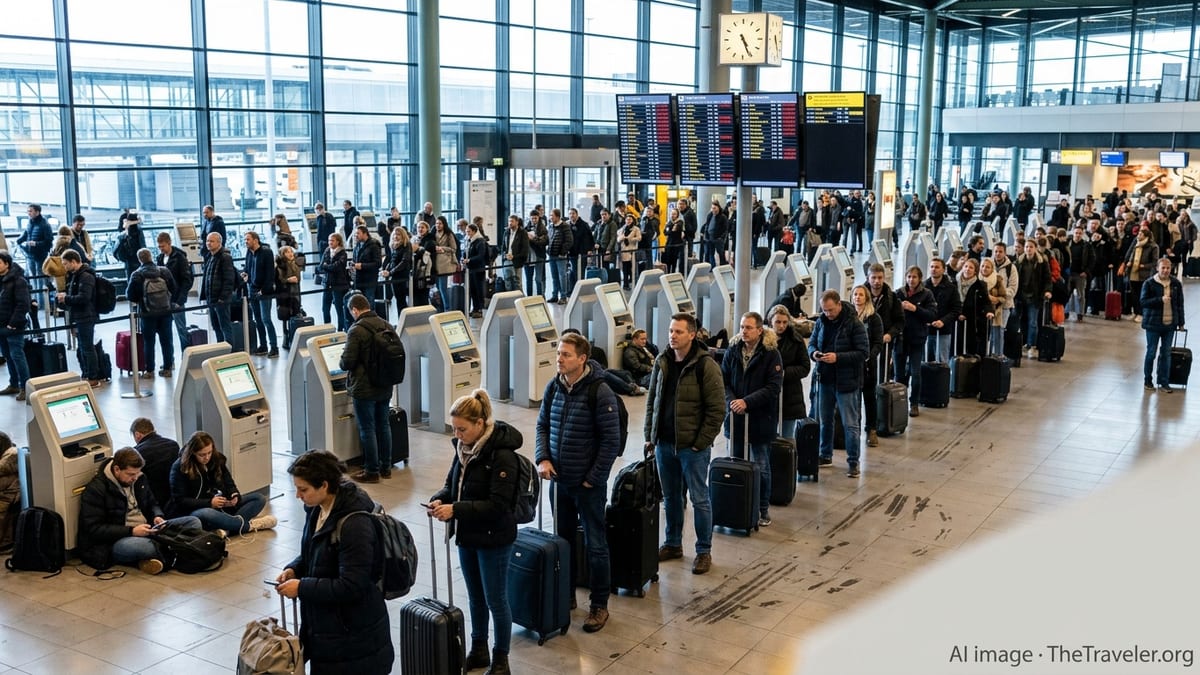
Network Strains Centered on Germany’s Hubs
Germany’s role as a central aviation hub means schedule changes at its major airports are quickly felt across the continent. Recent reports of more than 30 cancellations affecting flights from German cities to destinations including Rome, Amsterdam, Zurich, Oslo, Paris and Helsinki highlight how fast disruption can spread across multiple airline networks.
Lufthansa’s operations remain at the heart of this turbulence. The carrier is in the midst of a wide-ranging capacity adjustment program that includes the withdrawal of aircraft from its regional fleet and the discontinuation of several intra-European routes. Publicly available company statements and industry analyses indicate that thousands of short haul flights are being removed from the schedule through the summer period, amplifying the impact of any additional disruption such as strikes or technical issues.
These structural cuts come on top of recent strike-related problems. Pilot walkouts in April led to hundreds of Lufthansa flights being grounded over several days, with Frankfurt and Munich particularly affected. Aviation bulletins and travel-industry coverage describe how these stoppages forced large-scale same day cancellations and rebookings, leaving many passengers reliant on alternative routings through partner or rival hubs in Amsterdam, Zurich, Vienna and Paris.
The combined effect is that even when only a few dozen flights are cancelled on a given day, the knock-on consequences for connections, missed onward services and aircraft positioning can be substantial. Travelers departing Germany for major European capitals now face a significantly higher risk of last minute timetable changes than in previous seasons.
Knock-On Disruptions for KLM, SAS, SWISS and Partners
The reverberations are not limited to Lufthansa. KLM, SAS and SWISS have each been contending with their own operational and cost pressures, which magnify the region wide disruption when problems occur at a shared hub or on a joint route.
Industry reports indicate that KLM has trimmed part of its European network for the late spring and early summer period, including a number of intra EU services that connect through Amsterdam. When irregular operations hit German airports, disrupted passengers are often rerouted via Schiphol, increasing load on already busy flights and contributing to delays and occasional cancellations on routes such as Amsterdam to Rome, Paris, Zurich and Scandinavian destinations.
SAS has also been reported to cancel a significant number of flights in recent weeks as it copes with elevated fuel costs and a tight fleet and crew situation. Scandinavian gateways including Oslo and other Nordic cities can see secondary effects when passengers from Germany and continental Europe are rebooked onto limited SAS capacity, or when aircraft rotations are disrupted by problems further south.
SWISS, as part of the Lufthansa Group, is directly exposed to changes in the German network. Public statements and Swiss media coverage describe the airline both stepping in to operate additional services where possible and trimming its own schedule elsewhere in response to group wide fuel saving measures and aircraft availability. Connections between Zurich and German airports, as well as onward links from Zurich to Rome, Paris and northern Europe, remain particularly sensitive to disruption originating in Germany.
Fuel Prices, Capacity Cuts and Strike Fallout Drive Cancellations
Behind the visible wave of day to day cancellations lies a deeper shift in how European airlines are managing capacity. A steep rise in fuel costs has prompted several major carriers, led by Lufthansa, to remove large numbers of short haul flights from their schedules for the coming months. Publicly available financial commentary notes that cutting less profitable regional sectors is one of the quickest ways for airlines to reduce fuel burn.
The decision to scale back regional operations has a disproportionate effect on connectivity. Many of the flights being cut are feeder services linking smaller German and European cities to hubs such as Frankfurt, Munich, Zurich and Amsterdam. When these are removed, remaining flights are more heavily loaded and less resilient to disruption, meaning a single technical fault or weather event can cascade into multiple cancellations and missed connections across the network.
At the same time, recent industrial action has left schedules fragile. Airline labour disputes this spring, particularly at Lufthansa, resulted in several days of large scale flight cancellations and delays. Even after strike days ended, rescheduling aircraft and crew, clearing passenger backlogs and restoring normal rotations took time, with some services temporarily disappearing from booking systems or being adjusted at short notice.
Operational constraints at busy European airports add further pressure. Slot limits, air traffic management restrictions and ongoing staffing challenges at ground handling providers mean that airlines have less flexibility to recover schedules once disruption begins. The result is that when more than a few dozen flights in Germany are cancelled in quick succession, travelers across Europe often feel the effects for several days.
Routes to Rome, Amsterdam, Zurich, Oslo, Paris and Helsinki Under Pressure
Routes linking Germany with key European capitals have been particularly affected as airlines juggle capacity and attempt to maintain core connectivity. Travel industry monitoring shows cancellations and schedule changes on several high demand corridors, including flights from German airports to Rome, Amsterdam, Zurich, Oslo, Paris and Helsinki.
Services from Frankfurt and Munich to Rome and other Italian gateways have faced both direct cancellations and indirect disruption, as aircraft and crew are reassigned to cover higher yielding or strategically important routes. In Italy, airport data recently highlighted hundreds of delays and dozens of cancellations in a single day across major hubs, with flights operated by Lufthansa and KLM among those affected.
Amsterdam’s Schiphol, a crucial hub for KLM and a key partner gateway for passengers rerouted from Germany, has seen its own share of knock on issues. When German departures are cancelled, travelers often move to flights via Amsterdam, Paris or Zurich, which can quickly push load factors beyond planned levels. This in turn raises the likelihood of denied boarding, tight connections and further schedule adjustments on links to Oslo, Helsinki and other northern European destinations.
On northern routes, SAS and Finnair services are also exposed to these swings in demand and disruption. While not always at the center of the German cancellations, their networks can experience congestion when large numbers of travelers are rebooked through alternate routings, tightening capacity on services to and from Oslo and Helsinki in particular.
What Travelers Should Watch in the Coming Weeks
With structural capacity cuts still working their way through schedules and labour negotiations unresolved in parts of the industry, reports suggest that European air travel is likely to remain uneven into early summer. Travelers planning trips involving Germany, Amsterdam, Zurich, Rome, Paris, Oslo or Helsinki should expect a higher than usual possibility of schedule change, even if their specific flights are currently confirmed.
Consumer and aviation advocates recommend proactive monitoring of bookings using airline apps and booking platforms, as timetable adjustments may appear there before formal notifications arrive by email. Passengers connecting across multiple carriers, especially itineraries that mix Lufthansa Group airlines with KLM, SAS or other partners, face more complex rebooking scenarios if a first leg is cancelled at short notice.
Travel experts also point to the importance of understanding air passenger rights under European regulations. When cancellations are not caused by extraordinary circumstances such as severe weather or airspace closures, travelers on flights departing from EU, EEA and certain associated airports may be entitled to rerouting, care provisions such as meals and accommodation, and in some cases financial compensation.
For now, publicly available scheduling data and industry commentary suggest that airlines are still fine tuning their summer programs in response to fuel costs and demand forecasts. Until that stabilizes, journeys that rely on German hubs and major European city pairs such as Frankfurt to Rome, Munich to Amsterdam or Hamburg to Paris are likely to remain vulnerable to further short notice changes.