


The ferry crossing between Ischia and Naples is short, scenic and, in theory, very simple. Yet every season, travelers miss departures, overpay for tickets, end up at the wrong pier or get caught out by baggage rules and bad weather. Most problems are avoidable once you understand how this busy island route really works on the ground. This guide walks through the most frequent mistakes people make on the Ischia to Naples ferry and how to sidestep them, using real situations that play out every week along the piers of Ischia Porto, Casamicciola and Naples.
Get the latest updates straight to your inbox!
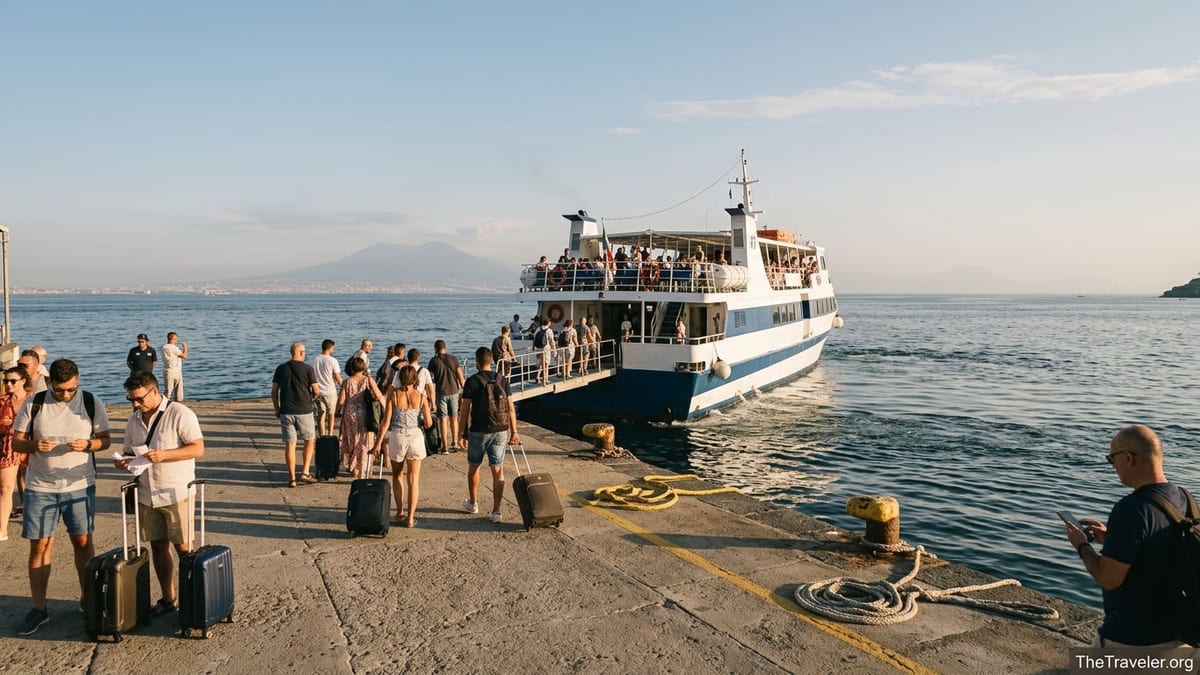
Confusing Terminals, Ports and Ferry Types
One of the most common and stressful mistakes is simply going to the wrong place. On the Naples side there are two nearby but distinct terminals inside the same port area. Molo Beverello is the fast hydrofoil terminal, serving high speed boats to Ischia, Procida and Capri. Calata Porta di Massa is the terminal for the larger, slower ferries that can also take vehicles. They are roughly a 10 to 15 minute walk apart, which is just long enough to turn a tight connection into a missed departure if you end up at the wrong one.
This confusion plays out constantly in high season. A typical example: a couple staying near Piazza Municipio follows signs for “Porto” and arrives at Molo Beverello for a 10:30 ferry they booked online. Only at the ticket office do they learn that their Medmar ferry actually leaves from Calata Porta di Massa. By the time they hurry along the waterfront and through the cruise terminal, the ship is already casting off and they must buy new tickets for a later departure.
Travelers also mix up departure and arrival ports on Ischia. The island has three ports connected with Naples: Ischia Porto, Casamicciola and Forio. Fast hydrofoils from Naples Molo Beverello mostly arrive at Ischia Porto and Casamicciola, while regular ferries from Calata Porta di Massa generally serve Ischia Porto and sometimes Casamicciola. Choosing “Ischia” generically on a booking site and then booking a hotel in Forio can result in a longer and more expensive transfer by taxi or bus than expected.
The simple fix is to treat your ferry details like a flight reservation. Before travel day, check your confirmation for three key pieces of information: the company name (for example Caremar, Medmar, Alilauro or SNAV), the type of vessel (ferry or hydrofoil) and the exact terminal and port on both sides. Once in Naples, follow signs for either Molo Beverello or Calata Porta di Massa specifically, rather than just aiming for “the ferry port.”
Underestimating How Long It Takes to Reach the Ferry
Missing sailings because of tight timing is another recurring problem, especially for travelers connecting from Naples airport or the central train station. On paper, the Alibus shuttle runs regularly between Capodichino airport, Napoli Centrale and the port area, and the ride can take around 20 to 35 minutes depending on traffic. In practice, summer congestion on the seafront and at Piazza Municipio often stretches this to 45 minutes or more, and queues for tickets or boarding the bus can add extra time.
A frequent real world scenario goes like this. A family lands at Naples airport at 14:00 with checked bags and has booked a 15:20 hydrofoil to Ischia Porto from Molo Beverello. They expect to clear baggage claim in 20 minutes and take the Alibus. Instead, luggage takes 30 minutes to arrive, the next bus is crowded and departs late, traffic near the port is slow and they reach Molo Beverello at 15:25, just in time to watch their boat leaving. Buying new tickets for a later sailing costs them extra and pushes their hotel arrival into the evening.
Similar issues happen with trains. Travelers stepping off a mid morning Frecciarossa at Napoli Centrale see that Molo Beverello is less than 3 kilometers away and assume they can walk. They set off with rolling suitcases under the midday sun, underestimate the hills and traffic crossings, and end up arriving at the port sweaty, exhausted and dangerously close to departure time.
The safest strategy is to build in a wide buffer. From the airport, allow at least 1.5 hours between scheduled landing and a hydrofoil departure in summer, and 2 hours if you are picking up luggage. From the main station, plan 45 to 60 minutes to reach either port by taxi or Alibus and check in calmly. If you get there early, Molo Beverello has cafes and shaded seating, and Calata Porta di Massa has basic bars where you can wait comfortably.
Misunderstanding Tickets, Prices and Reservation Rules
Ticket confusion is another fertile source of frustration. Several operators serve the Ischia to Naples route, including Caremar and Medmar for traditional ferries and companies like Alilauro and SNAV for hydrofoils. Prices vary depending on the operator, season, speed and whether you are traveling on foot or with a car. A typical one way adult foot passenger fare on a standard ferry might run in the range of 15 to 25 euros, while hydrofoil fares are usually higher, reflecting the shorter crossing time.
A frequent mistake is assuming that a ticket is automatically flexible. For instance, a traveler buys a discounted hydrofoil ticket for a specific 12:10 departure from Ischia Porto to Naples. When they arrive late after returning a rental scooter, they expect to simply board the 13:20 boat without paying more. At the pier they discover the cheaper promotional fare they chose is tied to a fixed time and date, and any change involves paying the fare difference plus a change fee, or in some cases buying a new ticket.
Another pain point is leaving ticket purchase until the last minute in peak season. On a busy August Saturday, it is common to see late afternoon ferries fully booked, especially those that accept vehicles. An example many hoteliers on Ischia recognize: guests with a rental car decide at breakfast to take the 18:00 ferry to Naples Calata Porta di Massa, only to find online that the next available space for cars is on a later sailing. They scramble to adjust dinner reservations, return the rental earlier or leave the car on the island and travel as foot passengers instead.
To avoid surprises, read the fare conditions before buying and decide whether you value price or flexibility more. In July and August, or during Easter and long Italian holiday weekends, consider reserving tickets for both outward and return legs several days in advance, particularly if you are traveling with a car or need to catch a same day flight or long distance train from Naples. If your schedule is looser, buying at the port on less busy weekdays usually works fine, but even then it pays to arrive early to get your preferred sailing.
Overlooking Luggage, Vehicle and Boarding Rules
Luggage and vehicle rules on the Ischia to Naples route can catch travelers off guard. Hydrofoil operators in particular often limit the size and number of pieces you can bring on board as standard, with extra items subject to additional charges. Regular ferries usually offer more generous luggage allowances, but space can still be tight on peak departures.
Here is a typical example. A couple returning from a spa weekend on Ischia arrives at Ischia Porto with two large checked suitcases, a carry on bag and a box of local wine. At the hydrofoil check in they are told that their basic ticket covers only one cabin sized bag per person and that the additional large cases and wine box must be checked in as extra luggage, with fees charged per piece. They have little choice but to pay on the spot, since repacking on the crowded pier is impractical.
Travelers with cars face different issues. Driving a rental vehicle onto the ferry requires arriving well ahead of departure, usually at least 60 minutes, to check in and be directed to the correct loading lane. In August, queues of vehicles routinely form in the heat at Calata Porta di Massa and at Ischia Porto. Drivers unfamiliar with the process sometimes park temporarily in the wrong place or miss the staging lane for their ship, leading to confusion with port staff or even being bumped to a later sailing when the vehicle deck fills up.
The boarding process itself can feel hectic on busy days, especially for first timers. Passengers often crowd near the gangway long before boarding starts, and announcements can be difficult to hear over traffic and port noise. It is easy to join the wrong line for a different ferry or hydrofoil leaving around the same time. Checking the vessel name and destination on the display or side of the ship before boarding is a simple but important step too many people skip in the rush.
Ignoring Weather Risks and Schedule Disruptions
The Gulf of Naples is generally calm, but weather and sea conditions still matter. High winds, rough seas or poor visibility can delay or cancel sailings, with hydrofoils more likely to be suspended than larger ferries. Most years, there are days in autumn and winter when only the slower ships run, or crossings are halted entirely for several hours.
Travelers often underestimate this risk by assuming that because the crossing is short, it is also immune to disruptions. A common scenario is a visitor booking a mid January hydrofoil from Ischia to Naples with a low cost flight onwards the same evening. When a mistral wind sweeps in, the hydrofoil schedule is partially suspended. The traveler is moved onto a later ferry that takes longer, arrives after dark, and compresses the transfer window to the airport to an uncomfortable degree.
Even in summer, local storms can disrupt specific departures. For example, an afternoon thunderstorm might cause a temporary shutdown of some hydrofoil services on a busy August day. Passengers arriving at Ischia Porto with tickets for a high speed boat may be rebooked on a slower ferry, extending their journey and crowding the ship. Those who cut it fine with evening train or flight connections from Naples can feel real stress in these cases.
To manage the risk, allow generous buffers for onward travel and avoid scheduling critical flights or long distance rail journeys immediately after your planned ferry. Checking conditions on the morning of travel by looking at operator announcements or asking hotel staff on Ischia can alert you early to significant disruptions. If seas are rough and you are prone to motion sickness, opt for a larger ferry rather than a hydrofoil; the crossing takes longer but generally feels more stable.
Misjudging Comfort, Seasickness and Onboard Experience
Another mistake is choosing a ferry purely based on schedule without considering your own comfort. Fast hydrofoils cut the crossing between Ischia and Naples down to around 50 to 60 minutes, whereas standard ferries typically take around 1 hour 30 minutes depending on the route and operator. Hydrofoils have enclosed seating and limited outside space, which can feel cramped for taller passengers or those sensitive to motion.
First time visitors sometimes book an early morning hydrofoil thinking faster is always better, only to spend the ride clutching a paper bag in choppy seas. A frequent real life pattern: a traveler who is slightly prone to seasickness boards a hydrofoil at Casamicciola after a late night. Sitting in the back of the cabin without fresh air, they quickly feel unwell as the boat hits a series of waves. They arrive in Naples pale and drained, with the rest of the travel day overshadowed.
By contrast, the larger open decks of traditional ferries offer fresh air, outdoor seating and better views of Vesuvius and the city skyline. Families with children often appreciate the ability to move around, find a quiet spot or grab a snack from the onboard cafeteria. The trade off is the longer sailing time and slightly less frequent departures.
Think about what kind of crossing you want. If you are taking an evening departure after a day at thermal parks in Ischia, a slower ferry from Ischia Porto to Naples can be a pleasant unwind, especially if you sit on deck as the lights of the coastline come into view. If you are on a short weekend trip and want maximum time on the island, a morning hydrofoil from Molo Beverello might make more sense, as long as you are comfortable with the ride.
Forgetting Local Regulations, Fees and Seasonal Restrictions
Local rules and seasonal restrictions can catch even experienced travelers out. Italian authorities periodically introduce limitations on vehicle access to Ischia during peak periods in order to manage congestion and pollution. These rules can restrict non resident cars from boarding ferries on specific dates, particularly around Easter and the core summer months. Travelers who plan to bring rental cars from the mainland sometimes discover too late that on their chosen dates, only residents or certain categories of vehicles are allowed.
Another underappreciated issue is local port and luggage fees. Some operators charge modest port taxes or boarding fees that are either included in the ticket price or collected at the time of purchase. Others might levy small surcharges for oversized baggage or sports equipment like surfboards or bicycles. For example, a cyclist returning from an island tour finds that while their own passenger ticket is reasonably priced, the bike itself attracts an extra charge at the pier that they did not factor into their budget.
Seasonality also affects operating hours of supporting services. In late autumn and winter, there are fewer evening departures between Ischia and Naples, and the last boat leaves significantly earlier than in July or August. A traveler lingering over dinner in Ischia Porto in November might assume there is always a late boat back to the mainland, only to find the final sailing departed more than an hour earlier. Similarly, some services from Forio operate only in the higher season, so shoulder season travelers relying on those may need to reroute via Ischia Porto or Casamicciola.
Before planning your trip, especially if you intend to bring a car or travel outside the peak summer months, research the period specific rules and timetables for your planned dates. Checking a recent schedule and asking your accommodation on Ischia whether any driving restrictions or reduced winter timetables apply can prevent last minute surprises that are difficult to fix at the port.
The Takeaway
The Ischia to Naples ferry route is one of the most enjoyable short sea crossings in Italy, but it works on its own rhythms. The most common problems travelers face are not hidden or complicated; they stem from assumptions about timing, terminal locations, ticket flexibility and the predictability of weather and schedules. Real world examples, from families missing hydrofoils because of airport delays to drivers turned away from fully booked vehicle decks at Calata Porta di Massa, show that a small amount of preparation goes a long way.
By double checking exactly which port and terminal you are using, allowing generous travel buffers, understanding basic fare and luggage rules and factoring in seasonal and weather related variations, you can turn the crossing into a smooth and scenic part of your trip rather than a stressful hurdle. Treat the ferry the way you would a flight, build in margin for the unexpected and choose the type of vessel that fits your comfort level. With those precautions, the journey between Ischia and Naples becomes a highlight, framing your time on the island with views of Vesuvius, the Castel dell’Ovo and the wide Bay of Naples.
FAQ
Q1. Do I need to book my Ischia to Naples ferry ticket in advance?
In low and shoulder seasons you can often buy tickets on the day, especially for foot passengers. In July, August and over holidays, advance booking is strongly recommended, particularly if you are traveling with a car or need a specific time slot for onward trains or flights.
Q2. Which terminal in Naples should I use for ferries from Ischia?
Fast hydrofoils from Ischia usually arrive at Molo Beverello, while traditional car ferries dock at Calata Porta di Massa. Always check your ticket, as the terminal is specified there. The two are close but not interchangeable, so knowing the correct one saves time and confusion.
Q3. How early should I arrive at the port before departure?
For foot passengers, arriving 30 to 40 minutes before departure is usually enough in normal conditions. In peak summer, or if you need to buy tickets at the port, aim for at least an hour. If you are boarding with a vehicle, plan to be there about 60 minutes before departure to complete check in and line up.
Q4. What happens if my ferry or hydrofoil is canceled due to bad weather?
If your sailing is canceled, staff will normally move you to the next available departure with the same or another operator, or offer a refund according to their policies. During prolonged bad weather, options may be limited, so having flexible plans and not scheduling tight same day connections from Naples is wise.
Q5. Can I bring large luggage or sports equipment on the ferry?
Traditional ferries are generally more forgiving with luggage and bulky items, while hydrofoils impose stricter size and piece limits. Extra or oversized baggage, bicycles and surfboards often incur additional fees payable at the port. If you travel with special equipment, confirm conditions and approximate charges with your chosen company in advance.
Q6. Is it better to choose a hydrofoil or a regular ferry from Ischia to Naples?
Hydrofoils are faster but usually more expensive and have less outdoor space, which can be uncomfortable in rough seas. Regular ferries are slower but offer open decks, more room to move and a more relaxed experience. If you are sensitive to motion or traveling with small children, many people find the larger ferries more comfortable.
Q7. Are there toilets and food available on board?
Yes. Both hydrofoils and ferries have toilets on board. Most traditional ferries and many hydrofoils also offer a small bar or snack counter where you can buy coffee, soft drinks and light food. Selection is simple, so if you have dietary needs you may want to bring your own snacks.
Q8. How long does the crossing from Ischia to Naples take?
On average, a hydrofoil from Ischia to Naples takes about 50 to 60 minutes, depending on the route and operator. Traditional ferries usually take around 1 hour 30 minutes. Timings can vary slightly by company and intermediate stops such as Procida.
Q9. Can I connect directly from the ferry to Naples airport or central station?
Yes. From Molo Beverello or Calata Porta di Massa, you can reach Napoli Centrale station or Capodichino airport by taxi or the Alibus shuttle. In light traffic the ride can be quick, but in summer you should allow extra time for congestion and queues, especially if you have a fixed departure to catch.
Q10. What should I do if I arrive at the wrong terminal in Naples?
If you realize you are at the wrong terminal but still have time, you can walk between Molo Beverello and Calata Porta di Massa in about 10 to 15 minutes through the port area. If departure is imminent, go straight to the nearest ticket office of your ferry company and explain the situation. They can advise if it is still possible to board or whether you need to move to a later sailing.