


Leaving the thermal pools and pastel villages of Ischia for bustling Naples is one of the most popular routes in the Gulf of Naples, and ferries and hydrofoils make the crossing quick and straightforward. With several ports, companies and ticket types to choose from, a little advance planning can save you both money and stress. This guide walks you through current options for traveling from Ischia to Naples, with real world examples of schedules, approximate fares, and what to expect on board.
Get the latest updates straight to your inbox!
Overview of the Ischia to Naples Route
The ferry route from Ischia to Naples is a short island hop across the Gulf of Naples, typically taking from about 50 minutes on a fast hydrofoil to roughly 1 hour 30 minutes on a conventional ferry, depending on the company and sea conditions. Services run year round, with extra departures during the busy summer season from late May through September. The majority of travelers sail into central Naples, using the route at the end of an Ischia holiday or as a leg in a wider itinerary that might include Capri, Procida or the Amalfi Coast.
Most crossings from Ischia back to the mainland arrive at one of two neighboring terminals in Naples: Molo Beverello, used primarily by passenger-only hydrofoils, and Calata Porta di Massa, used mainly by slower car ferries. On Ischia itself, departures are concentrated at Ischia Porto, the island’s main harbor, although there are also seasonal links from Casamicciola Terme and, less frequently, Forio. For a typical visitor staying in Ischia Porto, the simplest choice is a direct hydrofoil Ischia Porto to Napoli Molo Beverello.
Several local operators compete on this route, including Alilauro, SNAV, Caremar and Medmar. Hydrofoils are the domain of Alilauro, SNAV and part of the Caremar fleet, while Caremar and Medmar also operate larger ferries that can take vehicles. The result is a busy timetable that starts early in the morning and runs until evening, giving you flexibility to match your sailing to train times from Napoli Centrale or flights from Naples Capodichino Airport.
In practice, many travelers treat the Ischia to Naples crossing as part of their travel day rather than a standalone excursion. If you are aiming for a same-day train from Naples to Rome or Florence, build in generous buffer time. Sea conditions, congestion at the port, or a long queue for taxis in Naples can easily add 30 to 60 minutes to your journey.
Ports, Operators and Typical Timetables
From Ischia to Naples, the main departure point is Ischia Porto, a compact harbor with a semicircle of ticket offices and cafes. From here you will find both hydrofoils and ferries. Hydrofoils typically sail to Molo Beverello in Naples, situated close to the city center and a short walk from Municipio metro station. Ferries usually arrive at Calata Porta di Massa, part of Naples’ commercial port area just to the west of Beverello; the two terminals are linked by a shuttle and can be walked in about 10 to 15 minutes if you are traveling light.
Hydrofoils are primarily run by Alilauro, SNAV and Caremar, with journey times advertised at around 50 to 60 minutes between Ischia Porto and Molo Beverello. In high season it is common to find departures roughly once per hour during the day. For example, on a typical July weekday you might see morning hydrofoils around 8.30, 10.00 and 11.30 from Ischia Porto to Naples, with early afternoon and early evening sailings added for day trippers and holidaymakers checking out of hotels.
Conventional ferries, operated mainly by Caremar and Medmar, take longer but are more spacious and allow you to bring a car, scooter or larger luggage with fewer restrictions. The crossing from Ischia Porto to Calata Porta di Massa is usually timetabled at around 1 hour 20 minutes to 1 hour 30 minutes. Morning departures are popular with travelers connecting to long distance trains, while mid afternoon sailings suit those heading for evening flights. For example, in summer it is common to find ferries around 7.30, late morning and mid afternoon.
Additional options exist from Casamicciola Terme, on the north coast of Ischia, with both ferries and hydrofoils to Naples, and occasional hydrofoils linking Forio to Naples via Ischia Porto. These can be convenient if your hotel is in Lacco Ameno, Casamicciola or Forio, but schedules can be more seasonal. Always confirm times close to your travel date and check whether your chosen departure runs daily or only on certain weekdays.
Tickets, Prices and How to Book
Ticket prices on the Ischia to Naples route depend on the type of vessel, season, and how far in advance you purchase. As a rough guide for 2026, a one way adult ticket on a fast hydrofoil from Ischia Porto to Naples generally falls in the region of 20 to 30 euros per person, while a standard ferry ticket on the same route is often slightly cheaper, commonly in the mid to high teens or low twenties. Children’s fares are usually discounted, and infants typically travel for a nominal fee or free on an adult ticket, depending on the company.
Vehicle transport adds significantly to the cost. Taking a small car on a ferry from Ischia to Naples can raise your total ticket price to somewhere around 70 to 120 euros or more, depending on length of vehicle, season and operator, with driver fare often included but additional passengers charged separately. Scooters and motorbikes are cheaper but still subject to specific tariffs. In addition, some periods of the year see restrictions on non resident vehicles on Ischia, so it is important to check local regulations before planning to travel with your car.
There are three main ways to buy tickets: directly at the port ticket offices on the day, through the operators’ official websites, or via third party ferry aggregators. In the shoulder seasons of April or October, buying on the day is usually sufficient if you are flexible about departure time. In July and August, especially on weekends, advance booking is strongly recommended for morning departures and for any sailing with a vehicle, as crossings can sell out. Many travelers choose to secure a specific sailing online, then arrive at the port at least 45 to 60 minutes before departure to exchange a voucher or check in.
To illustrate, a couple leaving Ischia Porto in mid June for a mid morning hydrofoil to Naples might pay around 50 to 60 euros total for two adult tickets bought a few days ahead online. The same pair, choosing a slower afternoon ferry and buying at the ticket office, might pay a little less but have fewer departure options. For families or groups, it is good practice to price out both hydrofoils and ferries, since on certain days the slower boat can offer noticeable savings that add up across several travelers.
Hydrofoil vs Ferry: Which Is Better for You
Choosing between a hydrofoil and a conventional ferry from Ischia to Naples comes down to three main factors: time, comfort and budget. Hydrofoils are the fastest option, taking about 50 to 60 minutes, and are popular with travelers who need to catch a specific train in Naples or who are prone to motion sickness and prefer a shorter time at sea. They are passenger only, with airline style seating in enclosed cabins, and limited outdoor deck space. Luggage is stowed in designated racks and you are usually asked to keep large suitcases away from seats and aisles.
Conventional ferries are slower, but can feel more relaxed. Their crossing time is typically around 1 hour 20 to 1 hour 30 minutes, but they offer open decks, indoor lounges, snack bars and more room to move around. If you have heavy luggage, strollers, or simply like to walk and take photos of the coastline, a ferry can be more pleasant. Families with small children often prefer ferries because there is space to spread out and because boarding and disembarking can feel less rushed than on busy hydrofoils.
Hydrofoil tickets are often slightly more expensive than ferry tickets for foot passengers. For example, in peak summer you may find a mid morning hydrofoil priced in the high twenties in euros per person, compared with a mid day ferry in the high teens to low twenties. Over a group of four or five travelers, that difference can easily cover a round of coffees and snacks on board or a taxi ride from the port in Naples.
Weather can also influence your choice. The Gulf of Naples is usually calm in summer, but when winds pick up hydrofoils can be suspended or subject to stronger motion. Ferries, being larger and heavier, are generally less affected by choppy seas and are more likely to sail in marginal conditions, though all decisions depend on port authorities and safety rules. If you are traveling in winter, or you know you are sensitive to bumpy crossings, opting for a conventional ferry and allowing a little extra time is a sensible strategy.
Connections in Naples: From Port to Train Station and Airport
Arrival arrangements in Naples are an important part of planning your Ischia to mainland journey. Hydrofoils from Ischia usually dock at Molo Beverello, which sits directly in front of Castel Nuovo and next to Piazza Municipio. From the terminal you can reach Municipio metro station on Line 1 in about 5 minutes on foot, making it straightforward to continue to Napoli Centrale train station at Piazza Garibaldi. The metro ride takes roughly 10 minutes and is generally the quickest way to reach long distance trains to Rome, Florence and beyond.
Ferries from Ischia most often arrive at Calata Porta di Massa, the nearby commercial ferry terminal slightly to the west of Beverello. From here, shuttle buses and local city buses link to Piazza Municipio and the city center. If you are traveling with rolling suitcases and the weather is pleasant, you can also walk between Porta di Massa and Beverello, then continue to Municipio metro or into the historic center. Taxis are readily available at both terminals, though there can be queues at busy times when multiple ferries arrive at once.
If you are catching a flight from Naples Capodichino Airport, the Alibus shuttle service connects both the port area and Napoli Centrale station with the airport. Typical journey time from the port to the airport is 25 to 35 minutes depending on traffic. Many travelers choose to take the Alibus directly from the port if they have light luggage. Others prefer to go via Napoli Centrale to have access to more facilities and clear onward train connections if their travel plans change.
As an example, a traveler with a 17:00 train from Napoli Centrale to Rome might sensibly aim for a late morning or noon departure from Ischia, arriving in Naples early afternoon. This allows time for delays, the walk or shuttle to Municipio, the metro to Piazza Garibaldi, and a coffee before boarding. Tight, same hour connections between ferry arrival and train departure are risky in peak season, especially on Friday and Sunday afternoons when traffic and queues are common.
Practical Tips for a Smooth Crossing
On travel days, it pays to treat the ferry crossing as you would a short domestic flight. Arrive at Ischia Porto at least 30 to 45 minutes before departure for foot passengers, and 60 to 90 minutes ahead if you are traveling with a vehicle, especially in July and August. Port staff will direct cars into lanes for the correct ship, and boarding usually begins 20 to 30 minutes before the scheduled departure time. Pedestrians should check the monitors and signage outside each company’s office to make sure they are queuing for the right vessel.
Luggage policies vary by operator, but in general each passenger may bring at least one small cabin bag plus one larger suitcase, with surcharges applied to very bulky items or sports equipment. On hydrofoils from Ischia to Naples, you are often asked to place large suitcases in luggage racks at the bow or stern of the cabin and carry smaller bags to your seat. If you have valuables such as electronics or travel documents, keep them in a daypack that stays with you rather than in the general luggage area.
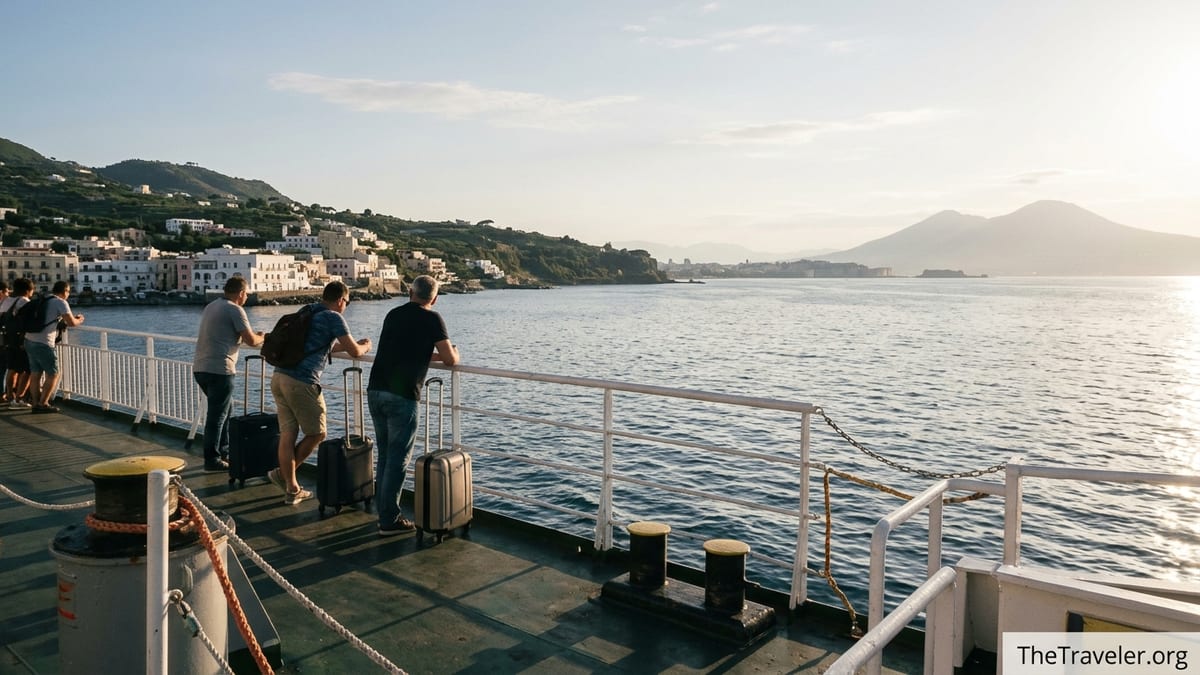
Facilities on board are straightforward but adequate. Most ferries and hydrofoils offer a small bar serving espresso, soft drinks, bottled water and basic snacks like sandwiches and pastries. Prices are higher than in town, so many locals stop at a café in Ischia Porto to grab a coffee and a snack to go before boarding. On sunny days the open decks of conventional ferries are particularly pleasant, with wide views of Ischia’s green hills receding behind you and Mount Vesuvius coming into focus ahead.
If you are prone to motion sickness, consider booking a seat toward the rear of the vessel where movement tends to be less pronounced, and avoid reading or spending too long on your phone. Travel sickness tablets, acupressure wristbands and ginger candies are commonly used by regular ferry passengers. In shoulder seasons and winter, bring an extra layer or a windproof jacket, as sea breezes can make outdoor decks feel much cooler than temperatures on land, even during relatively short crossings.
Seasonal Variations and When to Travel
The Ischia to Naples ferry route runs throughout the year, but the experience can vary markedly between seasons. In high summer, from late June through August, timetables are usually at their most frequent, with additional hydrofoils and ferries laid on to cope with holiday crowds. This is the time when advance booking is most important, especially on Friday afternoons, Sunday evenings and around Italian public holidays when many people move between the mainland and the islands.
Spring and autumn, roughly April to early June and September to October, often provide the best balance of decent weather, fewer crowds and comfortable sea conditions. During these months there are still multiple daily departures from Ischia to Naples, but boats are less likely to be completely full outside weekends. Prices may not drop significantly on the most popular mid morning sailings, but you are more likely to find good value on early or late departures and to enjoy a quieter journey on board.
In winter, sailings are reduced but do not stop. You can still count on regular connections between Ischia and Naples, though there may be fewer evening options and some secondary routes, such as Forio or certain Casamicciola departures, may be suspended. Weather becomes a more important factor. Strong winds and rough seas can lead to cancellations or delays, with hydrofoils more likely to be suspended than larger ferries. If you are traveling in January or February, build extra flexibility into your plans and keep an eye on forecasted conditions a day or two in advance.
An example of seasonal planning: a traveler flying out of Naples in early March might book a midday ferry from Ischia and overnight in Naples before a morning flight, rather than attempting a tight same day connection. Conversely, a visitor in mid September with a late afternoon train could confidently plan a morning hydrofoil from Ischia to Naples, trusting in the generally stable weather and frequent services at that time of year.
The Takeaway
Traveling from Ischia to Naples by sea is simple, scenic and flexible, provided you understand the key choices: hydrofoil or ferry, Ischia Porto or another island port, and which Naples terminal best suits your onward plans. Journey times range from under an hour on a fast hydrofoil to around an hour and a half on a conventional ferry, with prices that remain fairly reasonable even in the height of summer for foot passengers.
For most visitors staying near Ischia Porto and heading into central Naples or to long distance trains, a prebooked hydrofoil to Molo Beverello at a convenient mid morning or early afternoon time offers the best mix of speed and comfort. Travelers with cars, bulky luggage or a preference for open decks often favor the slower but more spacious ferries to Calata Porta di Massa. Whatever you choose, arriving at the port with time to spare, keeping your plans flexible, and treating the crossing as part of the pleasure of visiting the Bay of Naples will help turn a simple transfer into a memorable part of your journey.
FAQ
Q1. How long does the ferry from Ischia to Naples take?
The fastest hydrofoils between Ischia Porto and Naples usually take about 50 to 60 minutes, while conventional ferries generally take around 1 hour 20 to 1 hour 30 minutes.
Q2. How much does a ticket from Ischia to Naples cost?
As an approximate guide, foot passenger tickets on hydrofoils often fall between 20 and 30 euros one way, while standard ferry tickets are usually a little cheaper, commonly in the mid to high teens or low twenties.
Q3. Do I need to book my Ischia to Naples ferry in advance?
In July and August, on weekends and around public holidays, advance booking is strongly recommended, especially for morning sailings and any departure with a vehicle. In quieter months, buying tickets on the day is usually sufficient if you are flexible.
Q4. Can I take my car on the ferry from Ischia to Naples?
Yes, conventional ferries operated by companies such as Caremar and Medmar allow cars, scooters and other vehicles, subject to specific tariffs and any seasonal restrictions on non resident vehicles.
Q5. Which Naples port will I arrive at from Ischia?
Hydrofoils from Ischia typically arrive at Molo Beverello, close to central Naples and Municipio metro, while conventional ferries usually dock at Calata Porta di Massa, the nearby commercial ferry terminal.
Q6. How do I get from the port in Naples to the train station?
From Molo Beverello or Calata Porta di Massa, you can walk or take a short shuttle or bus to Municipio metro station on Line 1, then ride to Napoli Centrale at Piazza Garibaldi in about 10 minutes, or use a taxi or the Alibus shuttle.
Q7. Are ferries from Ischia to Naples affected by bad weather?
Yes, rough seas and strong winds can lead to delays or cancellations, with hydrofoils more likely to be suspended than larger ferries. In winter it is wise to allow extra time and check conditions shortly before traveling.
Q8. What time should I arrive at the port in Ischia before departure?
Foot passengers should plan to arrive at least 30 to 45 minutes before departure, while those traveling with a vehicle should allow 60 to 90 minutes, especially in peak summer periods when ports are busier.
Q9. Is there luggage storage on board the Ischia to Naples ferries?
Hydrofoils provide luggage racks where larger suitcases must be stored, while conventional ferries have open spaces and indoor areas where you can keep bags nearby. Policies vary slightly by company, so check when boarding.
Q10. Can I travel between Ischia and Naples year round?
Yes, there are year round services between Ischia and Naples, although winter timetables offer fewer daily departures and some secondary routes may be suspended until the busier spring and summer seasons.