


Leaving the green, volcanic island of Ischia for busy Naples can feel like a jolt, especially when you add ferries, timetables and luggage into the mix. With a little planning though, the Ischia to Napoli crossing can be one of the calmest, most enjoyable legs of your trip, rather than a stressful race to the port. This guide walks you through every step, using real schedules, current prices and concrete examples so you know exactly what to expect on the day you sail.
Get the latest updates straight to your inbox!
Understanding Your Route: Ports, Boats and Travel Times
The first key to a stress free trip from Ischia to Naples is understanding where you are actually sailing from and where you will land. The vast majority of travelers leave from Ischia Porto, the main harbor close to Ischia town. Some services also depart from Casamicciola Terme, just up the coast, and more rarely from Forio, which has mostly seasonal fast boats. On the mainland side you will arrive at one of two terminals within the Port of Naples: Molo Beverello, used mainly by fast hydrofoils, or Calata Porta di Massa, used by the larger, slower ferries that can also carry vehicles.
In practice this means that if you book a hydrofoil with companies such as Alilauro, SNAV or Caremar, you will almost always dock at Molo Beverello, a short walk from central Naples landmarks like the Maschio Angioino castle and the Municipio metro station. If you book a conventional ferry with operators such as Caremar or Medmar, you will typically arrive at Calata Porta di Massa, which sits slightly further along the port, connected to Beverello by a free internal shuttle. The two Naples terminals are about a 10 to 15 minute walk apart, but they serve different types of boats, so checking your arrival pier on your ticket is essential.
Travel time depends heavily on the type of vessel. Fast hydrofoils usually take about 50 to 60 minutes between Ischia Porto and Naples, sometimes stopping briefly at Procida. Conventional ferries normally need about 1 hour 15 minutes to 1 hour 30 minutes on the same route, again depending on any intermediate stops. For example, a mid morning hydrofoil advertised at 55 minutes might depart Ischia Porto at 10:20 and reach Naples Beverello around 11:15, while a similar time slot on a car ferry might leave at 10:10 and be scheduled to dock at Calata Porta di Massa around 11:30.
From a stress perspective, the real advantage of the hydrofoil is not only speed but also frequency. In peak season you may find departures roughly every hour in each direction with a mix of companies. Ferries are often less frequent but can be more forgiving with luggage and bad weather. If you know you have a tight connection in Naples, such as a mid afternoon high speed train from Napoli Centrale, choosing an earlier hydrofoil gives you extra margin without sacrificing too much of your morning on Ischia.
Ferry vs Hydrofoil: Which Is Less Stressful for You
Choosing between a hydrofoil and a conventional ferry is one of the biggest decisions you will make for this crossing. Hydrofoils are fast passenger only vessels with indoor seating, air conditioning and limited exterior deck space. They are ideal if you are traveling with just hand luggage or standard suitcases and want to minimize travel time. For instance, a couple staying near Ischia Ponte who need to be in Naples by early afternoon for a walking tour might book a late morning Alilauro or SNAV hydrofoil, knowing they can sit in comfort, store their bags in the designated racks and be in the city center in about an hour.
Conventional ferries, by contrast, are larger, slower ships that carry both passengers and vehicles. They tend to have large open decks, simple indoor lounges and basic bars serving coffee, snacks and sometimes hot food. They are often a better match for families with strollers, travelers with bulky luggage or anyone prone to seasickness who prefers being able to step outside for fresh air. A real world example is a family leaving an Ischia holiday rental with several suitcases and beach gear: they may choose a mid morning Medmar ferry from Ischia Porto to Calata Porta di Massa, accept the extra 20 to 30 minutes at sea, and enjoy a more spacious, less cramped environment.
Price differences are not huge but can be noticeable across a group. A one way adult ticket on a hydrofoil from Ischia to Naples commonly starts from the low 20s in euros per person in 2026, depending on company and season, while standard passenger tickets on conventional ferries often start a few euros lower. If you are transporting a car or scooter, the ferry is your only option and the vehicle surcharge can be substantial, so it is worth checking current tariffs and deciding whether to leave the car in a paid garage on Ischia or in Naples instead.
Sea conditions should also factor into your decision. The Gulf of Naples is generally calm in summer, but spring and autumn storms can affect smaller, faster craft more than the big ferries. There are days when hydrofoils are delayed or canceled while larger ferries still run, albeit with some rolling. If your priority is reliability rather than speed, or you know you are sensitive to motion, booking an earlier conventional ferry, sitting on the open deck and traveling with seasickness remedies can significantly reduce anxiety.
Buying Tickets: When, Where and How to Avoid Surprises
For a low stress experience it pays to think through your ticket strategy before departure day. You have three main ways to buy: directly on the ferry company websites, through third party aggregators that list multiple operators, or in person at ticket offices on Ischia. Each has pros and cons, and the best choice depends on your travel dates and your appetite for flexibility.
Booking online via the official sites of operators such as Caremar, Medmar, Alilauro or SNAV can be useful in high season, when popular morning and late afternoon crossings can sell out. You will see real time availability, can pick an exact departure, and often pay a small booking or presale fee per ticket. For example, travelers in August might reserve a 9:30 hydrofoil a few days in advance to secure seats that coordinate with a late morning train from Naples. The extra couple of euros per ticket can feel like cheap insurance against standing in long queues with luggage in the summer heat.
Buying at the port is still perfectly viable in shoulder and low season. Ticket offices line the waterfront at Ischia Porto, and it is common to arrive 60 to 90 minutes before departure, compare times on the screens and choose the next crossing with seats. A solo traveler leaving Ischia in late October, for instance, might walk down to the harbor around 10:00, find both a 10:20 hydrofoil and a 10:40 ferry with plenty of availability, and buy whichever feels more comfortable after checking the sea conditions on the day.
Whichever method you use, read the ticket details carefully. Make sure you note the exact departure port on Ischia (Ischia Porto versus Casamicciola), the arrival terminal in Naples (Molo Beverello or Calata Porta di Massa), and whether your fare includes baggage or has weight and size limits. Some hydrofoil companies classify anything larger than cabin luggage as paid baggage and may charge a few extra euros per item payable at the ticket office or boarding gate. Printing your ticket is no longer always required, but having either a printed copy or a screenshot of the QR code ready on your phone will speed boarding and remove last minute worries about mobile signal at the pier.
Timing Your Crossing: Connections, Check in and Weather Windows
Good timing is one of the simplest ways to remove stress from the Ischia to Naples route. Ferry companies generally recommend arriving at the pier about 30 minutes before departure for foot passengers, and earlier if you are boarding with a vehicle. In real life, especially in July and August, arriving about 45 minutes ahead of a popular morning or late afternoon sailing is more comfortable. That gives you time to queue for tickets if needed, check in, drop any checked bags and walk the pier without rushing.
Think about what you are connecting to in Naples. If you are flying out of Naples Capodichino Airport, a common pattern is to take a late morning or early afternoon ferry from Ischia to Naples and then the Alibus airport shuttle from just outside Molo Beverello or a short walk from Calata Porta di Massa. For example, if your flight leaves at 18:00, a sensible, low stress plan is to be on a boat from Ischia no later than around 13:00, aiming to touch the mainland by 14:00. This leaves time for any minor delays at sea, the 20 to 30 minute road transfer to the airport and usual airport formalities.
For rail connections from Napoli Centrale or Napoli Piazza Garibaldi, many travelers allow at least one hour between scheduled ferry arrival and train departure, with a preference for 90 minutes or more in peak season. A realistic snapshot: a family with reserved seats on a 16:30 high speed train to Rome might book a ferry scheduled into Calata Porta di Massa at 14:30. They then take a taxi at the fixed city rate from the port to the station, or the Alibus which stops at Piazza Garibaldi, arriving with plenty of time for a coffee and platform check even if their boat is 20 minutes late.
Weather is the wild card. In winter and during spring storms, services can be canceled or consolidated, particularly fast hydrofoils. If you are traveling outside the May to September sweet spot, it is worth checking morning schedules online before leaving your accommodation and allowing room to move to an earlier or later sailing if necessary. On very windy days, choosing a larger conventional ferry earlier in the day gives you the best chance of crossing while conditions are still manageable. Local hotels on Ischia are used to these issues and can often advise on which boats are most likely to run on a given day.
Getting To and From the Ports on Each Side
Knowing exactly how you will get between your accommodation and the ports removes another layer of stress. On Ischia, buses and taxis cover all the main towns. If you are staying in Ischia town itself, many hotels and guesthouses are within walking distance of the harbor, especially those along Via Roma or near Ischia Ponte, but keep in mind the cobblestones and summer heat if you have heavy bags. From other parts of the island such as Forio, Lacco Ameno or Sant’Angelo, frequent EAV buses connect to Ischia Porto and Casamicciola. Tickets can be bought at tabacchi shops or kiosks, and many visitors simply allow 40 to 60 minutes for the bus ride and a little buffer for traffic around school or commuting hours.
Taxis on Ischia charge regulated fares, often displayed on laminated cards in the vehicle, so you can ask the driver the flat price to “porto Ischia” or “porto Casamicciola” before setting off. A couple staying near the Poseidon thermal park, for example, might choose a taxi to Ischia Porto for door to door convenience with luggage, then switch to a hydrofoil for the sea leg. Some higher end hotels also operate shuttle vans to the harbor on check out mornings, particularly on weekends when many guests depart at once, so if you are unsure, ask at reception the day before.
In Naples, transfer options depend on which port you arrive at. From Molo Beverello, the Municipio metro station on Line 1 is just a few minutes’ walk, giving direct access to Napoli Centrale (by changing at Garibaldi) and other parts of the city. The Alibus airport shuttle stops near Beverello, usually on the main road just outside the port area, with tickets bought on board or at newsstands. From Calata Porta di Massa, you can walk to Beverello in about 10 to 15 minutes through the port area or take the free internal shuttle that circulates between the terminals. Taxis are lined up at both terminals, and the city applies fixed rates to the airport and central station; drivers should display these official tariffs inside the vehicle.
Realistically, the least stressful option with luggage is often a taxi, especially if you are traveling in a small group and can split the cost. For example, three friends landing at Calata Porta di Massa with backpacks after a week on Ischia might share a taxi to a hotel in the Spanish Quarter, paying a fixed, predictable fare instead of navigating metro changes at rush hour. If you prefer public transport, following the signs to Municipio from Beverello, or walking straight out of Porta di Massa to the main road for trams and buses, will get you into the wider city quickly without complicated route planning.
Onboard Experience, Luggage and Comfort Tips
Once you are actually on the boat, stress levels tend to drop quickly, but a few practical habits can make the crossing smoother. On hydrofoils, boarding is usually through a single gangway at the stern. Staff often ask passengers to place large suitcases in a designated luggage area near the entrance before heading up or along to their seats. It is smart to keep valuables, medication, passports and anything you might want during the trip in a smaller daypack that stays with you, while larger bags go in the shared storage zone. Seats are unassigned on most services, so boarding a bit earlier increases your chances of finding seats together.
On conventional ferries, you will usually walk or drive onto a broad vehicle deck and then climb internal staircases to the passenger lounges and external decks. If you board on foot with heavy luggage, consider going straight to the indoor seating and placing your bags by your chair before exploring. Many ferries between Ischia and Naples have basic cafeterias selling espresso, soft drinks, sandwiches and simple hot dishes. Prices are higher than onshore cafes but still moderate by European standards. Some travelers like to bring snacks and bottled water from Ischia’s supermarkets, particularly if they are traveling with children.
Dress for changeable temperatures. Air conditioning on hydrofoils can feel chilly even in summer, so a light sweater or scarf is a useful extra layer, while open decks on ferries can be windy. If you are prone to motion sickness, choose a seat in the middle of the vessel, near the waterline if possible, and avoid staring at screens. Looking out at the horizon and stepping onto the deck for fresh air when allowed can make a noticeable difference. Over the counter remedies such as ginger tablets or travel sickness pills are widely available in Italian pharmacies, including near the ports.
Security checks are usually light touch compared with airports, but you may be asked to show your ticket more than once, and occasionally bags are inspected or run through simple scanners, especially on busy days. Keeping your documents handy, watching any luggage left in shared racks when the boat empties and allowing crew to direct boarding and disembarkation will keep things flowing smoothly. Most crossings are relaxed, with a mix of commuters, weekenders from Naples, and international visitors, so respecting local norms such as standing aside to let unloading passengers pass on narrow gangways will help you blend in.
Planning for Different Seasons and Special Situations
The character of the Ischia to Naples route changes quite a bit with the seasons, and understanding those shifts will help you anticipate and avoid stress. In high summer, roughly late June through early September, boats are busy with holidaymakers and day trippers. Morning crossings from Ischia toward Naples often fill with travelers heading home or onward, while late afternoon and evening sailings can be crowded with Neapolitans returning after a day at the beach. At this time of year it is wise to secure tickets a day or two in advance for the exact departure you want, especially on Fridays, Sundays and around Italian public holidays such as Ferragosto on 15 August.
In shoulder seasons like April, May and October, there are still several daily crossings, but some of the very early morning or late evening services may run less frequently, and seasonal routes to smaller ports such as Forio may be reduced. A couple visiting the island in early May might find that there are four or five solid options to reach Naples during the day, but that the last departure is earlier than in August. Checking updated timetables a week before travel and again the day before, then building your travel day around a midday or early afternoon sailing, usually keeps things simple.
Winter is the quietest period. Fewer boats run, and those that do are more exposed to disruption from storms. If you are traveling between November and March, the least stressful tactic is to avoid same day, non flexible connections such as low cost flights or advance purchase train tickets. Instead, consider spending a night in Naples before onward travel, using a mid morning ferry from Ischia, then enjoying an afternoon and evening in the city. This way, if your boat is delayed or canceled, you can simply shift to an earlier or later crossing without jeopardizing international connections.
Special situations call for extra planning. If you are traveling with a car, for example, you need to book a specific ferry service that carries vehicles, arrive at the port earlier for check in and queueing, and ensure you know the rules about driving on the island, where summer restrictions and environmental rules sometimes apply. If you are part of a large group, such as a wedding party or conference delegation, contacting the ferry company in advance to inquire about group rates and procedures can also reduce last minute confusion at boarding time.
The Takeaway
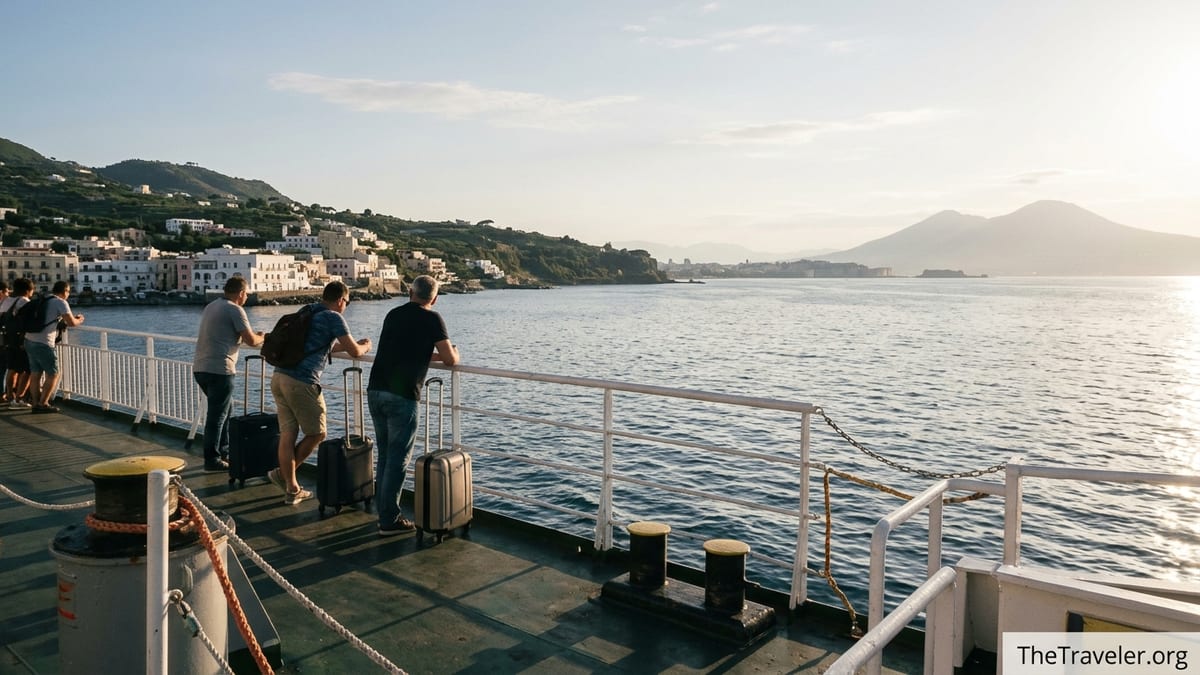
Sailing from Ischia to Naples does not have to be a chaotic dash for the boat ramp. With a clear understanding of the ports, a considered choice between hydrofoil and conventional ferry, and realistic timing around your onward transport, the crossing can be a calm, almost scenic pause between phases of your trip. Whether you are watching the castle of Ischia recede from an open ferry deck or sipping espresso in a hydrofoil lounge as Vesuvius comes into view, the key is to remove unknowns in advance.
In practical terms this means checking which port you depart from and arrive at, deciding how much buffer time you want before a flight or train, and buying tickets in a way that matches the season you are traveling in. Allow a little extra time for transfers to and from the ports, especially with luggage or children, and be prepared for modest variations in schedule due to sea conditions. If you approach the route as a short, well planned excursion rather than a logistical hurdle, you are far more likely to step off the boat in Naples feeling ready for whatever comes next.
FAQ
Q1. How long does the ferry from Ischia to Naples take?
The fast hydrofoils usually take around 50 to 60 minutes between Ischia Porto and Naples, while conventional ferries typically need about 1 hour 15 to 1 hour 30 minutes depending on stops.
Q2. Do I need to book my Ischia to Naples ticket in advance?
In July and August, and around Italian holidays, advance booking is strongly recommended, especially for morning and late afternoon departures. In spring and autumn you can often buy tickets at the port on the day, although booking ahead still helps if you have tight connections.
Q3. Which Naples port is better for the airport, Molo Beverello or Calata Porta di Massa?
Both ports work for the airport, but Molo Beverello is slightly more convenient because the Alibus shuttle stops very close and taxis are plentiful. From Calata Porta di Massa you can walk or take the free internal shuttle to Beverello, then use the same Alibus or a taxi.
Q4. Can I take my car or scooter from Ischia to Naples?
Yes, but only on conventional ferries that carry vehicles, not on hydrofoils. You must book a specific sailing with car space, arrive earlier for check in and be prepared for higher costs compared with foot passenger tickets.
Q5. How early should I arrive at the port on Ischia before departure?
For foot passengers, arriving about 30 minutes before departure is usually enough outside peak season. In summer, and if you still need to buy tickets, aim for 45 to 60 minutes, especially for popular morning and late afternoon boats.
Q6. What happens if the sea is rough or there is bad weather?
In rough conditions, fast hydrofoils can be delayed or canceled first, while larger ferries may still run with some motion. In winter and during storms you should check schedules on the morning of travel and consider switching to an earlier or larger ferry if reliability is a priority.
Q7. Is there a big difference in price between ferries and hydrofoils?
Prices are broadly similar, but hydrofoils are usually a little more expensive for foot passengers. As of 2026 it is typical to pay a bit over 20 euros one way on a hydrofoil, with ferries often a few euros less, depending on company and season.
Q8. Can I bring large luggage or sports equipment on board?
Yes, but hydrofoil companies in particular may charge extra for bags larger than standard cabin luggage, and there can be separate fees for items like bicycles or surfboards. It is advisable to check baggage limits when booking and to arrive prepared to pay a small surcharge at the ticket office if needed.
Q9. Are there food and drinks available on the Ischia to Naples boats?
Most conventional ferries have a small bar or cafeteria serving coffee, soft drinks, snacks and sometimes hot food. Hydrofoils often offer at least basic refreshments, but the choice can be limited, so many travelers bring water and snacks purchased on Ischia.
Q10. Is it easy to reach Napoli Centrale station after arriving by ferry?
Yes. From Molo Beverello you can walk to the Municipio metro station or take the Alibus or a taxi to Napoli Centrale or Napoli Piazza Garibaldi. From Calata Porta di Massa you can either walk or shuttle to Beverello first, then use the same transport options to reach the station.