


My ferry from Ischia to Naples was supposed to be an easy, blue-sky crossing: one last look at the island’s pastel houses before rolling my suitcase along Naples’ chaotic waterfront. Instead, it turned into ninety minutes of queasy suspense that completely changed the way I plan island trips in the Gulf of Naples. Only later did I realize that a two-minute look at the marine weather forecast could have spared me, and a lot of other passengers, a miserable ride.
Get the latest updates straight to your inbox!
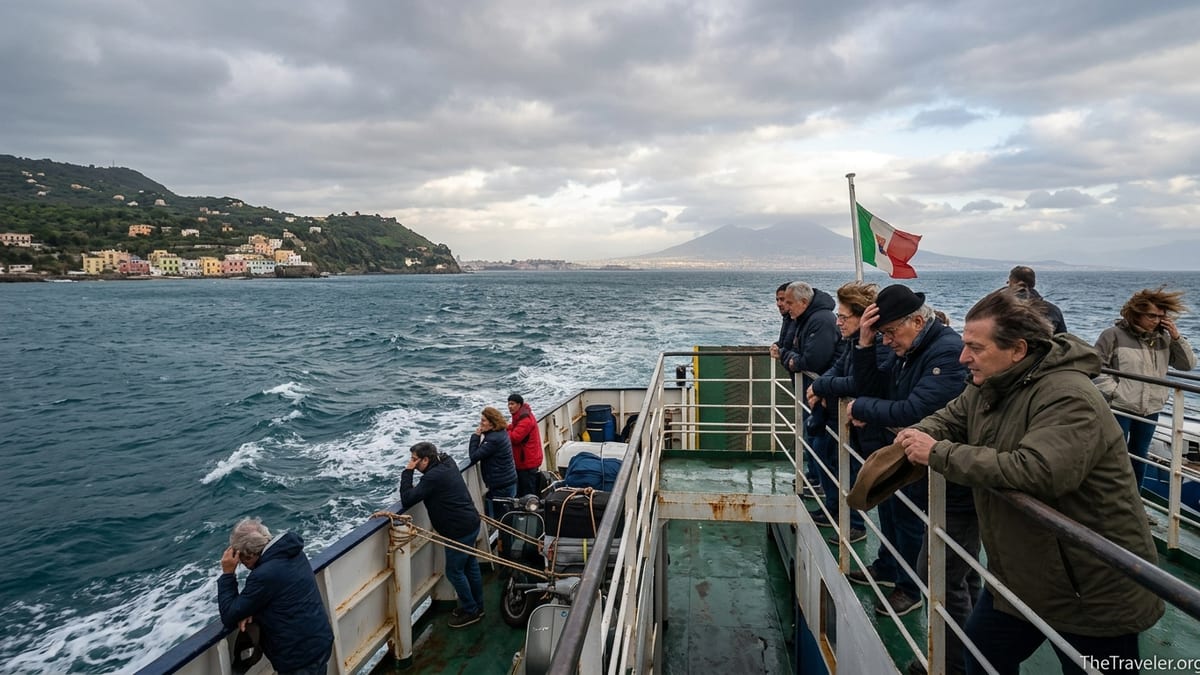
Leaving Ischia: How a Simple Crossing Went Sideways
The day started perfectly. I was staying near Ischia Porto and had a mid-morning ferry booked back to Naples Porta di Massa with Medmar, a classic car ferry that locals told me was more stable than the faster hydrofoils. At the ticket office the departure boards were a patchwork of green and red: several high-speed hydrofoils to Naples Beverello had already been cancelled due to rough seas, but the slower ferries were still marked on time. I noticed it. I shrugged. The sky over the port looked mostly clear, and I convinced myself that the cancellations were an overreaction.
On board, the first twenty minutes lulled everyone into complacency. We slid past Procida’s colorful marina and a couple of Alilauro hydrofoils sat motionless at the dock, crews waiting for the wind to drop. Then, about halfway to Naples, the mood changed. The swell in the Gulf of Naples had built into steep, confused waves, the kind that seem to hit you from two directions at once. Our big ferry could handle it, but each roll sent suitcases sliding and coffee flying. A family from Munich, who had switched from a cancelled hydrofoil to our ferry at the last minute, huddled near me in the lounge and quietly pulled out paper sick bags.
By the time the skyline of Naples appeared, the air in the cabin was thick with that unmistakable smell of diesel, saltwater, and seasickness. People queued for the restrooms, crew moved briskly but calmly, and a few locals looked bored, scrolling their phones as if this was nothing unusual. When we finally docked at Porta di Massa, we learned that all remaining hydrofoils that afternoon had been suspended and even some later ferries were in doubt. My phone’s marine weather app, which I opened on the pier out of curiosity, showed what I should have checked that morning: winds over 25 knots and a rising swell in the central hours of the day.
Why Weather Rules the Gulf of Naples
If you are planning to travel between Ischia and Naples, the most important timetable is not the printed one on the wall but the one written in the wind and waves. The Gulf of Naples is shallow in places and funneled by the surrounding islands and mainland, which means that when westerly or southwesterly winds pick up, waves can build quickly. Local authorities and ferry operators like Caremar, Medmar, Snav, and Alilauro routinely adjust sailings when forecasts show strong winds and rough seas, especially in winter and early spring.
In practice, this means that high-speed hydrofoils are the first to be cancelled. These sleek, fast boats sit higher on the water and are more sensitive to wave height and direction. Travelers are often attracted by the idea of a 50 to 60 minute crossing from Ischia Porto to Molo Beverello in Naples and are willing to pay more for the convenience. Yet those same fast services are usually the first to disappear from the board when a storm front passes through the Tyrrhenian Sea or the mistral funnels down the coast.
Traditional ferries, which can take around 70 to 90 minutes between Ischia and Naples depending on the vessel and any stop in Procida, are heavier and generally more stable in rough seas. They are also more likely to operate when high-speed services are suspended, although in extreme conditions even ferries stop running. In January 2026, for example, a severe storm isolated Ischia and Procida for hours as gale-force winds and waves over three meters forced all maritime connections to halt. Travelers who had not checked the forecast found themselves stuck either on the islands or in Naples with hotel nights unexpectedly extended.
This hierarchy of vulnerability means that your ticket type quietly dictates your exposure to disruption. If your schedule is flexible and the weather is settled, a hydrofoil can be a pleasure. If you are catching a same-day flight out of Naples or connecting to a long-distance train, relying on a high-speed craft during unsettled conditions is a gamble you might regret.
Hydrofoil vs Ferry: What My Crossing Taught Me
Before that rough crossing, I saw the choice between hydrofoil and ferry mostly as a question of speed versus price. A typical hydrofoil from Ischia to Naples might cost a few euros more than the slower car ferry but shave 30 to 40 minutes off the journey. On paper, that looked efficient. In reality, I watched several travelers who had booked a morning hydrofoil scramble to rebook on our ferry after reading “sospeso” next to their departure as the wind picked up.
On days like that, the port of Ischia becomes a real-time case study in transport risk management. Families with small children, older travelers, and people prone to motion sickness were queuing at the ticket window asking whether they should aim for the next hydrofoil or secure a spot on the more solid-looking Medmar or Caremar ferry. Staff gently steered the nervous toward the larger ships, explaining that hydrofoils might run again later if conditions improved, but there were no guarantees.
My own ferry ride, although far from comfortable, underlined the difference. The ship rolled and pitched, but the motion was heavy and predictable compared to the sharper slaps you feel on a smaller, faster craft. Passengers who had involuntarily upgraded from hydrofoil to ferry that morning repeatedly said some version of the same thing: “I am so glad this is not the small boat.” When we docked in Naples, the hydrofoil passengers were still staring at departure boards waiting for weather updates, while our ferry, though delayed, had completed the crossing.
Since then, I have adopted a simple rule for the Ischia to Naples route. If the forecast is calm and my schedule relaxed, I might treat myself to a fast hydrofoil for the views and the shorter travel time. If rain systems or wind are in the picture, I default to a conventional ferry, accept the longer crossing, and give myself a generous cushion before any onward connections. The peace of mind is worth more than the half-hour saved.
How to Check Weather and Sea Conditions Before You Sail
The good news is that checking conditions for the Ischia to Naples crossing is straightforward. You do not need to be a sailor or read complex marine charts. A combination of a reliable weather app and a quick look at the morning’s sailing situation will tell you most of what you need to know. After my rough crossing, I started using general weather apps that include wind speed and gusts hour by hour, plus specialized marine forecasts that focus on the Tyrrhenian Sea and the Gulf of Naples.
When looking at a forecast for the day of your crossing, pay attention to wind speed, wind direction, and any mention of swell or rough seas. As a loose guide, if winds are forecast around 15 to 20 knots from the west or southwest and rising, there is a reasonable chance that hydrofoils will be delayed or cancelled at least for a few hours. If forecasts show stronger winds or storms moving through, assume that your plans may need to change and avoid tight connections with trains or flights.
On the day itself, the departure boards at Ischia Porto, Casamicciola, or Forio tell their own story. If you see multiple hydrofoil departures to Naples Beverello already cancelled or marked subject to weather while ferries to Porta di Massa and Pozzuoli are still running, that is your cue that conditions are marginal. It is also wise to check the websites or social channels of operators like Caremar, Medmar, and Alilauro on the morning of travel, as they often post notices about suspended or delayed sailings when bad weather affects the Gulf.
If you are staying in a hotel or guesthouse on Ischia, staff at the front desk are often the most practical source of advice. They watch ferry disruptions every winter and early spring. On one particularly windy February morning, a receptionist in Lacco Ameno was blunt: “Take the first ferry that leaves, do not wait for the afternoon, and definitely not for a hydrofoil.” That kind of local insight, combined with your own look at the forecast, is the closest thing to a weather-proof plan you can have.
Planning Around Delays: Realistic Timings and Backup Plans
One of the biggest mistakes I made on my first rough crossing was building an over-optimistic schedule. I had allowed just two hours between the scheduled arrival of my ferry at Porta di Massa and a long-distance train leaving Napoli Centrale. Under perfect conditions, that buffer might have worked. In reality, we departed late, battled heavy seas that slowed us further, and then I had a slow taxi ride through Naples’ midday traffic. I reached the station with minutes to spare and a stress level that erased all the relaxation of my time in Ischia’s thermal spas.
Now, when I travel between Ischia and Naples, I treat the scheduled crossing time as only part of the journey. A conventional ferry might be listed at 90 minutes, but I mentally budget at least two and a half hours from boarding to disembarking and clearing the port, plus extra time for any onward transfer. If I have a flight out of Naples, I aim to travel back from Ischia at least half a day earlier than absolutely necessary, staying one night in the city before departure if possible. That way, even if a storm temporarily isolates the island, I am not watching the departure board with a sinking heart.
I also keep my luggage strategy flexible. On days when seas might be rough, it is worth minimizing the number of bags you bring on board, especially hand luggage that might roll around the cabin. On my uncomfortable crossing, small suitcases became loose projectiles whenever we encountered a bigger wave. On a later trip, learning from that experience, I left a large suitcase in luggage storage in Naples for a couple of nights and only took a smaller bag to Ischia. It made boarding easier and gave me one less thing to worry about when the ferry started to move.
Perhaps the most important mental shift is to treat ferry schedules as intentions, not guarantees. By building in wide margins and accepting that the sea has the final word, you shift from constant anxiety about delays to a calmer, more resilient mindset. That perspective makes it easier to adjust if a gale closes the Gulf for a morning or an afternoon.
Safety, Comfort, and Seasickness: What It Feels Like in Rough Seas
My rough Ischia to Naples crossing was never unsafe, but it was undeniably uncomfortable for many passengers. Crew members, who deal with winter storms year after year, were calm and reassuring. They encouraged people to sit down, secured loose objects where possible, and checked regularly on a few visibly distressed travelers. The ship rolled steadily but predictably, and while cups slid on tables and a couple of chairs toppled, there was no sense of panic.
For those prone to motion sickness, however, even a safe but lumpy crossing can be miserable. I saw plenty of practical lessons play out in real time. The passengers who fared best had taken a seasickness tablet before boarding, chosen seats in the middle of the ship near the waterline where motion is less intense, and kept their eyes fixed on the horizon whenever possible. Those who skipped breakfast or drank only water seemed less affected than people who had heavy meals and coffee just before sailing.
Clothing choices also made a difference. On a windy day, the outside decks can be cold and spray-soaked even when the island behind you is basking in sunshine. A light waterproof jacket, closed shoes, and a scarf or hoodie made it easier for people to move between inside and outside spaces as they searched for fresh air. On my first rough crossing, I underestimated the temperature drop and was shivering every time I stepped onto the open deck for a lungful of sea air.
Despite the discomfort, it helped to remember that ferries in the Gulf of Naples are built for these conditions. Captains are intimately familiar with their routes and do not hesitate to slow down or alter course slightly to ride the waves more comfortably. When conditions truly cross the line from uncomfortable to unsafe, services are suspended altogether. That knowledge, combined with preparation for motion sickness and a realistic expectation of what a winter sea looks like, can turn a potentially traumatic experience into a survivable story.
How My Mindset Changed After One Difficult Crossing
In the days after that choppy journey back to Naples, I realized how casually I had treated sea travel in the past. I would never plan a mountain hike without looking at the weather, but I had repeatedly boarded ferries in Italy and elsewhere with only a cursory glance at the sky. The Ischia to Naples route felt so routine, with departures every day and a constant flow of tourists and commuters, that I forgot it is still an open stretch of sea.
That experience shifted my habits in ways that reached beyond the Gulf of Naples. On later trips to other Mediterranean islands, I started checking not only air temperatures but also wind forecasts and wave heights. When a forecast showed a front moving through on the day I planned to island-hop, I learned to move my travel forward or back by a day to avoid the worst of it. The extra night in a hotel was often cheaper and less stressful than dealing with last-minute cancellations and lost reservations.
It also gave me a new respect for local advice. In Ischia’s bars and cafes, winter conversations often include a casual “oggi il mare è brutto” from people who have spent their lives watching the Gulf. When hotel staff or boat crews hint that you should leave earlier, choose a particular sailing, or avoid a certain time of day, they are drawing on collective memory of storms and near misses you will never read about in a guidebook.
Most of all, that crossing reminded me that travel is always a negotiation with forces beyond our control. You can buy the best ticket, study the timetable, and have every connection plotted out, but if the Tyrrhenian Sea decides to kick up a fuss, your role shifts from planner to patient observer. Checking the forecast does not remove that uncertainty, but it helps you enter the negotiation better prepared.
The Takeaway
If I could go back to that morning in Ischia Porto, I would still ride the ferry to Naples. I might even choose the same operator and the same departure time. The difference is that I would open a weather app before leaving my guesthouse, notice the strengthening westerly wind, and mentally prepare for a slower, rougher crossing. More importantly, I would not schedule a tight connection in Naples or assume that high-speed services would keep running all day.
For anyone planning the Ischia to Naples route, the essential lesson is simple: treat the weather forecast as part of your ticket. When seas are calm, enjoy the quick hydrofoil ride and the postcard views of Ischia fading behind you. When forecasts hint at rough conditions, book a conventional ferry, travel earlier in the day, allow generous margins for onward journeys, and prepare for a bit of motion. A few minutes of checking conditions can turn what might have been a stressful ordeal into just another memorable chapter in your Italian island story.
FAQ
Q1. How long is the ferry from Ischia to Naples in normal conditions
The conventional ferry usually takes around 70 to 90 minutes, while high-speed hydrofoils can take roughly 50 to 60 minutes when seas are calm.
Q2. Which port in Naples should I choose when coming from Ischia
Hydrofoils usually arrive at Molo Beverello, close to central Naples, while conventional ferries dock at Calata Porta di Massa, which is slightly farther but connected by taxis and buses.
Q3. Are hydrofoils from Ischia to Naples safe in rough weather
Safety standards are high, but hydrofoils are more sensitive to rough seas and are often the first services to be delayed or cancelled when the wind picks up.
Q4. How far in advance should I check the weather before my crossing
It is wise to look at forecasts a couple of days ahead and then again on the morning of travel, focusing on wind speed, direction, and sea conditions.
Q5. What should I do if my hydrofoil is cancelled due to bad weather
Go directly to the ticket office in Ischia Porto to transfer to a conventional ferry if available, and contact any hotels, airlines, or train companies about possible schedule changes.
Q6. Is it better to book ferry tickets in advance or buy them on the day
In peak summer it is sensible to book ahead, especially for popular times, but in winter and shoulder seasons you can often buy on the day once you know the weather situation.
Q7. How much buffer time should I allow in Naples after arriving from Ischia
A buffer of at least two to three hours before any long-distance train or flight is recommended, and more during months when storms are common.
Q8. What can I do to reduce seasickness on the Ischia to Naples route
Choose a conventional ferry, sit near the middle of the ship close to the waterline, look at the horizon, avoid heavy meals before departure, and consider motion sickness tablets if needed.
Q9. Are there alternative routes if ferries between Ischia and Naples stop
Sometimes ferries from Pozzuoli operate when certain Naples services are disrupted, but in severe storms all maritime connections may be suspended until conditions improve.
Q10. What months are most likely to have weather-related ferry disruptions
Late autumn, winter, and early spring see the most frequent storms in the Gulf of Naples, while summer crossings are usually calmer, though occasional windy days still occur.