


Abercrombie & Kent has long marketed itself as a byword for high-end, seamless touring, from small-group safaris in Botswana to private journeys through Japan. Many travelers do have exceptional experiences, but others discover after booking that the reality does not match the glossy brochure or the price tag. The difference often comes down to how carefully you choose, question and customize your tour before you pay the deposit. This guide looks at the most common mistakes travelers make when booking Abercrombie & Kent tours and how to avoid them, using real-world patterns from recent trips and reviews.
Get the latest updates straight to your inbox!
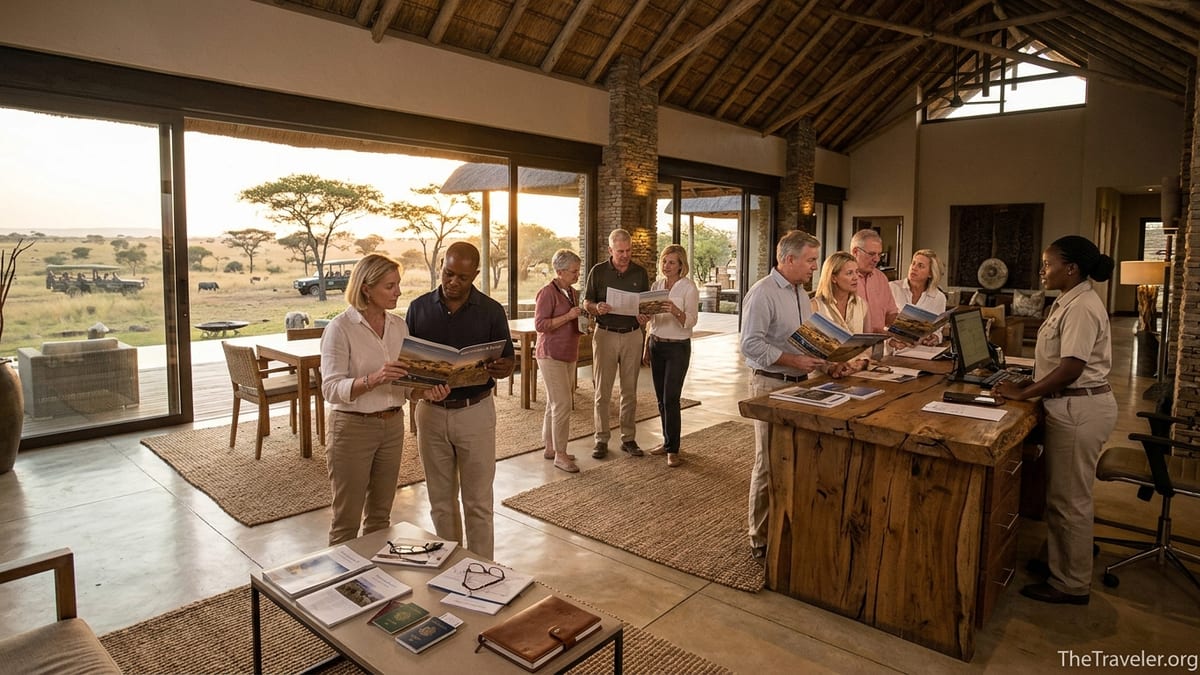
Confusing Luxury Branding With Automatic Value
One of the biggest mistakes travelers make with Abercrombie & Kent is assuming that the word “luxury” guarantees good value in every destination. A&K’s Small Group Journeys and tailor-made itineraries often package upscale hotels, private guiding and transfers under a single price, which can easily reach five figures per person for a two-week trip. For example, recent advertised rates for a 10-day “Ultimate Botswana Safari” small-group tour start from around 13,895 dollars per person, excluding international flights. For some guests, the seamless logistics, Resident Tour Director and high-end lodges justify that premium. Others only realize later that the same or similar properties and experiences could have been booked independently or via a local specialist for significantly less.
Several travelers who have posted their experiences online describe discovering after the fact that hotels on their A&K itinerary were selling publicly for a fraction of what they effectively paid through the package. In one Egypt trip example that circulates frequently in traveler forums, guests found that rooms marketed as “luxury” through A&K were available directly for roughly 200 dollars per night, while their per-night package cost, when divided out, exceeded 1,000 dollars. The core mistake was not asking, in advance, how much of the overall tour price was being allocated to hotels, internal flights, guiding and markups.
The right approach is to treat A&K’s “luxury” branding as a starting point, not a conclusion. Before you commit, take two or three representative hotels from the draft itinerary and check typical nightly rates over your dates using public booking engines. Then estimate the cost of equivalent private transfers and day tours. If the packaged price is far above what you calculate, ask your A&K consultant to explain what specific added value you are getting, such as exclusive access, higher room categories, or flexible on-trip support. When travelers skip this step, they are far more likely to feel that they overpaid, especially in destinations like Egypt, Morocco, or parts of Europe where high-quality local operators are plentiful.
Value is not only about price either. Some guests who booked A&K group journeys expecting opulent surroundings at every turn felt underwhelmed when a few nights were spent in solid but not spectacular business-style hotels, especially in big gateway cities like Johannesburg or Lima. Without carefully reviewing each property and understanding A&K’s reasoning – sometimes these hotels are chosen for logistics or safety rather than wow factor – travelers can end up disappointed, even when the overall trip is well run.
Not Reading the Fine Print on Terms, Payments and Protection
Abercrombie & Kent’s booking terms and conditions, updated in January 2026 for U.S. guests, are long and legalistic, and many travelers simply skim them or skip them entirely. That is a costly mistake. The contract spells out payment schedules, cancellation penalties and what happens if you change part of your trip after booking. For multi-country itineraries that combine different local suppliers, the terms can be especially strict; for instance, if you cancel one segment but not another, you may find that you are not entitled to any partial refund and might even be required to cancel the entire journey to avoid forfeiting substantial sums.
Travelers also often confuse A&K’s optional Guest Protection Program, which is underwritten by a third-party insurer, with a blanket “cancel for any reason” safety net. In reality, benefits depend on the level of coverage purchased and the timing of events. For example, if you need to cancel for a medical reason, you usually must notify both A&K and the insurer as soon as possible and be able to document the condition. If you simply change your mind about a destination a few weeks before departure, standard coverage may not reimburse you. Some guests only discover these distinctions when they try to file a claim after a late-stage cancellation and are surprised by how much remains nonrefundable.
Payment timelines are another frequent source of frustration. On many A&K journeys, especially complex safaris or polar expeditions, large nonrefundable deposits are required months in advance, and the remaining balance can be due 90 days or more before departure. If you are booking for peak dates such as East Africa’s Great Migration or Japan’s cherry blossom season, cancellation windows can be even less forgiving because of the high demand for limited space. Travelers who do not budget for these early, substantial payments may feel blindsided when final invoices fall due far earlier than for typical package holidays.
The practical solution is to treat the terms and conditions as essential reading, not a formality. Before paying a deposit, ask your consultant to walk you through the cancellation schedule for your exact journey and point out any elements that are fully nonrefundable from day one, such as certain charter flights or luxury lodge stays. Compare A&K’s in-house protection program with an independent travel insurance policy that might offer broader cancel-for-any-reason provisions. A few extra questions before booking can prevent extremely expensive misunderstandings later.
Misunderstanding Group Size, Pace and What “Small Group” Really Means
A&K promotes its Small Group Journeys as intimate experiences, often highlighting an average of 14 guests and a maximum group size that typically ranges between 12 and 18, depending on the tour. The phrase “small group” sounds appealing, but travelers sometimes assume this guarantees a slow pace or highly personalized touring in every situation. In reality, some itineraries are quite fast-moving, with early morning departures, internal flights and multiple included activities per day. Guests who imagined long, lazy afternoons around the pool can find themselves exhausted by day four.
Recent examples include classic East Africa safaris where guests move every two or three nights between parks, or multi-country itineraries in Europe that combine Italy and Croatia in just over a week. While the group size remains limited, the logistics can still feel intense. Travelers who are less mobile, jet-lagged or unused to back-to-back sightseeing days sometimes struggle to keep up, especially when add-on optional excursions are offered in the evenings. Complaints about “too rushed” or “no downtime” usually trace back to initial expectations that were never clearly aligned with the day-by-day schedule.
Another subtle issue is that a “maximum of 18 guests” does not mean the group will always be smaller. Popular departures of flagship trips, such as 12-day Kenya and Tanzania safaris or Nile cruise-based Egypt journeys, often run near capacity in high season. For some travelers, 16 like-minded guests feels convivial and fun. For others who imagined eight people in two vehicles, the reality of three safari vehicles or a bus with nearly twenty passengers can clash with their mental picture of a boutique, near-private experience.
The way to avoid this mismatch is to probe the details before you book. Ask specifically what the maximum and typical group size are for your selected departure, and whether any dates are already close to full. Request a detailed hour-by-hour itinerary and discuss how much flexibility there is if you want to skip an activity or rest for a morning. If a slower pace is important to you, consider a private or “tailor-made” A&K trip instead of a group journey, and compare the cost difference. Many negative surprises arise not from the inherent structure of A&K tours, but from guests projecting a different style of travel onto a format that is actually fairly structured and social.
Overlooking What Is Actually Included (and What Is Not)
Another common mistake is assuming that a high per-person price means everything is included. While A&K itineraries usually cover premium hotels, many meals, internal transportation and guided touring, there can be notable exclusions that add significantly to the final cost. International flights to and from your starting point are often left out, as are some alcoholic beverages, certain optional experiences and gratuities for local guides and staff. On a two-week trip that crosses regions, these extras can add several thousand dollars per couple, especially in destinations with high restaurant prices like Japan or Scandinavia.
Travelers on recent A&K journeys have noted that while some meals are lavish, other days have only breakfast and an early dinner included, leaving guests to fend for themselves at lunchtime, sometimes in resort areas where a simple meal can be surprisingly expensive. Similarly, a “city highlights” tour may be included, but access to a special rooftop, after-hours museum visit or food tour might be offered only as an optional add-on at additional cost. When guests do not factor these extras into their pre-trip budgeting, they may feel nickel-and-dimed on the ground, despite having paid a premium base price.
Misunderstandings can also arise around entrance fees and line-skipping privileges. A&K often advertises skip-the-line access at major sites, and in many cases this works smoothly. However, individual experiences vary. Some travelers in Europe have reported that a pre-booked timed entry did not include full access to a cathedral dome or special gallery they assumed was part of the visit, leading to frustration and the need to queue and pay again if they wanted the full experience. The core error was not asking in advance exactly which areas or ticket types were included.
Before you finalize a booking, ask your consultant for a clear list of inclusions and exclusions in everyday language. For example, confirm whether house wine and beer are included at dinner on a Nile cruise, whether airport departure transfers are provided at the end of the tour, and what customary tipping levels are suggested for your Resident Tour Director, drivers and local guides. If the written materials remain vague, press for specifics with real scenarios, such as “On day 5 in Florence, will we be able to go inside the Duomo as part of the tour, or is it just an exterior visit and skip-the-line ticket is extra?” Precision up front avoids awkward conversations and surprise charges later.
Ignoring Destination-Specific Alternatives and Local Expertise
Because Abercrombie & Kent has a long-standing global brand, some travelers do not seriously compare destination-specific specialists before booking. This is especially common in places like Egypt, Jordan, Southern Africa and Japan, where A&K has featured heavily in high-end travel media for decades. However, in these same destinations, there are increasingly strong local or regional operators that may offer similar quality of guiding and accommodation at a lower price, or with more flexibility in tailoring experiences.
For instance, in Egypt, several well-regarded local companies operate luxury Nile cruises on ships also used by A&K or comparable vessels, pairing them with five-star hotels in Cairo and Luxor. Travelers who automatically default to A&K without checking may later hear from fellow passengers that they paid markedly more for essentially the same cabin and touring schedule. Likewise, in Botswana or South Africa, many independent safari specialists can secure space at top-tier camps such as those in the Okavango Delta or Sabi Sand and package them with charter flights and transfers. The critical edge A&K sometimes offers is in on-the-ground support and the presence of an experienced Resident Tour Director accompanying the group, but not every traveler weighs that as heavily as cost.
Another pattern in reviews and forum discussions is a gap between expectation and reality around “insider access.” Marketing language often highlights private openings, special tastings or behind-the-scenes encounters. While these do exist, they may be limited to one or two standout moments on a trip, rather than being woven through each day. Local specialists can sometimes arrange similar experiences, but with a more flexible, bespoke slant if they know your precise interests, whether that is contemporary art, food markets or architecture. Travelers who do not research these alternatives beforehand may overpay for a style of touring that another operator could have delivered in a more tailored way.
To avoid this trap, treat A&K as one contender in a competitive field, not the automatic choice. Request similar sample itineraries and ballpark pricing from at least one local specialist and one other international upscale operator for the same dates and outline. Ask each to explain what is genuinely unique about their proposal, in concrete terms, such as specific lodges, private access, or 24/7 local support. If you ultimately choose A&K, you will do so with eyes open, rather than discovering later that you could have had a comparable experience at a lower price or with better alignment to your personal interests.
Failing to Match the Trip Style to Your Travel Personality
Abercrombie & Kent offers several touring styles, from tightly scheduled Small Group Journeys to fully private Tailor-Made Travel. A frequent mistake is picking a trip category that does not suit your personality or priorities. Social travelers who enjoy meeting new people usually fare well on small-group itineraries, especially ones that involve shared wildlife viewing, river cruises or train journeys. Independent-minded travelers, or those with very specific interests or dietary needs, can feel constrained by fixed schedules and shared dining arrangements.
Some recent guests have commented that they felt rushed through destinations where they would have preferred more unscripted time. In Japan, for instance, a group tour might dedicate a single afternoon to a neighborhood like Kyoto’s Gion or Tokyo’s Shibuya, with limited time to linger in a teahouse or explore side streets. Travelers who love getting lost in cities, revisiting favorite coffee bars or taking long photography walks may find that the group moves on just as they are settling in. Those same travelers often report greater satisfaction on private journeys, where a guide can adapt the day as they go.
Physical ability and pace are also key. Many A&K itineraries involve walking tours on uneven surfaces, stair climbing in historic buildings and early morning departures for flights or game drives. If you are traveling with older relatives or have mobility concerns, simply reading the “moderate activity level” description may not be enough. You need concrete examples: How many hours will we be on our feet in Florence? How many steps are there at Petra or Machu Picchu, and is there an option to shorten or skip those segments? When travelers fail to ask these granular questions, they sometimes end up either overextending themselves or skipping marquee experiences they had expected to enjoy.
The key is honest self-assessment and open discussion with A&K staff before booking. Explain your preferred daily rhythm, social comfort level, interests and any physical limitations. Ask them to recommend a trip style and specific departures that align with those factors, rather than selecting purely based on the destination headline. If the suggested solution is a more expensive private journey, weigh that additional cost against the risk of frustration on a group trip that does not fit your style. The most satisfied A&K travelers tend to be those whose trip format genuinely matches who they are.
The Takeaway
Abercrombie & Kent can deliver highly polished, memorable trips, from Galapagos yacht charters to multi-country African safaris. Many recent guests praise the professionalism of Resident Tour Directors, seamless airport transfers and thoughtful touches such as surprise picnics or local cultural encounters. However, a significant minority feel disappointed or overcharged, and their frustrations often stem from the same avoidable mistakes: not interrogating the value behind the luxury label, skipping the fine print on payments and protection, assuming “small group” means ultra-personalized, overestimating inclusions, overlooking strong destination-specific alternatives and choosing a trip style that does not match their personality.
To get the most from an A&K tour, approach the planning process like a serious investment. Ask detailed questions about pricing structure, inclusions, pace and group size. Compare at least one or two alternative operators in the same destination. Be precise about what luxury means to you, whether that is opulent hotels, flawless logistics, deep cultural immersion or all of the above. When you pair A&K’s global infrastructure with clear-eyed expectations and careful due diligence, you are far more likely to step off the plane at the end of your journey feeling that the experience was worth every penny.
FAQ
Q1. Are Abercrombie & Kent tours really worth the high prices?
Value depends on your priorities. Many travelers feel the seamless logistics, experienced Resident Tour Directors and high-end accommodations justify the premium. Others, especially in destinations with strong local operators, conclude that they could have arranged a similar trip for less. Comparing hotel and flight costs independently before booking is the best way to judge whether the markup matches the service you expect.
Q2. How small are Abercrombie & Kent “Small Group Journeys” in practice?
Most Small Group Journeys advertise a maximum of about 12 to 18 guests, with an average around 14. Popular departures in peak seasons often run close to that maximum, so you should expect a genuinely small but still social group, not a semi-private trip. If you want more privacy or flexibility, a private or tailor-made itinerary is usually a better fit.
Q3. What are the most common hidden costs on A&K trips?
Travelers are often surprised by the cost of international flights, some lunches and dinners, drinks that are not included with meals, optional excursions and gratuities. In expensive destinations such as Japan or Northern Europe, these extras can add thousands of dollars over the course of a trip. Before booking, ask for a realistic estimate of on-the-ground spending beyond the tour price.
Q4. How strict are Abercrombie & Kent’s cancellation and change policies?
A&K typically requires substantial deposits and full payment well before departure, with cancellation penalties that increase as the trip approaches. Some elements, such as charter flights or certain lodges, can be nonrefundable from the start. Changes to part of an itinerary may not be possible without penalties. Carefully review the current terms and conditions and discuss worst-case scenarios with your consultant before paying a deposit.
Q5. Does the Guest Protection Program let me cancel for any reason?
Not exactly. The Guest Protection Program, administered through an external insurer, usually covers specific insured reasons such as illness or certain unforeseen events, subject to documentation and timing. It is not automatically a full “cancel for any reason” policy. If you want that broader flexibility, consider an independent travel insurance policy that explicitly offers it and compare coverage details.
Q6. How can I tell if a specific A&K itinerary is too fast-paced for me?
Ask for a detailed daily schedule that lists approximate departure and arrival times, flight durations and walking expectations for each day. Then map that against your usual travel style. If you see many early starts, frequent hotel changes and long days of sightseeing, the trip is likely to feel busy. You can request a slower-paced private version or choose an itinerary with more three-night stays in each location.
Q7. Are there destinations where A&K is a better choice than local operators?
A&K’s strength is in complex or logistically demanding destinations where 24/7 support and experienced crisis management matter, such as multi-country African safaris or trips that combine remote regions and internal flights. Travelers who value a single point of contact, consistent service standards and an escorting Resident Tour Director often find A&K particularly useful in those contexts, even if local alternatives might cost less.
Q8. How should I compare Abercrombie & Kent with other luxury tour companies?
Request sample itineraries and approximate pricing for the same dates and destinations from at least two competitors, as well as from a reputable local specialist. Compare hotel choices, group sizes, what is included, and the level of on-trip support. Ask each company to highlight two or three concrete advantages of their proposal. The aim is not just to find the lowest price, but to see which operator best matches your priorities.
Q9. What questions should I ask an A&K consultant before booking?
Key questions include: typical and maximum group size for your departure, precise inclusions and exclusions, payment and cancellation timelines, physical demands of the itinerary, and how issues are handled on the ground if something goes wrong. You might also ask how hotels were selected, whether room categories can be confirmed in writing, and what flexibility you have to customize the program.
Q10. Can I use Abercrombie & Kent for part of a trip and book the rest myself?
Yes, many travelers use A&K for complex segments such as safaris, Nile cruises or remote regions, while booking simpler city stays or beach extensions on their own. If you take this approach, be clear with A&K about where their responsibility begins and ends, especially regarding transfers and flight connections, so there are no gaps in support or misunderstandings if schedules change.