


TripAdvisor remains one of the most influential travel platforms in the world, shaping where millions of travelers sleep, eat, and spend their money. Used wisely, it can save you from a bedbug-ridden guesthouse or a tourist-trap restaurant. Used carelessly, it can nudge you toward overpriced, overhyped experiences that look perfect online but disappoint in real life. Understanding where people go wrong with TripAdvisor is the first step to using it as a helpful decision-making tool instead of a shortcut to regret.
Get the latest updates straight to your inbox!
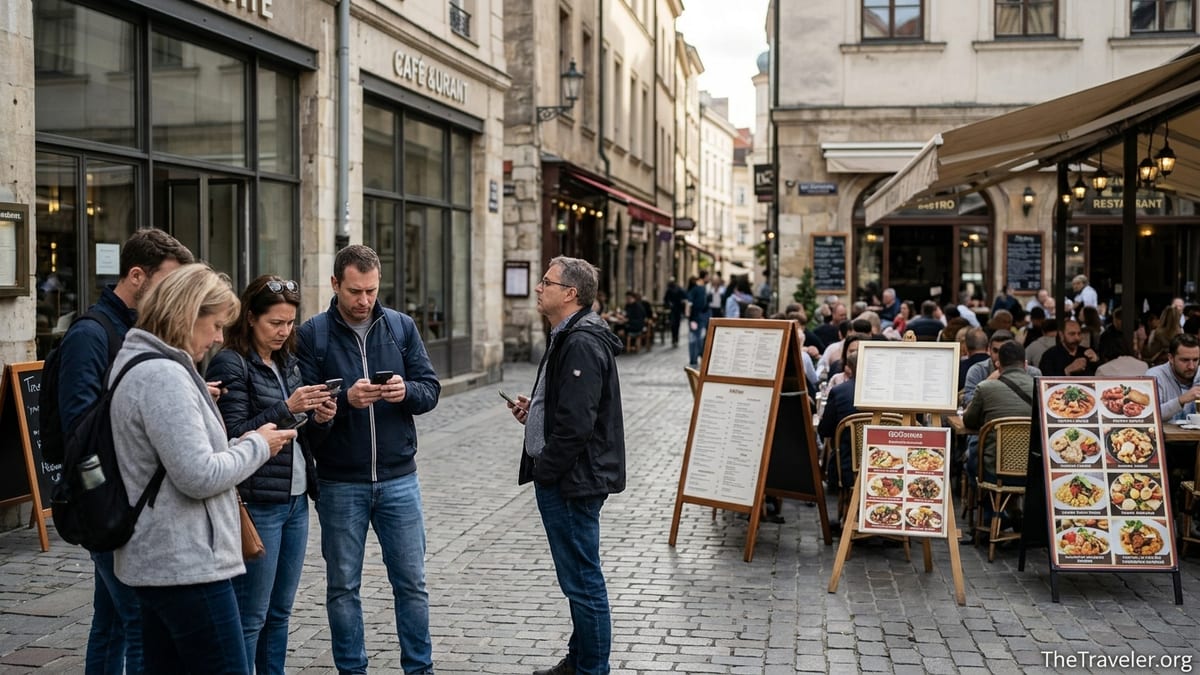
Relying On the Overall Rating Without Reading the Details
One of the most common missteps is treating TripAdvisor’s average score as the only thing that matters. Travelers see a hotel rated 4.5 out of 5 and assume it must be excellent, without noticing that many of those glowing reviews are several years old or refer to room types they are not booking. TripAdvisor’s own guidance stresses that recency and volume of reviews strongly influence its popularity ranking system, because a cluster of fresh feedback is more predictive than a high score built years ago. Yet many users still filter by “Top rated” and pick the first result without opening the reviews themselves.
Consider a mid-range hotel in Rome that held a 4.5 rating for years based on 2018 and 2019 comments praising its renovated rooms and attentive staff. In 2024, the property quietly changed ownership, cut housekeeping staff, and outsourced breakfast to a nearby café. The most recent reviews mention long waits at check-in and dirty common areas, but the overall score remains high because those older five-star reviews dominate the average. Travelers who book on the strength of that 4.5 rating alone often arrive to find a hotel that no longer matches the glowing description they trusted.
The same pattern appears with attractions. A “can’t-miss” boat tour in Thailand may have a stellar rating from pre-pandemic years when group sizes were small and fuel costs lower. More recent reviews might complain that tours now cram 40 people into the same boat and tack on extra fees for snorkeling gear. Travelers who scroll only through the first page of praise, or sort by “Best reviews” instead of “Newest,” risk missing crucial context about how an experience has changed over time.
The remedy is simple but requires discipline. Always sort reviews by most recent and read at least a handful that match your travel style and budget. If you are a solo female traveler, look for comments from similar travelers. If you plan to stay in a standard room rather than a suite, search within reviews for “standard room” or the exact room category name. Treat the average score as a starting point, not a verdict.
Ignoring Red Flags Around Fake or Distorted Reviews
TripAdvisor invests significant effort into fighting fraudulent reviews, including automated systems and human investigators that blocked or removed an estimated 2.7 million fake submissions in one recent year. The company’s latest transparency reports describe how it sends warnings to thousands of businesses caught incentivizing reviews or trying to manipulate their ranking. Despite this, fake or biased content still slips through, and travelers often fail to recognize the warning signs when they scroll through a listing.
Real-world cases surface regularly. Consumer groups and news outlets have highlighted hotels that suddenly accumulate dozens of five-star reviews from accounts with only one contribution and generic phrasing. In the United Kingdom, an investigation by the consumer organization Which? reported highly rated hotels that were later penalized by TripAdvisor for suspicious patterns of reviews. In small resort towns, it is not uncommon to see a new restaurant climb to the top of the rankings almost overnight, fueled by a burst of near-identical praise, only for disappointed guests to later note that the reality does not match the hype.
Travelers can protect themselves by treating every review as a single data point rather than a truth. Profiles with only one or two reviews, particularly when those reviews are either extremely positive or extremely negative, deserve extra scrutiny. A run of short five-star posts with vague language like “Amazing place! Best ever!” but no concrete details about the room, location, or service can indicate promotional activity. Likewise, a sudden wave of one-star reviews arriving within a few days may point to a backlash or organized campaign rather than a true collapse in quality.
Comparing TripAdvisor comments with reviews on other platforms helps too. If a hotel in Lisbon is rated 5.0 on TripAdvisor but sits around 8.0 out of 10 on a major booking site and 4.2 on Google, that discrepancy can be a clue that something is off. You might discover, for example, that many of the TripAdvisor reviews are several years old, while recent guests on other platforms mention ongoing renovation noise or reduced services. Let TripAdvisor be one voice among many, not the only judge.
Overlooking the Importance of Recency and Seasonality
Many travelers treat a review from three years ago as equally valid as one posted last month, even though travel businesses can change dramatically in a short period. Staff turnover, ownership changes, new management contracts, renovations, and global events such as the pandemic all reshape how a place operates. TripAdvisor’s own materials about its popularity ranking emphasize that recency is critical, because more current reviews reflect the experience future guests are likely to have. Yet when planning a trip, travelers often read the “Top” reviews surfaced by the algorithm and forget to check dates.
A classic example is a beach hotel that underwent a major renovation in 2022. Earlier reviews complain about moldy bathrooms and dated decor, while more recent comments praise the refreshed rooms and improved breakfast buffet. If you fail to filter for newest reviews, you might dismiss the property based on problems that no longer exist. The reverse can also be true. A beloved family-run guesthouse in Bali may accumulate hundreds of glowing reviews over a decade, only for standards to slip after it is sold to a larger group. The last fifty reviews might mention dirty pools and poor maintenance, but the hotel still appears in the top ranks because of its historical reputation.
Seasonality introduces another blind spot. A traveler planning to visit Athens in August might rely heavily on reviews written in October and November that rave about quiet streets and mild weather. Those reviewers avoid mentioning the 40-degree summer heat, peak-season crowds at the Acropolis, or the fact that some small island ferries are fully booked weeks in advance. Likewise, a Christmas market in Germany may have hundreds of positive reviews from December, but travelers visiting the same town in March will find a very different atmosphere. Reading reviews written in the same season you plan to travel offers a more reliable picture.
Before you book, scan the date distribution of reviews and deliberately read the most recent 10 to 20, giving extra weight to those from the same month or season. If you see a pattern of complaints emerging in the last year about issues like cleanliness, noise, or hidden fees, treat that pattern as more relevant than a long tail of older praise. If in doubt, emailing the property and politely asking whether a noted issue has been resolved can provide valuable reassurance.
Letting Rankings Dictate Plans Instead of Personal Priorities
TripAdvisor’s city rankings can subtly shape entire itineraries. Travelers arrive in Prague or Dubai and open the app to see the “Top restaurants” or “Top things to do,” then proceed to march down that list as though it were a to-do checklist. The problem is that TripAdvisor’s algorithm rewards volume and consistency of mainstream praise, which often means centrally located restaurants with broad appeal rise to the top, while small specialist venues or niche attractions stay buried. Travelers who blindly follow the rankings can end up in crowded, tourist-focused spots that do not reflect their interests or the local culture.
A clear illustration is the restaurant scene in major European capitals. In central Florence or Barcelona, the first page of TripAdvisor results frequently shows trattorias and tapas bars situated steps from major landmarks, many of which employ staff to stand outside and beckon passersby. These places succeed on TripAdvisor because they serve large numbers of visitors every day who then leave reviews about “great location” and “friendly staff.” Meanwhile, a tiny neighborhood place in a residential district, serving more traditional dishes and catering mainly to locals, might have an even higher rating but far fewer reviews, keeping it off the front page of search results.
The same issue appears with attractions. In cities like London or Paris, the top “things to do” lists highlight globally famous landmarks, which are important but hardly the whole story. Quieter museums, local markets, or free galleries often sit much lower in the rankings despite offering exactly the kind of experience some travelers value most. A traveler interested in contemporary art, for example, could spend an entire afternoon at a small gallery that barely appears on TripAdvisor but ranks highly in local recommendations.
To avoid this trap, start trip planning with your own priorities instead of the rankings. If your main interest in Tokyo is food, use TripAdvisor to cross-check specific ramen shops or izakayas recommended by local blogs or guidebooks rather than simply booking whichever restaurant appears at the top of the app. If you care about architecture in Chicago, search for particular buildings or walking tours that match that interest. Use TripAdvisor filters such as neighborhood, price range, and cuisine type to surface places that align with your preferences, and treat the “best of” lists as inspiration, not commandments.
Misreading Photos, Amenities, and Room Types
Another frequent mistake is trusting photos and amenities at face value without digging into the details. On TripAdvisor, property photos can mix official promotional images with traveler snapshots. Hotels often upload pictures taken on opening day, in perfect weather, with wide-angle lenses that make standard rooms appear much larger than they are. Years later, the same photos still sit at the top of the gallery even if wear and tear has set in. Travelers compare those glossy shots with a price they see on a booking site and assume the two match, leading to disappointment on arrival.
Room category confusion is particularly common. A resort in Mexico may display stunning images of its oceanfront suites and infinity pool, yet the cheapest “garden view” rooms sold through third-party sites look very different. On TripAdvisor, reviews for all room types are usually grouped together, and unless reviewers explicitly mention which category they booked, it can be hard to tell whether their praise for the “spacious balcony” or “sunset view” applies to your reservation. Real-world complaints often stem from travelers expecting a balcony, bathtub, or sea view that they only ever saw in marketing images and never actually booked.
Amenities can be equally misleading. A listing might show “airport shuttle,” “spa,” or “gym” as checkboxes that are technically true but functionally useless. In some resort towns, the “airport shuttle” is actually a paid transfer run by a third-party company at prices higher than a regular taxi. A “spa” may be a single treatment room run by an external therapist who visits a few days per week. A “gym” might be two treadmills in a basement. Only by reading recent reviews and looking specifically for mentions of these facilities can you understand what they really offer.
When assessing a listing, scroll deliberately through traveler photos, which tend to show rooms under normal lighting, with suitcases on the floor and curtains half drawn. These images reveal details such as traffic noise from street-facing rooms, worn carpets, or the true size of the bathroom. Cross-reference them with reviews that mention the exact room category you are considering, and double-check amenity descriptions via the hotel’s own website or a booking platform. A few extra minutes comparing details can mean the difference between getting the cozy city-view room you imagined and ending up in a dark courtyard room above the dumpsters.
Booking Add-ons and Tours Without Checking the Operator
TripAdvisor is not only a review site but also a booking marketplace, especially through its tours and activities arm. Travelers often assume that a high-rated tour on the platform equates to the highest-quality operator on the ground. In reality, multiple tour companies in the same destination may offer nearly identical products, such as a half-day snorkeling trip in Phuket or a skip-the-line Colosseum tour in Rome. The one that appears at the top of TripAdvisor search results may simply be the partner with the largest marketing budget or the most aggressive review collection strategy, not necessarily the one best suited to your preferences.
Real travel stories show how this plays out. A family booking a “small group” northern lights tour in Iceland through a well-rated listing may arrive to find twenty-five people boarding a coach, because the operator’s definition of “small group” differs from their own. Another traveler might reserve a wine tour in Portugal that advertises visits to “authentic local wineries,” only to discover that the route focuses on larger, more commercial estates that can handle busloads of visitors. In both cases, the reviews might still skew positive overall, especially if first-time visitors lack a point of comparison, but more detailed reading would have revealed commenters warning about group size or rushed schedules.
Another complication is that TripAdvisor often lists the same experience in slightly different forms under different titles. For example, a sunset cruise in Santorini might appear as “Luxury Catamaran Sunset Cruise,” “All-Inclusive Sunset Experience,” and “Premium Evening Sail,” all run by the same company but marketed through multiple listings. If you do not read closely, you may think there are many competing operators when you are really comparing versions of the same product. This can make it difficult to judge value and can lead travelers to pay more simply because one version has accumulated more reviews.
Before booking any tour or activity through TripAdvisor, scroll past the headline and read the detailed description, cancellation policy, and recent reviews that mention group size, transportation, timing, and language of the guide. Search within the reviews for terms like “late,” “crowded,” “rushed,” or “worth the money” to see recurring themes. If you notice that the same operator name appears across multiple similar listings with different prices, take a moment to compare inclusions and choose the one that best fits your expectations rather than automatically clicking the top-rated option.
Assuming TripAdvisor Reflects All Travelers and All Cultures Equally
A subtler but important mistake is assuming that TripAdvisor’s crowd reflects everyone’s tastes equally. In reality, its user base tends to skew toward certain travel styles, budgets, and nationalities. Academic research comparing reviews of London attractions written in different languages has found that travelers from different countries sometimes rate the same place quite differently. Some languages showed consistently higher or lower scores for particular types of sites, suggesting that cultural expectations shape perceptions. If all you read are reviews written in one language, you may be seeing only a slice of opinion.
This matters in practice. Budget-minded backpackers in Southeast Asia might care most about price and social atmosphere, while family travelers visiting the same city place higher value on safety, noise levels, and proximity to playgrounds. Luxury travelers booking five-star resorts in the Maldives will weigh service touches and privacy differently from business travelers needing a reliable desk and fast internet in New York. Yet on TripAdvisor, these groups mingle in the same review sections, and unless they explicitly identify their priorities, it can be hard to know whether their praise or criticism applies to your situation.
In some destinations, particular nationalities dominate the reviews for specific hotels or attractions. A resort in Antalya might have most of its reviews in Russian or German, reflecting its core customer base. A ryokan in Japan might primarily receive reviews in Japanese, with only a handful in English. If you cannot read the main language used, summary scores may feel less meaningful. You may also miss nuanced comments about cultural expectations, such as whether a place feels child-friendly, whether staff speak certain languages fluently, or whether the breakfast caters mainly to local tastes.
Travelers can navigate this by filtering reviews by traveler type and language where possible, and by reading with an eye to the reviewer’s context. Look for people whose situation resembles your own: couples on a city break, solo travelers working remotely, families with teenagers. Pay particular attention when reviewers explain their expectations. A one-star review of a Parisian café that complains about having to “wait to be seated” may reveal more about the reviewer’s unfamiliarity with local customs than about real problems. By consciously accounting for whose voices you are reading, you can better judge how relevant their experiences are to your trip.
The Takeaway
TripAdvisor is a powerful travel companion, but it is not an oracle. The platform aggregates millions of opinions, many honest and thoughtful, some careless or biased, and a small fraction deliberately deceptive. Common mistakes arise when travelers treat ratings as definitive, overlook recency and seasonality, miss signs of manipulation, or assume that the loudest voices represent everyone. These missteps can steer trips toward crowded tourist traps, misrepresented hotels, or underwhelming tours.
Using TripAdvisor wisely means reading beyond the stars. Focus on the newest reviews, compare comments across multiple platforms, and pay attention to traveler photos and specific room or tour details. Weigh the rankings against your own priorities rather than letting an algorithm dictate your itinerary. Remember that different cultures and traveler types value different things, and filter reviews accordingly. With a bit of skepticism and careful reading, TripAdvisor becomes what it was always best suited to be: not a final verdict, but a useful, if imperfect, conversation among travelers that you can learn from without being led astray.
FAQ
Q1. Can I trust TripAdvisor reviews at all, given the risk of fake posts?
TripAdvisor reviews are generally useful when read in aggregate and with a critical eye. The platform actively removes many suspicious posts, but some slip through, so focus on patterns across many detailed, recent reviews rather than trusting any single comment.
Q2. How many TripAdvisor reviews should I read before booking a hotel?
There is no fixed number, but a practical approach is to read at least 10 to 20 of the most recent reviews, paying special attention to guests whose travel style and room type match your own plans.
Q3. What are the clearest warning signs of a fake or biased TripAdvisor review?
Red flags include accounts with only one review, overly generic praise or criticism with few specifics, clusters of very similar reviews in a short time frame, and extreme ratings that do not match the overall pattern.
Q4. Why do some places have fantastic TripAdvisor ratings but feel disappointing in person?
Expectations, changes over time, and traveler mix all play a role. A place may have earned its high rating years earlier, may cater to a different audience than you, or may look better in carefully chosen photos than in everyday reality.
Q5. Should I rely on TripAdvisor’s ranking of “Top” restaurants and attractions in a city?
Use rankings as a starting point, not a final list. Top spots often reflect popularity with first-time visitors and central locations rather than local favorites or niche experiences that might suit you better.
Q6. How can I use TripAdvisor to avoid tourist traps?
Look for places slightly away from major landmarks, read reviews from frequent travelers and locals, and prioritize detailed comments over star ratings alone. Cross-check with guidebooks or local blogs for balance.
Q7. What is the best way to compare TripAdvisor with other review sites?
Check the same hotel or restaurant across at least one or two additional platforms, such as a major hotel booking site or a map service, and look for consistent themes in the comments rather than identical scores.
Q8. How important is the date of a TripAdvisor review?
Very important. Recent reviews are usually a better indicator of current conditions, especially after renovations, ownership changes, or major events that can affect staffing and service.
Q9. Is it safer to book tours and activities directly with operators instead of through TripAdvisor?
Both options can work well. Booking through TripAdvisor may offer extra visibility and standardized policies, while booking direct can sometimes provide more flexibility. In either case, research the operator name and read multiple recent reviews.
Q10. What should I do if my experience contradicts TripAdvisor’s glowing reviews?
Share your detailed, honest review to help balance the picture for future travelers, and if you encountered serious issues such as safety concerns or misleading advertising, consider also notifying the platform or relevant local authorities.