


More news on this day
Syrian Airlines’ decision to resume regular passenger flights between Moscow and Damascus, in the wake of President Bashar al Assad’s fall in late 2024, is being interpreted across global newsrooms as a test of Syria’s post conflict realignment and the durability of its long standing ties with Russia.
Get the latest news straight to your inbox!
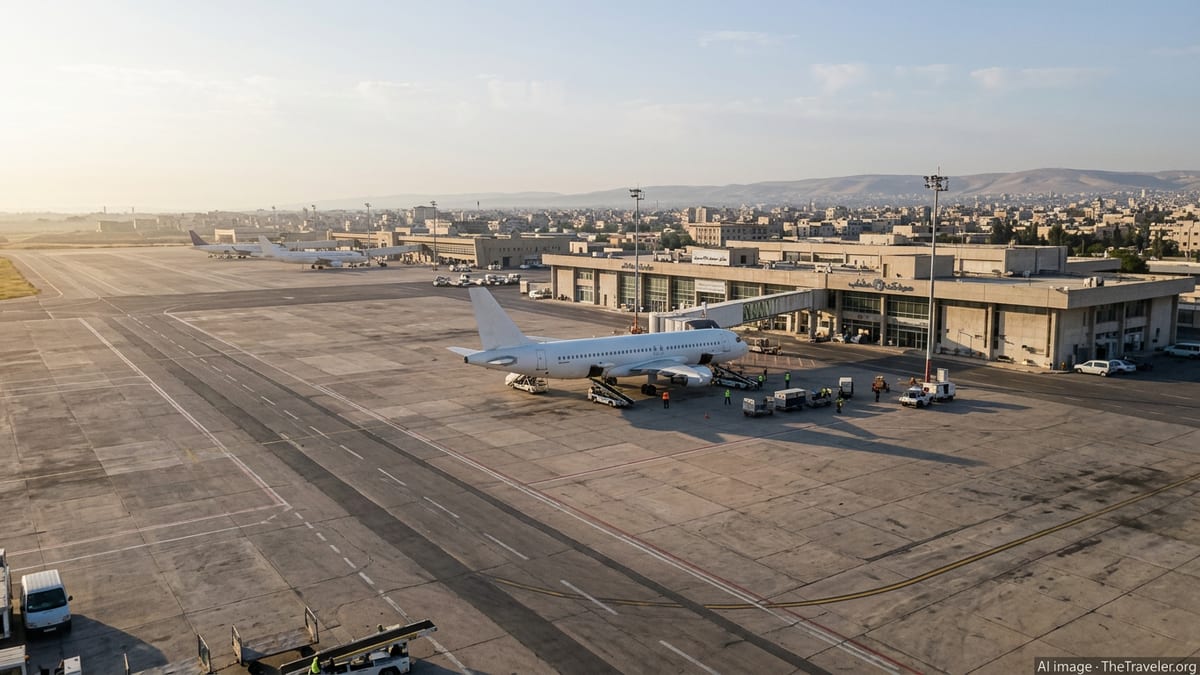
A Symbolic Route in a Reopened Sky
Reports from aviation databases and airport schedules indicate that Syrian Airlines has quietly reinstated a scheduled Moscow Damascus rotation, restoring a route that once served as a political and economic lifeline during the civil war years. The move comes after the phased reopening of Damascus International Airport to international traffic under the country’s transitional authorities, a process that began in late 2024 and gathered pace through 2025 as regional carriers cautiously returned.
In most mainstream coverage, the new service is presented as more than a commercial calculation. Outlets describe the Moscow link as a barometer of how far the post Assad leadership is willing to go in preserving strategic ties with Russia while seeking broader rehabilitation in the region and beyond. The first flights are portrayed as relatively low key, with modest passenger loads and limited fanfare on the ground in Damascus compared with earlier celebratory domestic restart services.
Aviation focused publications add that Syrian Airlines, constrained by sanctions and an aging fleet, faces logistical and financial hurdles in sustaining long haul routes. They note that the Moscow service appears to rely on narrow body aircraft with technical stops or carefully managed payloads, underscoring the practical limitations behind what is often described in political reporting as a highly symbolic connection.
Russian and Syrian State Media: Continuity Over Change
Russian state aligned outlets and pro government Syrian platforms generally frame the resumption as evidence of continuity rather than rupture. Their narratives emphasize long standing cultural, educational and economic exchanges between the two countries and present the revived flights as the natural restoration of people to people links disrupted by war and sanctions.
These reports often focus on operational details, such as departure times, aircraft types and check in procedures at Moscow area airports, while highlighting the convenience for students, business travelers and diaspora communities. References to the fall of Assad appear sparingly and are usually couched in neutral language that stresses institutional stability in Damascus and the preservation of existing agreements signed before 2024.
Some commentary in this camp also draws a line between the new Syrian Airlines service and earlier military and cargo operations that continued even when civilian links were severely curtailed. By underscoring that passenger flights are now operating alongside ongoing defense cooperation, these outlets present the route as proof that the strategic partnership outlived its original patron in the presidential palace.
Western Wires and Broadsheets: A Test of Post-Assad Alignment
International wire services and major Western newspapers generally adopt a more cautious tone, situating the renewed Moscow Damascus connection within a wider debate over Syria’s foreign policy orientation after Assad’s departure. Their reporting frequently juxtaposes the reopening of Syrian airspace to regional carriers such as Qatar Airways, Royal Jordanian and Turkish Airlines with the decision to prioritize the Russian capital as one of the earliest long haul destinations.
These outlets tend to explore how the new transitional authorities are balancing domestic expectations for a clear break with the past against the fiscal and security realities of maintaining working ties with Moscow. Analysts quoted in public commentary suggest that allowing Syrian Airlines to reinstate the route offers economic benefits and helps manage outstanding military and energy commitments, even as the government pursues closer links with Gulf states and European institutions.
Coverage also highlights the lingering impact of sanctions and reputational risk for companies engaging with Syrian carriers. Insurance arrangements, overflight permissions and access to spare parts are cited as ongoing constraints that could determine whether the Moscow service becomes a sustainable corridor or remains a politically charged but fragile gesture.
Regional and Arab Media: Balancing Russia and the Neighborhood
Regional broadcasters and Arab language newspapers largely place the Moscow flights within the broader story of Syria’s reintegration into its neighborhood. Their reporting frequently references the earlier resumption of commercial operations at Damascus and Aleppo, describing how domestic routes and short haul regional services laid the groundwork for more ambitious international links.
In many of these accounts, the return of Syrian Airlines to Moscow is portrayed as one pillar in a diversified aviation strategy that also hinges on rebuilding traffic to Amman, Doha, Dubai and other Gulf and Levant hubs. Commentators point out that passenger demand from Russia, including for religious tourism and family visits, had remained relatively resilient throughout the conflict, making the route commercially attractive once basic airport infrastructure and security conditions improved.
At the same time, a strand of regional commentary raises questions about whether leaning too heavily on Russian traffic might complicate efforts to normalize ties with Western capitals. Articles note that Syrian officials must navigate complex expectations from Arab League partners, some of whom favor greater distance from Moscow after its own international controversies, even as others continue to coordinate closely with Russia on energy and security issues.
Independent, Exile and Rights-Focused Outlets: Memory and Accountability
Independent Syrian exile media and human rights focused platforms adopt a distinctly different lens, treating the resumed Moscow service as a reminder of Russia’s role during the civil war and its support for the former government. Their coverage often places images of newly reopened departure halls in Damascus alongside archival footage of bombardments and mass displacement, drawing attention to unresolved questions of accountability.
These outlets highlight the contrast between the normalization implied by commercial air links and the slow progress on transitional justice, missing persons investigations and detainee releases. They point out that, for many Syrians who fled Russian backed operations, seeing national carriers reestablish direct connections to Moscow can be emotionally charged, even as the practical reality is that some refugees may now use the same route to visit family or explore return options.
Several commentaries also examine how different segments of Syrian society interpret the flights. For business owners and some professionals, the Moscow route is described as an economic opportunity and a sign that the country is reopening after years of isolation. For others, particularly families of victims of past military campaigns, it is seen as a symbol of unfinished political change in a landscape where the leader has fallen but many institutions and international partnerships remain largely intact.