


More news on this day
Warren Buffett’s Berkshire Hathaway has raised its stake in Delta Air Lines, reinforcing the conglomerate’s renewed interest in aviation and deepening its exposure to what many analysts describe as the world’s largest airline by traffic and network reach.
Get the latest news straight to your inbox!
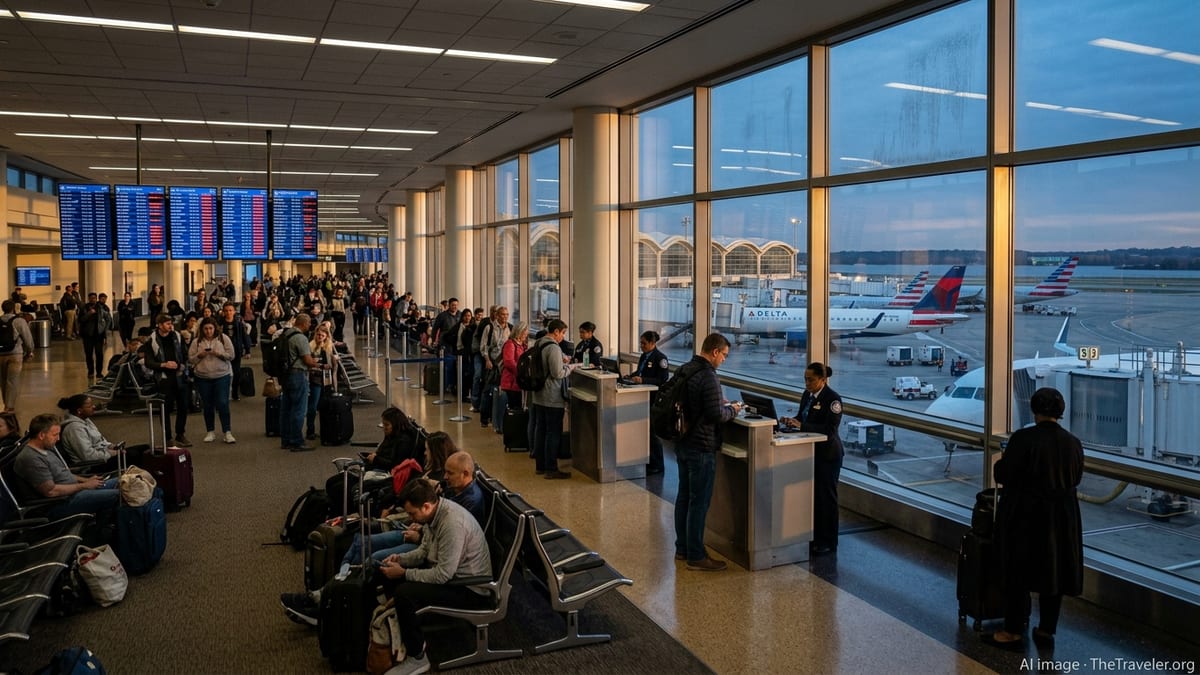
A Bigger Bet on a Global Aviation Leader
Recent regulatory filings show that Berkshire Hathaway significantly increased its holdings in Delta Air Lines during the second quarter of 2026, only months after establishing a new position in the carrier. Publicly available portfolio data indicate that Berkshire now owns a mid-single-digit percentage of Delta’s outstanding shares, lifting the airline into the ranks of the conglomerate’s more substantial equity stakes by market value.
Investment commentary and portfolio breakdowns suggest that the additional purchases lifted Berkshire’s Delta stake by more than 40 percent in the latest quarter, building on an initial multibillion-dollar position disclosed earlier this year. The move has drawn attention because of Berkshire’s long and often skeptical history with the airline industry and the size of the fresh commitment.
Market observers note that Delta is widely regarded as the world’s largest airline when measured by revenue passenger kilometers, global network breadth, and alliance partnerships, a status that appears to have strengthened as international travel rebounded and capacity rationalization continued across the sector. Berkshire’s decision to concentrate more capital in the carrier is being interpreted as a pointed vote of confidence in both Delta’s balance sheet and long-term demand for air travel.
The increased stake comes at a time when Berkshire is sitting on an unusually large cash pile, giving the company considerable flexibility to scale positions where it sees durable competitive advantages. The decision to add to Delta, alongside other large holdings in financial services, consumer brands, and technology, suggests that aviation has reemerged as a strategic theme within a broader value-oriented portfolio.
Why Delta Fits Berkshire’s Long-Term Playbook
Analysts following Berkshire’s portfolio note that Delta’s business model lines up with several of the characteristics the conglomerate has traditionally sought in major equity holdings. The airline’s dominant hub positions in key U.S. markets, deep participation in the SkyTeam alliance, and joint ventures with carriers in Europe, Latin America, and Asia give it access to higher-yielding international traffic and a diversified revenue mix.
Delta’s extensive loyalty business, anchored by its SkyMiles program and co-branded credit card partnerships, is also seen as a strategic asset that generates relatively stable, high-margin cash flows less tied to the volatility of ticket sales. Travel industry research indicates that loyalty revenue has become an increasingly important profit driver for large network airlines, supporting investment in fleet renewal and digital upgrades.
In addition, Delta’s focus on operational reliability and premium cabins has helped it command pricing power in core business routes and long-haul markets. Industry data show that the carrier routinely ranks near the top of on-time performance and customer satisfaction tables among major U.S. airlines, attributes that have historically aligned with Berkshire’s preference for companies with strong consumer franchises.
From a financial perspective, public filings and earnings reports highlight Delta’s efforts to reduce leverage taken on during the pandemic, extend debt maturities, and restore investment-grade metrics. Observers say that visible progress on balance sheet repair, combined with growing free cash flow and targeted shareholder returns, likely made the stock more attractive to a patient, long-horizon investor such as Berkshire.
A Reversal of Earlier Skepticism on Airlines
The expanded Delta position marks a notable shift from Berkshire’s sharp pullback from airline stocks during the early stages of the Covid-19 crisis, when it exited holdings in several U.S. carriers. At the time, Warren Buffett was widely quoted emphasizing the structural challenges of the airline business, including high capital intensity, sensitivity to economic cycles, and exposure to fuel price swings.
Since then, the industry landscape has evolved, with further consolidation of capacity, rationalization of routes, and new sources of ancillary revenue. According to industry analyses, the largest network carriers now benefit from stronger oligopolistic dynamics in key markets, better yield management tools, and more sophisticated fuel hedging and maintenance strategies.
Delta’s diversified revenue streams and operational scale appear to have addressed at least some of Berkshire’s earlier concerns. Aviation analysts point out that the airline has invested heavily in its maintenance, repair, and overhaul business, an in-house capability that can generate third-party revenue while helping control operating costs. The company’s integrated approach, from its refinery assets to its loyalty partnerships, aims to smooth some of the volatility that has historically plagued airline earnings.
Market commentary suggests that the renewed bet on Delta may reflect both changing industry fundamentals and the influence of Berkshire’s current investment leadership. While Warren Buffett remains chairman, day-to-day capital allocation in the equity portfolio is now closely associated with chief executive Greg Abel and Berkshire’s internal investment managers, who have shown a willingness to revisit sectors that once seemed off-limits.
What the Move Signals for Global Travel and Investors
Berkshire’s larger stake in Delta is being watched as a broader signal about the outlook for global air travel. Forecasts from industry groups and travel data providers continue to point to rising international passenger volumes, especially on transatlantic and transpacific routes, even as economic growth moderates in some regions.
For investors, the move underscores a belief that premium corporate and long-haul leisure travel will remain resilient over the long term, supported by expanding middle classes in emerging markets and a sustained appetite for experiences. Delta’s extensive international partnerships and alliance network leave it well placed to capture that demand, particularly in higher-yield cabins where margins are strongest.
At the same time, analysts caution that airline investments still carry meaningful risks, including exposure to fuel costs, labor negotiations, geopolitical disruptions, and potential health crises. Berkshire’s position sizing, while significant, remains a fraction of its overall equity portfolio and cash reserves, indicating that management is balancing conviction in Delta’s prospects with an awareness of sector volatility.
The increased Delta stake also highlights Berkshire’s continued role as a bellwether for long-term, fundamentals-driven equity investing. When a conglomerate known for its cautious approach deploys more capital into an industry once viewed as structurally unattractive, it tends to prompt a reassessment among institutional investors of both the sector and the specific company involved.
Strategic Context Inside Berkshire’s Evolving Portfolio
The larger investment in Delta comes as Berkshire Hathaway continues to reshape its portfolio under new executive leadership. Public disclosures show that the conglomerate has been increasing exposure to select technology, insurance, and homebuilding names while trimming some financial holdings, all against the backdrop of a substantial and growing cash position.
Within that context, adding to Delta can be viewed as part of a broader strategy to blend durable, cash-generative businesses with targeted cyclical opportunities that offer attractive valuations. Observers note that Berkshire’s aviation bet is still modest compared with its stakes in long-standing core positions, but the trajectory of purchases signals a willingness to scale up if industry earnings remain robust.
For Berkshire shareholders, the move offers a window into how the conglomerate may deploy its liquidity in the years ahead, particularly under Greg Abel’s tenure as chief executive. Portfolio changes in recent quarters suggest a more active stance toward reallocating capital as relative opportunities shift across sectors and regions.
Whether Berkshire continues to add to Delta or maintains its current holding, the enlarged stake has already underscored two themes: the resilience of global air travel and the enduring importance of scale, network strength, and balance sheet discipline in determining which carriers are positioned to thrive. For now, Berkshire appears to be signaling that Delta sits near the top of that list.