


More news on this day
American Airlines is beginning to lift the curtain on how it will deploy its new Airbus A321XLR fleet, outlining nine initial routes that pair a low‑density 155‑seat cabin with a mix of premium U.S. transcontinental and thinner transatlantic services through 2026.
Get the latest news straight to your inbox!
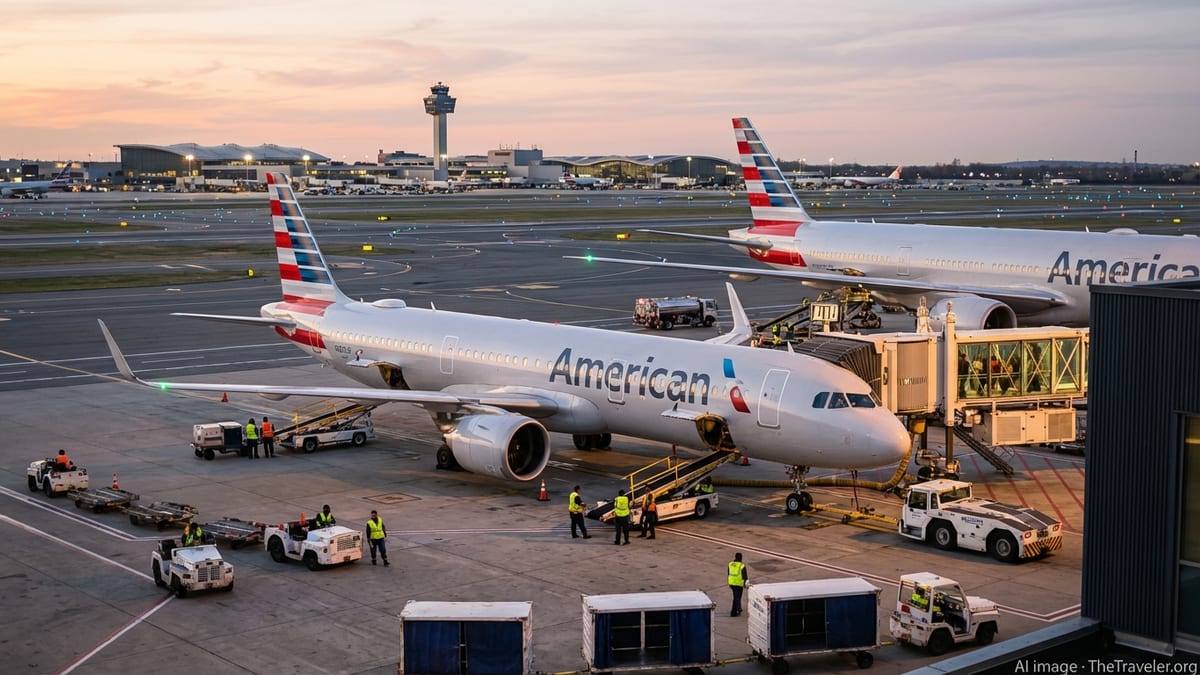
A321XLR Enters Service With 155-Seat Premium Layout
Publicly available fleet data and schedule filings indicate that American’s A321XLRs are being delivered in a 155-seat configuration, significantly below the roughly 190 seats typical on standard high-density A321 variants. The layout combines lie-flat business class suites, a small premium economy cabin and an economy section with relatively generous pitch compared with much of the carrier’s existing narrowbody fleet.
The low seat count aligns with the airline’s long-stated plan to use the A321XLR as a premium workhorse on routes that demand high-yield cabins more than raw capacity. Industry documentation and cabin descriptions show a focus on private suites in business class and distinct premium economy seating, mirroring the latest widebody refits and aiming to offer a consistent experience on long flights regardless of aircraft type.
The aircraft’s advertised range of up to about 4,700 nautical miles allows American to pair this premium interior with long sectors that would previously have required widebodies, while still maintaining operating economics closer to a narrowbody. This combination is central to the network strategy emerging from schedule filings for 2025 and 2026.
Operational planning information suggests American expects to have a growing subfleet of A321XLRs in service by late 2025, with additional frames arriving through 2026. As the number of aircraft increases, the carrier is progressively adding both domestic and international sectors to the type’s roster.
Transcontinental Debut on New York and Boston Services
According to published coverage and schedule data, American’s first scheduled A321XLR passenger flights are on its flagship U.S. transcontinental network, starting with New York John F. Kennedy to Los Angeles in December 2025. The aircraft then gradually expands onto other coast-to-coast routes, including New York to San Francisco and Boston to Los Angeles, as additional frames enter service.
These routes replace or supplement the aging A321T premium transcon fleet, which has long featured lie-flat seating for business travelers. The A321XLR’s updated 155-seat layout effectively increases total capacity compared with the older three-class A321T, while maintaining a strong emphasis on premium seating and adding a dedicated premium economy section for the first time on these domestic routes.
Network planners appear to be using the aircraft first on sectors where American already markets a “flagship” experience, leveraging existing demand from corporate contracts and high-value loyalty customers. The focus on New York and Boston coastal flying also allows the airline to build crew familiarity and operational reliability on routes with ample connectivity on both ends.
As the subfleet grows, indications from timetables and industry analysis point to Boston emerging as a particular focus, with multiple daily A321XLR frequencies planned between Boston and Los Angeles. This would effectively turn the aircraft into the backbone of American’s premium transcontinental offering from New England.
Transatlantic Expansion: Amsterdam, Barcelona, Lisbon and Beyond
Once the A321XLR is established on domestic premium routes, American is moving the type across the Atlantic. Schedule filings tracked by independent route analysts show the aircraft being rostered on nine key routes through the end of the summer 2026 season, including several services from the U.S. East Coast to Western Europe.
The list of early transatlantic assignments includes New York JFK to Barcelona, New York JFK to Lisbon, and New York JFK to Amsterdam, alongside additional East Coast gateways such as Philadelphia on select European routes. These city pairs are typically strong leisure and mixed business markets that can support a premium-heavy cabin without always filling a larger widebody.
The A321XLR allows American to keep or extend seasonal routes that might otherwise have seen reduced frequencies or widebody downgrades outside peak summer. Industry commentary highlights examples such as extended shoulder-season service from the U.S. East Coast to secondary European points, with the smaller-gauge XLR helping maintain nonstops through lower-demand months.
By matching the 155-seat aircraft with mid-size transatlantic markets, American can also better align capacity with day-of-week and seasonal demand patterns. This flexibility is particularly evident in schedule data for late 2026, where the A321XLR appears on routes that in previous years either paused in winter or operated with reduced widebody service.
How Nine Routes Fit Into American’s Wider Network Strategy
The nine initial A321XLR routes revealed through published schedules sketch out a clear strategic pattern: anchor the aircraft on high-profile transcon services, then redeploy them seasonally to transatlantic markets where widebodies are either too large or too expensive to justify year-round. This allows American to protect key corporate corridors while also experimenting with new or extended Europe links.
On a typical day in peak season, the 155-seat A321XLR is expected to rotate between long-haul transcontinental sectors and overnight crossings to Europe, improving utilization and keeping the aircraft in markets where its premium-focused interior can command higher average fares. That pattern reduces the need to rely solely on joint-business partners for connectivity to certain European points.
The strategy also gives American more freedom to adjust its widebody deployment. With some transatlantic flying moving to the A321XLR, larger aircraft such as the Boeing 777 and 787 families can be concentrated on trunk routes with dense demand or on long-haul services beyond the XLR’s range, including deeper into continental Europe, the Middle East and parts of South America.
Industry observers note that this approach brings American closer to European network carriers that already use long-range narrowbodies on select Atlantic routes. The difference lies in American’s decision to cap capacity at 155 seats, signaling a clear focus on yield rather than volume, especially from key U.S. coastal hubs.
Implications for Passengers and Competitive Dynamics
For travelers, the 155-seat A321XLR deployment means a more consistent premium experience on routes that previously alternated between cabin types. Business-class passengers on early XLR routes can expect suites with direct aisle access, while premium economy customers gain a cabin that is separate from standard economy on both domestic and international services.
However, the use of a single-aisle jet on transatlantic flights is likely to remain a point of debate among passengers. While the cabin is less dense than many widebodies, some travelers may still perceive narrowbodies as less comfortable for overnight crossings. At the same time, seat width and pitch figures for the A321XLR compare favorably with some high-density twin-aisle layouts, underscoring the trade-off between cabin width and space per passenger.
From a competitive standpoint, the move positions American to better match rivals that are also rolling out next-generation long-range narrowbodies on similar missions. On sectors such as New York to major European leisure and secondary business markets, the XLR’s economics could enable American to maintain nonstop options where demand might not fully support a larger aircraft.
As more A321XLRs join the fleet and additional routes are filed, the pattern established by these first nine services offers a preview of how American intends to balance comfort, capacity and cost. The aircraft’s role on both sides of the Atlantic suggests it will become a central tool in the carrier’s effort to refine its long-haul network while keeping a close eye on premium revenue performance.