


More news on this day
Hundreds of passengers moving through Copenhagen Airport on June 9 faced significant disruption as at least 63 flights were delayed and seven were cancelled in Denmark, affecting services operated by Scandinavian Airlines Ireland, SAS, Cityjet and several partner carriers on busy routes across northern Europe.
Get the latest news straight to your inbox!
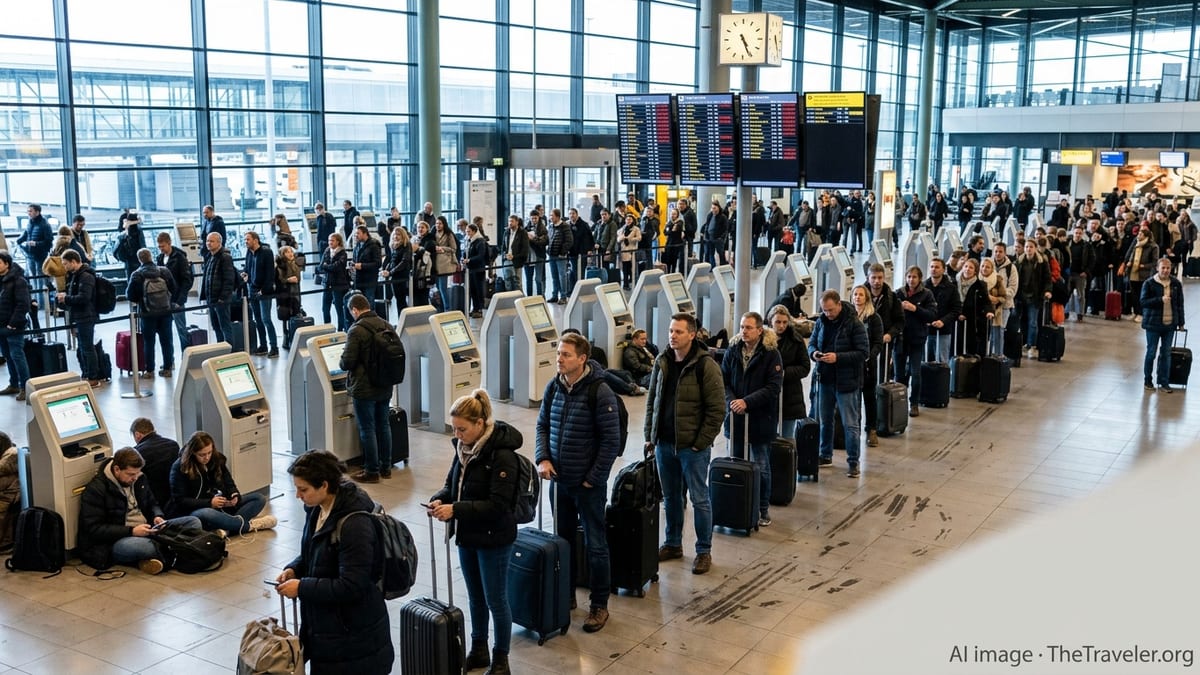
Delays Ripple Across Key Northern European Routes
Operational data for Denmark on June 9 indicate that Copenhagen Airport experienced a concentrated wave of disruption, with dozens of departures and arrivals delayed and a smaller number cancelled outright. The problems affected regional and intra-European connections linking the Danish hub to cities including Munich, Milan, Hamburg, Helsinki, Manchester and London, according to live flight tracking and airport information services.
The majority of impacted services were short haul flights that form part of the dense intra-European network centered on Copenhagen. These flights are critical for both business and leisure travelers using the Danish capital as a transfer point to and from Scandinavia, continental Europe and long haul destinations. Knock on effects were reported through the day as delayed aircraft and crews rotated onto later services.
Publicly available information shows that delays varied from modest schedule slippages of 15 to 30 minutes to more serious disruptions of more than two hours. The seven cancellations recorded in Denmark removed entire rotations from the schedule, forcing passengers to rebook and in some cases seek overnight accommodation or alternative routings via other European hubs.
Air travel analytics providers note that while Copenhagen generally records strong punctuality, concentrated disruption on a single day can significantly affect passenger flows, particularly in the peak summer build up when aircraft are scheduled intensively and spare capacity is limited.
SAS Affiliates and Partner Airlines Among Most Affected
Among the carriers most visible in the disruption were Scandinavian Airlines and its affiliated operators, including Scandinavian Airlines Ireland and Cityjet, which run flights on behalf of SAS on several European routes. These operators handle a mix of regional and medium haul services for the group, meaning their performance directly influences onward connections for travelers across the network.
Flight tracking platforms show that Cityjet and SAS branded flights to cities such as Hamburg, Helsinki and Munich experienced notable delays in both directions. Similar patterns were recorded on services where Scandinavian Airlines Ireland or other contract operators supply aircraft and crews under the SAS banner, underscoring how operational issues at a hub can affect multiple companies linked through franchise and wet lease arrangements.
Several Star Alliance and codeshare partners also appeared among the delayed services, including airlines operating joint routes from Copenhagen to major European markets. Publicly available timetables illustrate a tightly interwoven schedule in which a delay to one SAS or SAS affiliate flight can quickly affect partner services sharing aircraft, slots or crews.
While the precise mix of causes on June 9 was not immediately clear, historical data from Copenhagen suggest that weather constraints, congestion in regional airspace and tight turnaround times are recurring factors when delays escalate. Industry observers emphasize that complex franchise and wet lease structures can sometimes make it harder for passengers to understand which company is responsible for disruption and assistance at the airport.
Knock On Impacts for Transfers and Long Haul Connections
The day of disruption came as SAS and Copenhagen Airport are positioning the hub for an expanded summer schedule, including new long haul links such as the group’s recently announced Copenhagen to Mumbai route. That new service, which has already drawn attention after initial regulatory complications, relies heavily on reliable feeder traffic from cities like Munich, Milan and London.
When short haul flights into Copenhagen are delayed or cancelled, connecting passengers can miss onward departures to intercontinental destinations and may need to be reprotected on alternative flights. Publicly available passenger accounts from recent weeks highlight cases in which travelers on itineraries such as Munich Copenhagen Mumbai or Manchester Copenhagen onward connections faced uncertainty following schedule changes or cancellations.
Air travel forums and consumer platforms describe how some travelers impacted by Copenhagen based disruption have been rebooked via other European hubs, including Frankfurt and Paris, or shifted onto later SAS departures where space allows. These reroutings can extend total travel time by many hours, particularly for passengers starting or ending their journey in secondary European cities.
Industry data from Eurocontrol and other bodies indicate that northern European airspace remains relatively busy heading into the peak 2026 summer period. When combined with tight aircraft utilization at carriers such as SAS, even localized issues at a hub like Copenhagen can generate system wide effects that reach well beyond Denmark’s borders.
Passenger Experience and Compensation Rights in Denmark
The latest disruption adds to a series of operational challenges for travelers using Copenhagen Airport in recent months, including weather related irregularities and industrial action affecting partner airlines. Consumer rights organizations and travel advisory sites note that passengers departing from Denmark or elsewhere in the European Union are generally covered by EU261 protections when flights are significantly delayed or cancelled for reasons within the airline’s control.
Public guidance from Danish and European consumer bodies explains that, depending on distance and length of delay, eligible travelers may be entitled to meals, refreshments, hotel accommodation where necessary and, in some cases, financial compensation. However, passengers are advised to retain boarding passes, booking confirmations and receipts for out of pocket expenses, as these documents are often required when submitting claims.
The presence of multiple operators behind the SAS brand at Copenhagen can complicate the process for some travelers, particularly when flights are operated by affiliates such as Scandinavian Airlines Ireland or partner companies like Cityjet. Published advice generally recommends that passengers direct claims to the airline that marketed the ticket, even where the operating carrier is different, and to use official complaint channels outlined on airline websites.
Travel experts also warn that not all delays qualify for compensation, especially when caused by factors deemed extraordinary, such as severe weather or air traffic control restrictions. As a result, two passengers experiencing similar disruption on the same day may receive different outcomes depending on the specific circumstances of their flight and route.
Planning Ahead for Summer Travel Through Copenhagen
With Copenhagen Airport entering one of its busiest travel periods of the year, the June 9 disruption serves as a reminder for passengers to build additional flexibility into summer itineraries. Travel planners and consumer advocates increasingly suggest leaving longer connection times when routing through major European hubs, especially when journeys involve separate tickets or tight self arranged transfers.
Publicly available guidance from airlines and airports advises passengers to monitor flight status closely on the day of travel, use official mobile apps for real time updates and allow extra time for security and border controls during peak periods. Travelers connecting from regional airports or using low cost carriers on one leg of a journey may face particular challenges if delays cascade across multiple flights.
Analysts point out that Copenhagen’s role as a key hub for SAS and its partners means the airport is likely to remain central to northern European air travel in the coming months, even as carriers adjust schedules and deploy new aircraft types. Continued pressure on punctuality indicators suggests that occasional days of disruption are possible, particularly when weather or airspace issues coincide with dense peak day schedules.
For now, the June 9 episode highlights both the resilience and vulnerability of the interconnected European network anchored at Copenhagen. While most flights ultimately operated, the sheer number of delays and a cluster of cancellations were enough to upend travel plans for hundreds of passengers and to underline the importance of contingency planning for anyone flying through the Danish capital this summer.