


More news on this day
Hundreds of passengers were left waiting for hours at Ben Gurion Airport on June 8 after a wave of disruption triggered 156 delayed flights and 15 cancellations involving El Al, Wizz Air, Israir, FlyDubai and Aegean Airlines on routes serving Tel Aviv and other major Israeli destinations.
Get the latest news straight to your inbox!
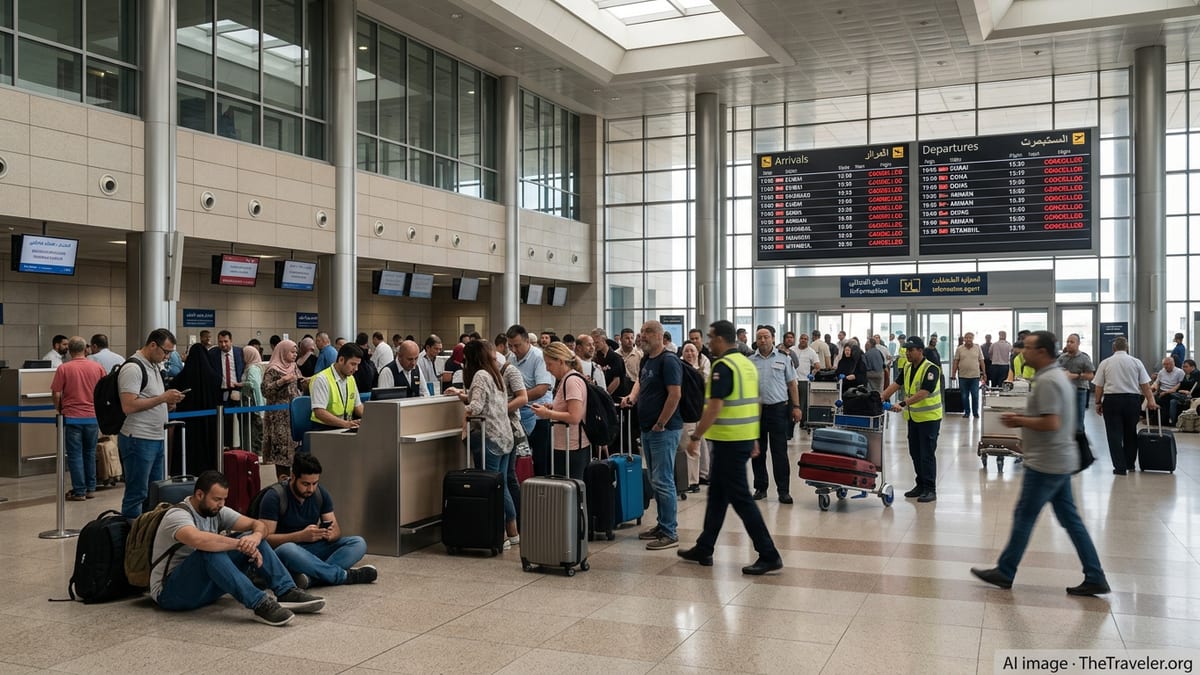
Widespread Disruption Follows Fresh Security Tensions
Publicly available airport data and local media coverage indicate that the disruption unfolded as regional security tensions intensified over the weekend, prompting airlines to reassess their operations into and out of Israel. While Ben Gurion Airport remained open, flight schedules were thinned and individual departures were repeatedly pushed back, leaving departure boards dominated by delay notices.
Reports from flight tracking services show that foreign and Israeli airlines adjusted their operations in different ways. Some carriers opted to cancel specific rotations outright, while others re-timed departures or consolidated services, a pattern that contributed to bottlenecks in check-in halls and at departure gates throughout the day.
According to published coverage, the concentrated wave of disruption on June 8 affected not only international routes but also services linking Ben Gurion with domestic destinations across Israel. The scale of delays, combined with a smaller number of outright cancellations, created cascading knock-on effects for aircraft and crew availability later in the day.
The situation highlighted how quickly the fragile recovery in Israel’s air travel market can be derailed. After months of gradual restoration of international links to Tel Aviv, the latest spike in tensions again tested the resilience of the country’s primary gateway.
Key Carriers Hit: El Al, Wizz Air, Israir, FlyDubai and Aegean
Data compiled from Ben Gurion’s live arrivals and departures boards and summarized by local business and travel outlets show that the disruption on June 8 centered on flights operated by El Al, Hungarian low cost carrier Wizz Air, Israeli leisure airline Israir, Dubai-based FlyDubai and Greek carrier Aegean Airlines.
El Al, Israel’s flag carrier and the largest operator at Ben Gurion, saw multiple services delayed as it attempted to maintain a pared-back schedule under changed security and airspace conditions. Publicly available information shows that the airline also issued flexible rebooking and credit options for travelers with near-term departures, reflecting an expectation of continued volatility.
Wizz Air, which in recent years has grown into one of the largest foreign airlines serving Israel, went further. According to recent coverage in Israeli and international media, the airline temporarily suspended flights to and from Ben Gurion for at least two days, leaving a series of point-to-point routes to European cities without service. This followed a pattern in which the carrier has swiftly reduced exposure to the market during spikes in regional risk.
Israir, FlyDubai and Aegean Airlines also featured prominently in the list of affected flights. Airport status pages on June 8 showed Israir departures to popular Mediterranean vacation destinations marked delayed, FlyDubai rotations to and from Dubai canceled or pushed back, and Aegean’s services on the busy Athens route subject to disruption. Together, these carriers represent a significant share of leisure and short haul connectivity for Israeli travelers.
Impact on Passengers Bound for Tel Aviv, Jerusalem, Haifa, Eilat and Beersheba
Although Ben Gurion Airport itself is located near Tel Aviv, the effects of the mass delays and cancellations rippled far beyond the city. Many of the disrupted services were feeding passengers to onward ground transport toward key urban centers across the country, including Jerusalem, Haifa, Eilat and Beersheba.
Travelers planning to reach Jerusalem and Haifa via rail or intercity buses from Ben Gurion faced crowded terminals and missed connections as evening arrivals slipped further into the night. Public transport timetables were not designed to absorb so many late incoming flights at once, leaving some passengers searching for last minute taxis or shared rides.
Connections to Israel’s southern resort city of Eilat and the Negev hub of Beersheba were also affected. Flights into Ben Gurion that normally feed early morning or late evening domestic services and long distance buses were delayed, complicating plans for holidaymakers heading to the Red Sea and for residents returning to the south after overseas trips.
Travel industry observers noted that the disruption again exposed the sensitivity of Israel’s internal mobility to conditions at Ben Gurion. With most international air traffic funneled through a single major airport, concentrated operational problems there can quickly translate into nationwide travel headaches.
Operational and Safety Constraints Behind the Delays
While individual airlines did not immediately provide detailed breakdowns for every delay, publicly available reporting pointed to several overlapping factors behind the June 8 disruption. Security developments in the region prompted airspace restrictions and route adjustments, forcing carriers to replan flight paths and, in some cases, to pause operations until risk assessments could be updated.
Changes to preferred routings can lengthen flight times and compress turnaround windows, which in turn reduce scheduling flexibility. When combined with crew duty time limits and aircraft positioning requirements, these constraints often lead carriers to delay or cancel selected flights rather than risk further knock-on delays across their networks.
Ben Gurion’s own operating procedures during periods of heightened alert can also contribute to slower throughput. Although the airport remained open, reports indicate that tighter security protocols and more conservative air traffic management measures were in place, limiting the number of takeoffs and landings that could be handled each hour.
Analysts following the region’s aviation sector noted that, while such measures are disruptive in the short term, they are broadly consistent with how airlines and airports respond globally when confronted with uncertain or rapidly changing security environments.
What Travelers Should Expect in the Coming Days
As of June 9, published flight status data suggest that operations at Ben Gurion were gradually stabilizing but remained fragile, with additional delays and isolated cancellations still appearing on departure boards. Airlines continued to adjust schedules in response to evolving assessments of airspace safety and demand.
Consumer advisories from travel companies and airline notices emphasized the importance of checking flight status repeatedly before leaving for the airport, monitoring email and app alerts, and allowing extra time for check-in and security. Passengers with flexible tickets or nonessential trips were encouraged to consider postponing travel where possible to relieve pressure on the system.
For those connecting onward from Ben Gurion to cities such as Jerusalem, Haifa, Eilat and Beersheba, transport operators and travel agents recommended building larger buffers into itineraries. With rail and bus networks already busy at the start of the summer season, missed connections can be difficult to rebook at short notice.
Industry watchers suggest that, while the current wave of disruption may ease if regional tensions subside, airlines serving Israel are likely to maintain a cautious stance. This could mean thinner schedules, more conservative capacity planning and a greater risk of sudden changes whenever security conditions shift, keeping travelers to and from the country on alert in the weeks ahead.