


More news on this day
Hundreds of travellers were stranded for hours on Monday, November 9, after multiple crashes involving heavy-duty vehicles triggered a massive gridlock on the Kaduna–Abuja highway, once again exposing the vulnerability of one of northern Nigeria’s busiest road corridors.
Get the latest news straight to your inbox!
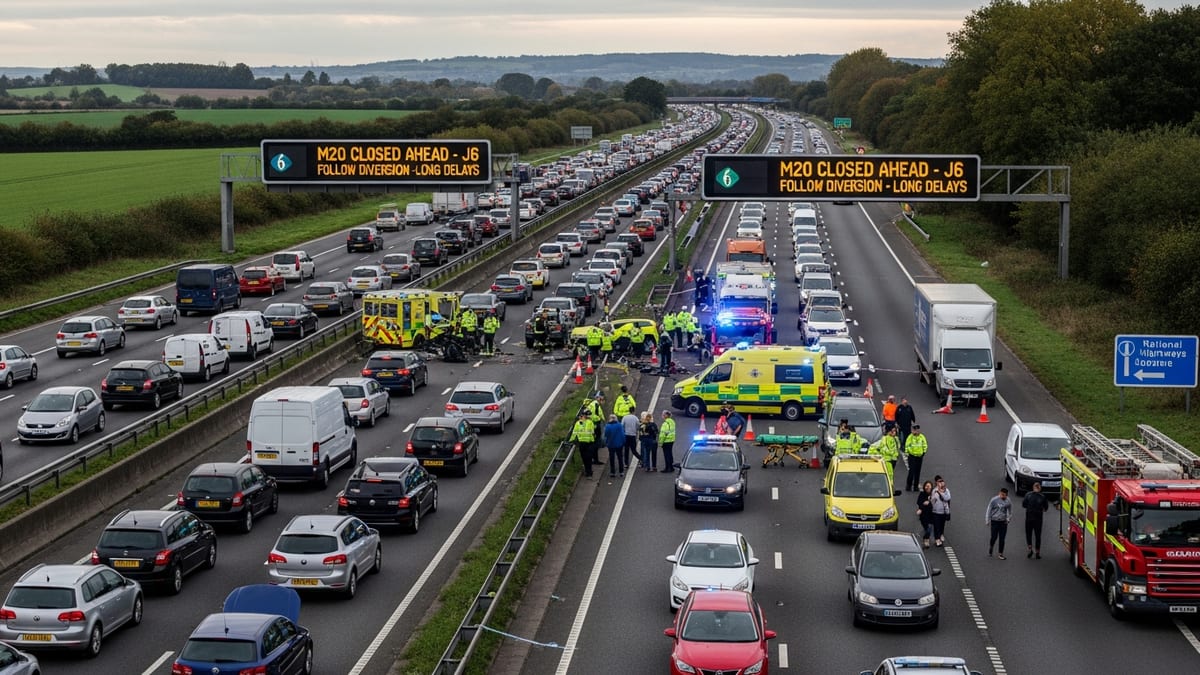
Hours-Long Standstill Around Gidan Busa and Katari
Published coverage indicates that the traffic disruption was concentrated around Gidan Busa, shortly before Katari in Kaduna State, where several articulated trucks were involved in separate crashes that partially blocked the carriageway and narrowed already constricted diversion lanes.
Reports from Nigerian outlets on November 9 and 10 describe long queues of vehicles stretching far beyond the immediate crash sites, with the gridlock fading into the distance as cars, buses and trucks came to a halt in both directions under the afternoon sun.
Motorists and passengers were forced to wait inside stationary vehicles or stand by the roadside as the standstill persisted for several hours, with some travellers eventually turning back towards Kaduna or attempting longer detours through routes such as Kachia and Bwari to reach Abuja.
Images and video shared in local media show private cars, intercity minibuses, fuel tankers, container trucks and trailers loaded with livestock or bundled cargo trapped in dense, unmoving traffic near the accident zone.
Travellers Miss Flights, Meetings and Connections
Publicly available accounts compiled by several Nigerian news platforms highlight the extent of disruption to travel plans, with many road users reporting missed business meetings, delayed deliveries and abandoned same-day return trips between Abuja and Kaduna.
Coverage from national and regional outlets notes that some passengers travelling for work appointments in Abuja were unable to reach scheduled meetings after spending hours in the gridlock, while others reported losing money on time-sensitive cargo and perishable goods stuck on the highway.
Reports also describe how the standstill continued into the late afternoon and early evening, heightening safety concerns among travellers wary of being caught on the corridor after dark, given the highway’s history of security incidents and kidnapping fears in recent years.
Some motorists reportedly chose to park on the shoulder and wait for the traffic to ease rather than risk unfamiliar back roads, while passengers moving with children or elderly relatives were seen standing outside vehicles to get relief from the cramped interiors and heat.
Construction Bottlenecks and Heavy Truck Traffic Blamed
The Kaduna–Abuja highway forms part of Nigeria’s A2 corridor, a federal route that links the capital with Kaduna and onwards to Kano and the northern border, carrying intense volumes of long-distance passenger and freight traffic every day.
Ongoing reconstruction works along key sections near Katari, Jere and Gidan Busa have reduced the width of the carriageway and diverted vehicles onto temporary lanes, creating narrow bottlenecks that are particularly vulnerable when a single heavy vehicle breaks down or is involved in a crash.
Reports from multiple Nigerian newspapers and online platforms indicate that the November 9 gridlock followed collisions and breakdowns involving at least three heavy-duty trucks, including articulated vehicles carrying containers and livestock, which obstructed traffic lanes at one of these constrained sections.
Transportation-focused commentary in the aftermath of the incident notes that, in such conditions, minor collisions or stalled trucks can quickly escalate into a corridor-wide traffic crisis as drivers attempt to overtake on shoulders or wrong lanes, further blocking the limited space available for clearing damaged vehicles.
Recurring Disruptions on a Strategic Corridor
The events of November 9 are the latest in a series of traffic disruptions on the Kaduna–Abuja route in 2026, with recent coverage documenting earlier gridlocks around Katari and Rijana linked to broken-down trucks, falling containers and the cumulative impact of ongoing works.
Reports published on November 8 and 10 describe a separate incident in which three heavily loaded containers reportedly toppled on the highway near Katari, causing another major traffic build-up and compounding frustrations among regular users of the corridor.
Analysis pieces in Nigerian media underline that these recurring blockages highlight both infrastructure strain and the pressure of heavy freight movements along the route, as more cargo is shifted by road between the Federal Capital Territory and the commercial centres of Kaduna and Kano.
The pattern of repeated standstills, sometimes lasting several hours, has led to renewed public debate about the pace of highway reconstruction, the management of articulated vehicles on congested sections and the need to balance road upgrades with short-term traffic management measures that keep one of the country’s most important arteries functioning reliably.
What the Gridlock Means for Travellers Planning the Route
For travellers and motorists planning journeys between Abuja and Kaduna in the coming weeks, the most recent incident serves as a reminder that travel times on the corridor can be highly unpredictable when crashes coincide with narrow diversions and peak traffic.
Publicly available traffic and infrastructure updates suggest that reconstruction activities are still in progress along parts of the highway near Katari and Gidan Busa, which means that lane reductions and temporary diversions remain in place and can quickly become choke points during heavy-vehicle incidents.
Transport commentators in local coverage recommend that travellers allow generous buffer time when using the corridor, particularly on days with high freight traffic or ahead of major religious and year-end holidays, when passenger volumes and commercial movements typically increase.
Although no comprehensive official travel time guidance has been issued for the post-crash period, recent reports from the November 9 gridlock indicate that delays of several hours are possible if multiple heavy vehicles are involved in accidents at reconstruction bottlenecks, a scenario that road users are now factoring into their journey planning along the Kaduna–Abuja highway.