


More news on this day
A luxury cruise ship that sat idle in Cambodia for weeks after its operator ran out of money has renewed questions about how well passengers are protected when cruise and tour companies collapse mid-voyage.
Get the latest news straight to your inbox!
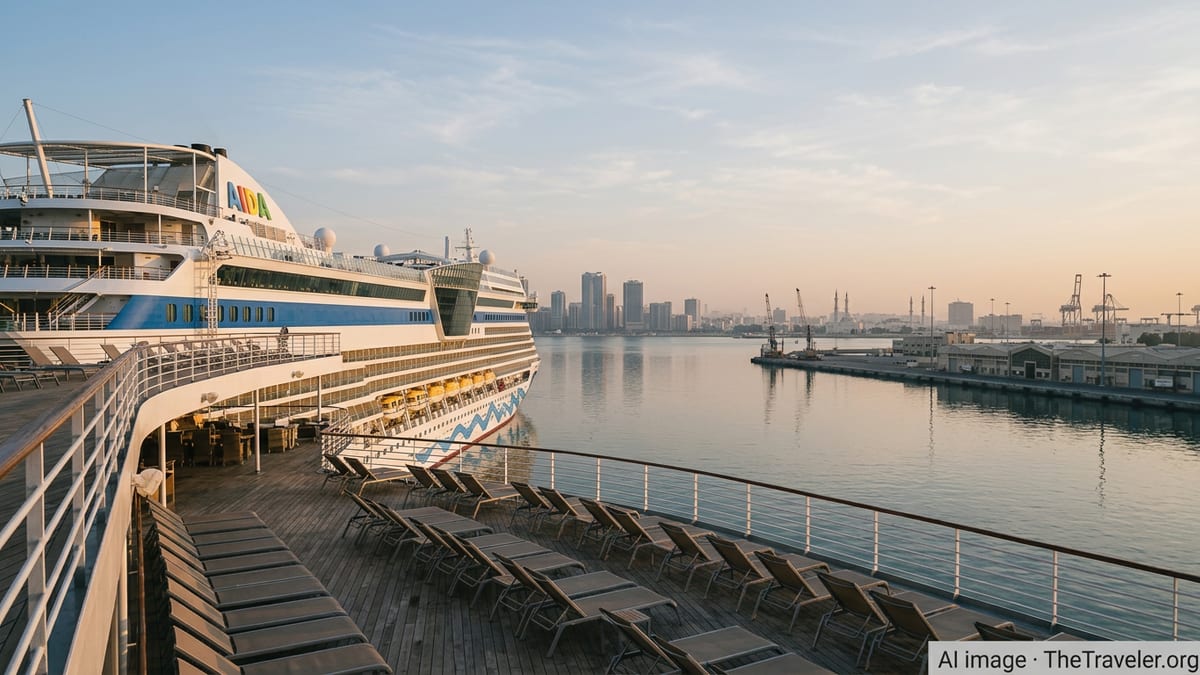
A stranded ship in Cambodia highlights financial fragility
In late October and early November 2026, international coverage focused on the small cruise ship Odyssey, which remained in Cambodia after its operator, Villa Vie Residences, ran into severe financial difficulties. Reports indicate that the company had to suspend operations while scrambling to refinance, leaving the vessel without a clear itinerary and raising concerns about how future sailings would be funded.
Accounts in global media described passengers being asked to contribute toward the ship’s fuel costs as negotiations unfolded, a striking illustration of how quickly a leisure voyage can be overtaken by cash-flow problems when an operator is under pressure. The unusual request became a symbol of the wider risks facing travelers who prepay for lengthy voyages with companies that may be thinly capitalized.
By early November, the Odyssey had left Cambodian waters without passengers on board, after guests were assisted in disembarking and making alternative arrangements. Publicly available information suggests that the ship’s departure did not mark a normal resumption of service, but rather a repositioning of an asset while the company sought a financial solution, underlining the uncertainty that can follow when travel businesses approach insolvency.
The incident did not involve a formal bankruptcy filing at the time of writing, but it has been widely compared with previous collapses that left travelers stranded around the world. For many prospective cruisers watching from afar, the images of a nearly empty ship leaving port have become a visual reminder that even niche luxury products are vulnerable when funding dries up.
From Thomas Cook to American Queen: a pattern of sudden disruption
The concerns around the Odyssey echo earlier moments when financial failures stranded passengers outright. In September 2019, the collapse of long-established tour operator Thomas Cook led to about 600,000 travelers being caught in limbo worldwide, including around 150,000 United Kingdom customers who had to be brought home under a special Civil Aviation Authority operation known as Operation Matterhorn. Government documents and official reviews describe that airlift as the largest peacetime repatriation effort in modern British history.
Although Thomas Cook was primarily a tour operator and airline rather than a cruise specialist, its packages included sea voyages, and the abrupt halt in trading showed how quickly a corporate insolvency can ripple across every part of the leisure sector. Case studies produced after the collapse detail hotels refusing to release guests until unpaid bills were settled, flights suddenly canceled and travelers forced to wait for organizing authorities to confirm rescue plans.
In the United States, more recent developments have highlighted gaps closer to home for cruise passengers. In February 2024, the Federal Maritime Commission announced that American Queen Voyages, a well-known operator of Mississippi River and coastal cruises, had shut down and filed for Chapter 11 bankruptcy protection. Publicly available notices explain that the company canceled all future sailings and that affected travelers needed to seek refunds through a surety bond system designed for passenger vessel operators.
While American Queen Voyages had ceased active operations before passengers found themselves stuck mid-cruise, the shutdown still left would-be guests facing canceled plans, refund claims and limited clarity about when or whether itineraries might be revived under new ownership. Together with the Thomas Cook case and the more recent Odyssey episode, it illustrates a spectrum of disruption, from canceled departures to passengers caught mid-journey.
How protections work for cruise passengers in a collapse
For travelers, the central question in any cruise-related bankruptcy or near miss is who ultimately pays to get them home or to refund lost services. In the United States, passenger-ship operators that embark guests from domestic ports are generally required to maintain financial security, often in the form of a bond, to cover refunds for nonperformance. Federal Maritime Commission notices regarding American Queen Voyages emphasize that this mechanism is meant to ensure passengers can recover money for canceled sailings, even when a company is in bankruptcy proceedings.
Those protections, however, mostly apply to amounts paid before a voyage, not the costs incurred if a ship is left far from its planned route or if travelers need hotels, flights and onward transport at short notice. In such situations, travelers often find themselves relying on travel insurance, credit card protections or ad hoc assistance from governments and tourism boards rather than an automatic legal guarantee from the cruise line’s bond.
European travelers face a different framework. Under United Kingdom and European Union package travel rules, package holidays that combine transport and accommodation are meant to be financially protected so that customers are either refunded or repatriated if the provider fails. In the Thomas Cook case, United Kingdom authorities used those rules, along with emergency contracting of aircraft and support services, to justify a large-scale retrieval operation. Official reports note that the system was broadly effective but costly, sparking debate about how much risk should remain with the state versus private insurers and operators.
Around the world, cruise specialists and consumer advocates are pointing to these recent cases as evidence that financial protections have not kept pace with the industry’s rapid growth and diversification. Multi-year world cruises, residential ships and expedition vessels now operate in remote regions, where the consequences of a collapse could go beyond lost vacation days to involve complex evacuations.
What travelers can do before booking a high-cost voyage
The renewed focus on insolvency risk is prompting many travelers to scrutinize the financial and legal details of their bookings more closely, especially for extended or high-priced cruises. Consumer groups frequently recommend confirming whether a trip is covered by a national financial protection scheme, such as the United Kingdom’s Air Travel Organiser’s Licence framework for package holidays, or by U.S. bonding requirements for passenger vessels. If those protections are absent, travelers face a greater risk of unsecured losses if a company fails.
Specialists also advise paying attention to how and when large balances are due. Many long voyages require substantial deposits many months in advance, with final payment due well before embarkation. Using a major credit card rather than direct bank transfers can offer additional recourse if services are not delivered, since card issuers in some jurisdictions are obliged to assist when purchases fail because of insolvency.
Travel insurance is another key layer, but publicly available policy wordings show that not all plans cover supplier default. Where they do, coverage limits, claim procedures and exclusions can vary significantly. Travelers looking at world cruises, niche operators or start-up “residential” ships are increasingly encouraged by consumer advisers to read those clauses carefully and, if necessary, select higher-tier policies that explicitly reference bankruptcy or insolvency of a travel provider.
Ultimately, the situations involving the Odyssey in Cambodia, the collapse of American Queen Voyages and the legacy of Thomas Cook’s failure have added a new dimension to cruise planning. Alongside choosing itineraries and cabin categories, many travelers are now weighing balance sheets, refund guarantees and repatriation plans, aware that when a company’s finances falter, passengers can suddenly find themselves at the center of a complex global rescue effort.