


More news on this day
Passengers at Margao’s Kadamba Transport Corporation (KTC) bus stand were left waiting for extended periods after a crew crunch disrupted departures, renewing concerns about the reliability of Goa’s state-run bus network during peak travel hours.
Get the latest news straight to your inbox!
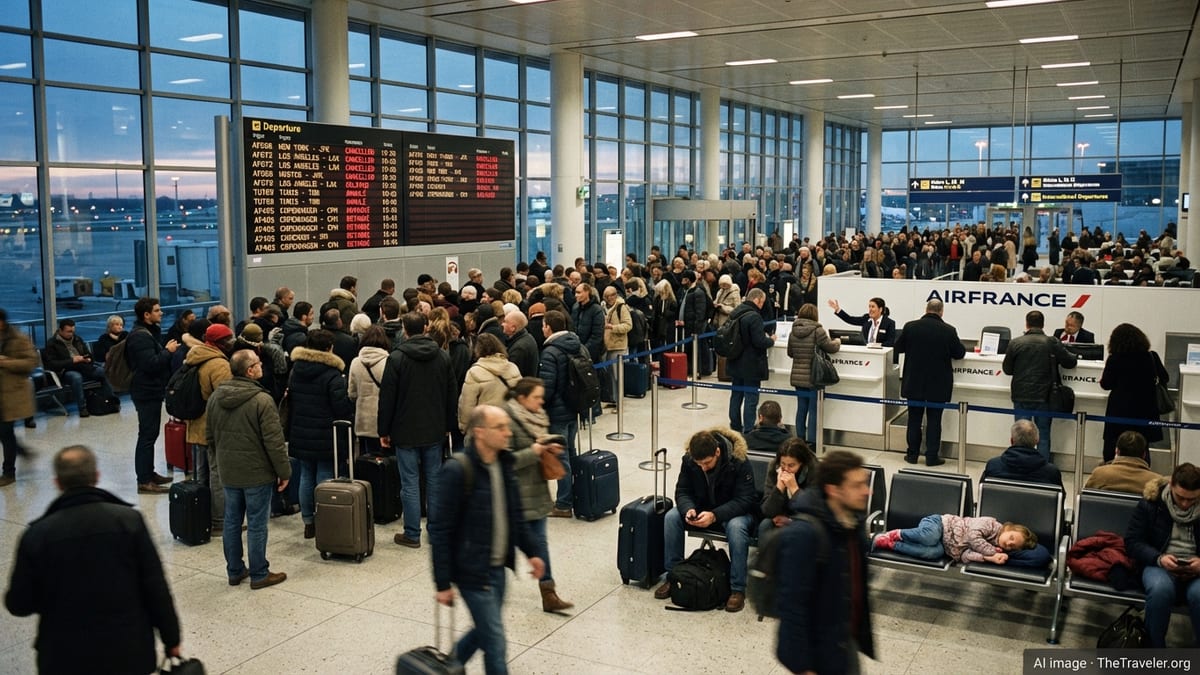
What happened at Margao and why it matters for travelers
Published coverage describing the incident points to insufficient crew availability, particularly conductors and drivers, resulting in delayed or cancelled departures and crowding at the Margao KTC bus stand, one of South Goa’s most important public-transport hubs. For travelers, Margao is a common transfer point for services to Panaji (Panjim) and other towns, as well as onward movement toward rail connections and airport links.
The immediate impact is straightforward: longer waits, uncertainty about which departures will actually run, and missed connections for commuters and visitors alike. Even short disruptions can cascade at bus stands where many riders rely on high-frequency shuttles to bridge distances between major towns in South Goa and the state capital.
The episode also fits a broader pattern of service reliability issues reported across Goa’s network, where passengers have periodically flagged irregular operations on key corridors, including the Panaji–Margao shuttle services. When schedules become unpredictable, travelers tend to shift toward taxis or self-drive rentals, putting pressure on roads and increasing trip costs.
Staffing pressures behind the disruption
Publicly available information indicates that staffing shortfalls have been a recurring challenge for KTC. A March 17, 2026 report in The Times of India described a major manpower gap, including a significant number of vacant conductor posts, and noted that operational constraints such as shortages of drivers and buses have contributed to cancellations or irregular trips even when formal schedules were not officially reduced.
Separately, KTC’s personnel needs have surfaced in connection with planned service expansion. A July 5, 2026 report by Herald Goa described fleet and manpower constraints, while also outlining recruitment intentions that include adding drivers and conductors in the coming months. The combination suggests that day-to-day operations may be sensitive to absences, rosters, and deployment decisions at busy depots.
For passengers stranded at Margao, the difference between a planned timetable and what runs in real time often comes down to whether a bus has the required crew to depart. In systems that still rely on conductors for ticketing and onboard management, conductor availability can be as critical as having a roadworthy vehicle.
Fleet constraints and the “knock-on” effect on shuttle routes
Alongside staffing, fleet availability remains a factor in KTC’s reliability. Herald Goa’s July 5, 2026 coverage described a shortage of buses affecting operations across Goa and on interstate routes, while also pointing to planned inductions intended to relieve pressure. When fleet constraints intersect with staffing gaps, operators may prioritize certain routes while leaving others with longer headways and fewer departures.
Shuttle services between Panaji and Margao are especially exposed to this squeeze because they are high-demand and time-sensitive for office-goers and students. Coverage in The Goan dated May 27, 2026 described passenger complaints about irregularities on multiple routes, including Panaji–Margao KTC shuttles, with riders reporting long waiting hours, overcrowding, and uncertainty.
Published reporting has also highlighted that disruptions can occur for reasons beyond staffing, including technical issues. For example, earlier coverage has described electric-bus service interruptions linked to charging or battery problems at the Margao depot. While that is separate from a crew crunch, it underscores how multiple operational weak points can produce similar outcomes at the bus stand: fewer buses on the road, longer queues, and missed connections.
What stranded passengers can do right now
For travelers caught in a disruption at Margao, the practical priority is reducing uncertainty. Because published coverage shows that trip cancellations and irregular operations can occur due to operational constraints, travelers should budget extra time for connections and avoid tight transfers when using the Panaji–Margao corridor during peak hours.
When service is disrupted, a second-best option is often to re-route through alternative departures that still get you closer to your destination, even if it means changing buses more than once. In Goa, that can mean reaching a nearby hub first and then continuing onward once frequency improves, rather than waiting indefinitely for a specific shuttle departure.
Travelers also benefit from planning around the day’s most time-sensitive commitments. If you must catch a train or flight, treat bus travel as a variable-time segment and consider earlier departures than you would normally take. Where budget allows, taxi or app-based rides may become the fallback, but availability and pricing can vary with demand, so the key mitigation is time buffer rather than last-minute switching.
What to watch next: recruitment, new buses, and service stability
The next developments to monitor are recruitment and fleet expansion timelines that have already been described in published coverage. Herald Goa’s July 5, 2026 report outlined plans that include adding new buses and recruiting additional staff, steps that could improve resilience if implemented on schedule.
At the policy level, service reliability is increasingly tied to whether public transport can be dependable enough to shift riders away from private vehicles. The Goan’s May 27, 2026 report framed passenger complaints about irregular services against broader calls for greater public-transport use, highlighting a core tension: travelers are being encouraged to use buses, but they need consistent departures to do so.
For Margao in particular, repeated episodes of crowding and disruption risk turning the bus stand into a bottleneck for South Goa mobility. Travelers should expect continued scrutiny on staffing levels, fleet readiness, and the dependability of high-demand shuttle routes, since those are the levers most directly connected to whether a “crew crunch” becomes a one-day disruption or an ongoing pattern.