


More news on this day
Nicko Cruises is sharpening its long-haul focus for 2027–28, unveiling a 172-day world cruise on Vasco da Gama that places unusually strong emphasis on extended calls in South Africa and the Indian Ocean islands.
Get the latest news straight to your inbox!
Longer global voyage built around Africa and the Indian Ocean
According to itinerary details released for the 2027–28 season, Vasco da Gama will sail a 172-day roundtrip world cruise from Lisbon, departing on 4 November 2027 and returning on 24 April 2028. A shorter, 125-day segment from Panama City to Lisbon is also being marketed, but the full circumnavigation is framed as Nicko’s flagship “grand world cruise” product.
Publicly available information shows that the voyage crosses six continents and visits more than 40 countries, with the route designed to build toward a late-season finale along Africa’s east and southern coasts. After transiting the Panama Canal and crossing the South Pacific via islands such as Tahiti before reaching Australia and Southeast Asia, the ship turns into the Indian Ocean for a sequence of port-intensive weeks.
Industry coverage indicates that Nicko has been steadily expanding its long-haul ocean program with Vasco da Gama, a 1,000-passenger, traditionally styled vessel that allows for access to smaller ports. The 2027–28 deployment continues this strategy, but gives more calendar time to the western Indian Ocean and South Africa than many comparably timed world itineraries.
Travel trade analysis notes that world cruises for the late 2020s are increasingly differentiating themselves by emphasizing either South America and Antarctica or Indian Ocean and Africa routings. Nicko’s plan for 2027–28 clearly aligns with the latter, positioning African and island experiences as a key selling point rather than a brief add-on at the end of the journey.
Expanded sequence of Indian Ocean “dream islands”
Outline itineraries published by Nicko Cruises and summarized in cruise-industry media point to an extended series of calls across the Indian Ocean as Vasco da Gama sails west from Southeast Asia. Among the destinations featured for the 2027–28 world cruise are the Maldives, Seychelles, Zanzibar, Madagascar, Mauritius and Réunion, building what the line describes as a “dream islands” segment.
These ports collectively form one of the most remote and logistically complex stretches of the itinerary, and the schedule is structured to allow guests multiple opportunities for beach, lagoon and reef exploration as well as cultural touring in historic island capitals. The calls also provide access to national parks and marine reserves, particularly in the Seychelles and Madagascar, where biodiversity and nature excursions are a major draw.
Reports on the deployment note that the Indian Ocean leg is configured with relatively few long ocean crossings between ports compared with many traditional world cruises. Instead, Vasco da Gama’s routing strings together shorter sailing distances wherever possible, a pattern that supports more full days in port and a slower pace through the region.
For travelers joining only part of the voyage, the line is packaging these Indian Ocean calls into one of several segment cruises carved out of the larger world itinerary. Segment-focused marketing materials highlight the islands as a stand-alone “bucket list” region and emphasize the advantage of experiencing them within the more intimate scale of a mid-sized ship rather than a very large resort vessel.
South Africa positioned as grand finale
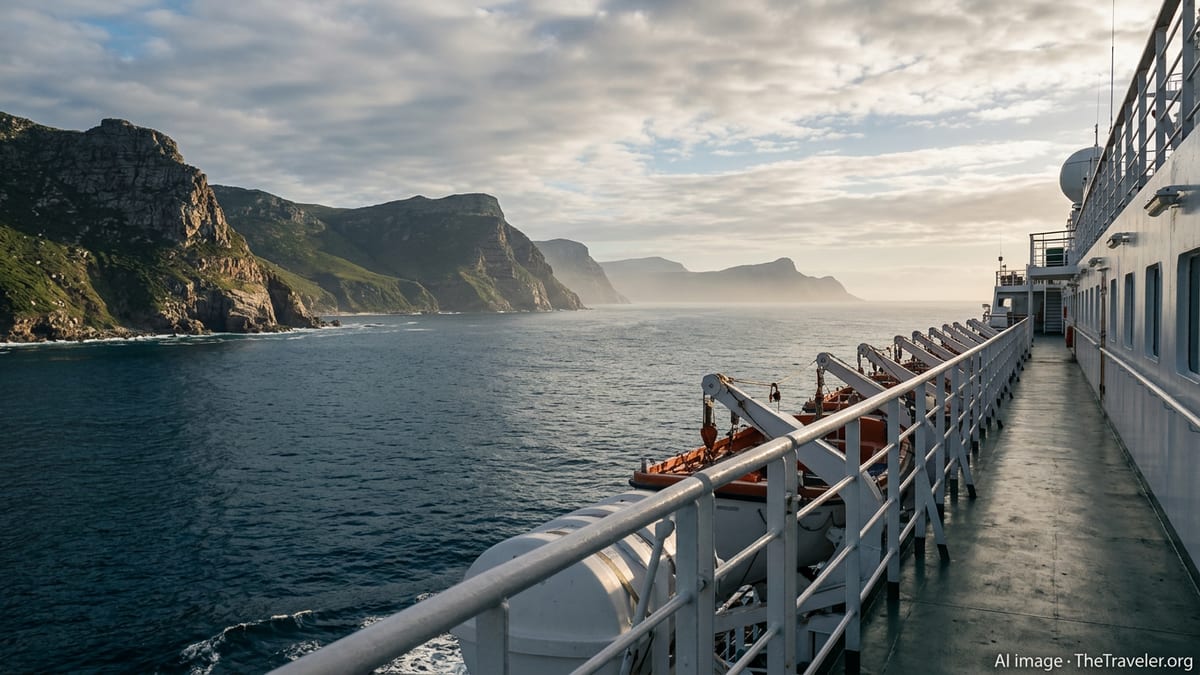
After leaving the Indian Ocean islands, Vasco da Gama is scheduled to continue along Africa’s east coast, calling at ports that provide access to Kenya and Tanzania before reaching Mozambique and South Africa. Cruise trade reports describe South Africa as the “grand finale” of the world cruise, with multiple calls intended to showcase both safari opportunities and coastal scenery.
From the information currently available, the itinerary includes days in South African ports that serve as gateways to wildlife reserves and national parks, allowing for overland safari excursions. Travel media coverage notes that these options are expected to be a central component of the late-voyage programming, appealing to guests who want to combine a world cruise with classic game-viewing experiences.
Nicko’s decision to give South Africa and its neighboring waters a prominent role reflects broader momentum in the cruise sector, where more lines are adding or lengthening Africa itineraries for the 2027–28 period. Analysts point out that this shift responds to growing demand from experienced cruisers seeking less familiar regions after multiple visits to the Caribbean, Mediterranean and Alaska.
By scheduling South Africa toward the end of the 172-day journey, the itinerary also creates a natural narrative arc, moving from Caribbean and South Pacific island chains through Australia and Asia before culminating in African wildlife and coastal landscapes. The concluding sail north from southern Africa back to Lisbon provides time at sea for guests to transition from intensive touring to a more reflective pace.
Segment options and target market
Alongside the full 172-day circumnavigation, Nicko is promoting shorter world-cruise sectors for travelers who cannot commit to nearly six months at sea. Publicly available route descriptions mention a 125-day “short world cruise” starting in Panama City and a selection of regional segments that allow guests to focus on individual parts of the itinerary, including the Indian Ocean and Africa.
Industry observers suggest that these partial voyages are aimed at a mix of German-speaking and broader European markets looking for extended, but not full-season, itineraries on a mid-sized ship. The Indian Ocean and South Africa segments are likely to appeal in particular to repeat cruisers who have already sailed classic routes but want a higher level of destination depth than is typical on standard two- or three-week sailings.
Travel advisor commentary notes that Nicko’s world-cruise pricing structure and onboard style place Vasco da Gama in a niche between mass-market and ultra-luxury operators. The ship’s capacity of around 1,000 guests and its emphasis on longer port stays in more remote regions are being used as differentiators in a competitive environment where several larger lines are also releasing 2027 and 2028 world itineraries.
With sales open more than a year in advance of departure, the 2027–28 world cruise is expected to attract a mix of guests booking the entire voyage and others selecting only the Africa and Indian Ocean legs. Industry reports indicate that Africa-heavy routings are selling strongly among experienced cruisers, and Nicko’s decision to weight its global voyage toward South Africa and surrounding waters reflects that trend.