


More news on this day
Greece’s Hellenic Civil Aviation Authority reports that flight delays linked to air traffic decreased in June compared with a year earlier, offering a rare bright spot for summer travelers as traffic through the country’s airports continues to climb.
Get the latest news straight to your inbox!
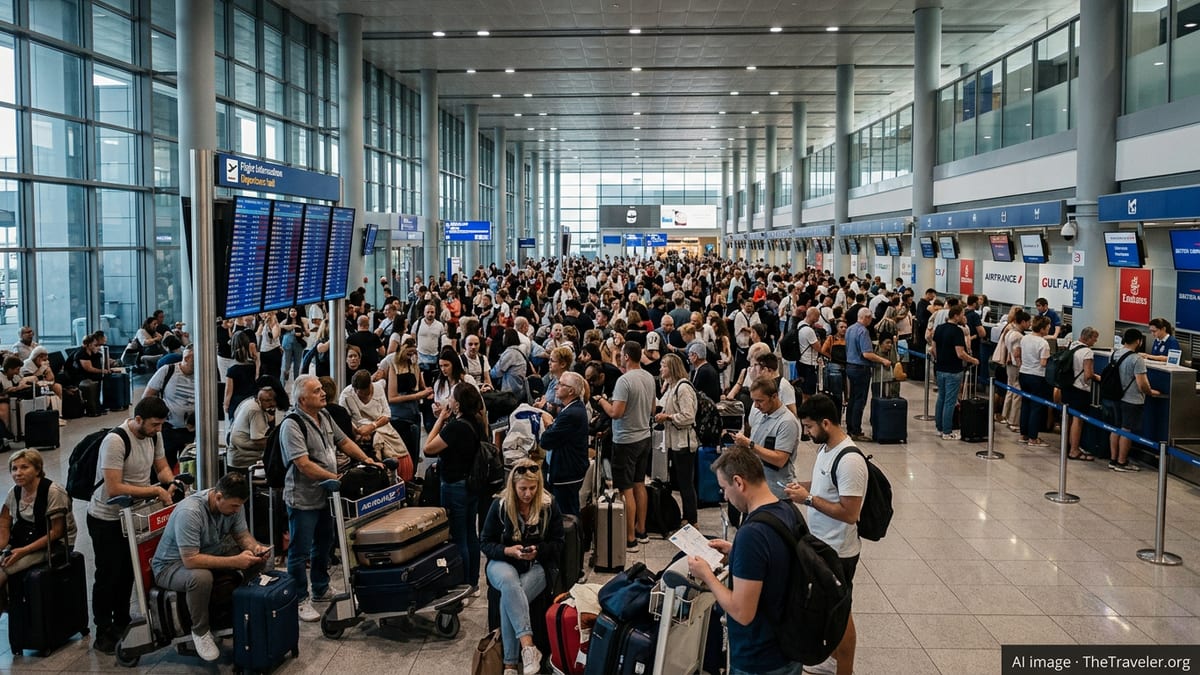
New data point to shorter waits at Athens International Airport
According to recent figures highlighted in Greek media, air-traffic related delays at Athens International Airport in June fell significantly compared with the same month of 2025. The Hellenic Civil Aviation Authority data indicate that the average delay attributed to air traffic at the capital’s hub stood at around 4.4 minutes per flight, down from about 6.5 minutes a year earlier, a drop of more than two minutes per movement.
In proportional terms, publicly available information shows that total air-traffic related delay minutes at Athens were reduced by nearly one third in June, with reports citing a decrease of approximately 31.8 percent. This suggests that, for many passengers passing through Greece’s busiest airport, queues on the runway and in holding patterns have eased, even as the traditional summer peak gets under way.
The improvement comes after a year in which Athens recorded some of Europe’s weakest punctuality scores among major airports. Industry punctuality reports for 2025 placed the airport near the bottom of its peer group for both arrivals and departures, underscoring the significance of any subsequent gain in on-time performance at the start of the 2026 holiday season.
While the latest figures focus on delays explicitly attributed to air traffic management, they feed into a broader picture of improving operational discipline at the country’s main gateway. Other causes of disruption, such as airline scheduling issues, ground handling constraints or weather, are tracked separately and can continue to affect passengers even when airspace-related delays are falling.
Contrast with Eurocontrol concerns over Greek airspace bottlenecks
The new delay statistics emerge against the backdrop of heightened scrutiny of Greece’s air navigation performance at the European level. Recent network briefings from Eurocontrol have highlighted Greece as one of the larger contributors to en route delays across the continent so far this year, alongside France and Spain. The reports point in particular to capacity and staffing constraints at the Athens and Makedonia area control centers.
Eurocontrol’s monitoring shows that, on a network-wide basis, en route air traffic flow management delays this summer have fallen compared with 2025. Yet Greece still accounts for a notable share of minutes lost in European skies, as traffic linked to Mediterranean tourism and ongoing tensions in neighboring regions channel more aircraft through its airspace. For travelers, that can translate into airborne holding patterns or rerouted paths, even when conditions at individual airports are improving.
The apparent discrepancy between strengthened punctuality at Athens International Airport and the country’s position in continental delay rankings reflects the complexity of aviation performance metrics. Airport-level delays capture what passengers experience at departure and arrival gates, while en route figures gauge how efficiently flights are handled once airborne. Greece’s latest data indicate progress at the terminal level in June even as structural issues in airspace management remain under pressure.
Publicly available commentary from Greek outlets notes that the civil aviation authority has emphasized its own statistics on Athens delays in response to the broader European assessments. By foregrounding the June improvement at the country’s main hub, the authority is seeking to illustrate that local operational measures and infrastructure adjustments are beginning to pay off at the start of the high season.
Busy summer season tests resilience of Greek aviation system
The decline in June delays comes as Greece experiences another year of rising air traffic, driven by sustained tourism demand and expanding route networks. Recent figures from the civil aviation authority and airport operators show passenger numbers across Greek airports increasing in the first five months of 2026 compared with the same period a year earlier, adding pressure to airspace and ground systems even before the peak holiday months of July and August.
Airports serving popular island destinations, including those managed under concession agreements, are already handling dense schedules of seasonal services. Coordinated slot controls and tighter planning for general and business aviation have been introduced at some coordinated airports for the summer period in an effort to keep flows manageable. These measures complement efforts by the authority and Eurocontrol to fine-tune air traffic flow management in the region.
Despite the overall improvement, recent weeks have still seen localized disruption in Greek air travel. Test flights for navigation and landing systems at Athens, alongside occasional technical issues and weather episodes, have led to temporary delays for some services. Industry observers note that such short-term interruptions are to be expected in a busy summer and that the more important indicator is the trend in average delay minutes across the month, which for June moved in a positive direction.
Travel industry representatives are watching whether the pattern holds through the rest of the season. A sustained reduction in air-traffic related delays at Athens and other Greek airports would bolster the country’s reputation as a reliable summer destination and could ease some of the operational strains that carriers reported during earlier peak periods.
Modernization efforts and regulatory backdrop
The Hellenic Civil Aviation Authority’s June statistics arrive as Greece pursues a broader modernization of its aviation infrastructure and oversight framework. Over recent years, authorities have embarked on projects to update air traffic management systems, strengthen contingency procedures and align national regulations more closely with European standards on passenger rights and network performance.
Greece’s aviation regulators operate alongside European mechanisms such as Eurocontrol’s network management function, which coordinates traffic flows and capacity planning across member states. Within this framework, national authorities remain responsible for day-to-day operations at airports and in domestic airspace, while also contributing data used to monitor safety, punctuality and environmental performance.
The recent focus on delays has highlighted the importance of transparent reporting and publicly accessible statistics. By publishing comparative month-on-month figures, including the June reduction in average delay minutes at Athens, the civil aviation authority provides airlines, airports and passengers with benchmarks against which to assess service levels. Analysts note that consistent data can also support investment decisions in staffing, technology and runway capacity.
At the same time, ongoing investigations into earlier system outages and communication failures have underscored the need for resilient backup arrangements. Air traffic disruptions earlier in the year drew attention to legacy equipment in parts of Greece’s aviation network, prompting calls for accelerated upgrades. The June delay improvement at Athens is being viewed within that wider context of efforts to deliver both more punctual and more robust operations.
What the figures mean for travelers planning trips to Greece
For passengers considering travel to Greece later in the summer, the reported fall in June delays offers cautious reassurance rather than a guarantee of disruption-free journeys. On average, shorter air-traffic related waits at Athens suggest that aircraft are moving more smoothly through takeoff and landing phases than they did a year ago, reducing the likelihood of extended ground holds directly attributable to airspace constraints.
However, aviation analysts stress that punctuality remains sensitive to a range of variables beyond air traffic control. Airline scheduling decisions, aircraft availability, crew rostering, ground handling capacity and local weather patterns can all contribute to late departures and arrivals, even when measured ATC-related delays are improving. The networked nature of European air travel also means that problems in distant hubs can cascade into Greek operations.
Travelers are therefore advised to read the latest guidance from carriers and airports, build in sensible connection times and monitor flight status updates closely on the day of travel. Industry reports indicate that early-morning departures often face fewer knock-on delays than services later in the day, when the cumulative impact of operational issues across the network is more likely to be felt.
Overall, the June data from Greece’s civil aviation authority signal that concerted efforts to stabilize the aviation system are starting to show up in key metrics at the country’s main airport. With demand for Greek destinations expected to remain strong through the peak summer months, the coming weeks will test whether those gains can be maintained under the heaviest seasonal loads.