


More news on this day
Days after a norovirus outbreak sickened more than 120 people on the Ruby Princess during a 20 day voyage from San Francisco, new accounts from passengers on the following sailing are raising concern that gastrointestinal illness may still be circulating on board.
Get the latest news straight to your inbox!
New Voyage Departs Amid Ongoing Health Concerns
The Ruby Princess returned to San Francisco on July 2, 2026, after a round trip cruise to Alaska and Canada during which 102 passengers and 23 crew members reported symptoms consistent with norovirus, according to publicly available federal data. Within hours of docking, the ship began boarding thousands of new guests for its next Alaska itinerary, even as details of the outbreak were still emerging in news coverage.
Local television coverage in the Bay Area reported that passengers waiting at the cruise terminal for the subsequent departure had been informed of the norovirus cases on the previous sailing and were offered the option to rebook. Some travelers described enhanced screening at embarkation, including health questionnaires and reminders about hand hygiene, but boarding proceeded on schedule for the new cruise.
On social media and cruise discussion forums, several individuals who identified themselves as currently sailing on the Ruby Princess reported that gastrointestinal illness had not fully disappeared from the ship. One poster described being on the voyage “right after the outbreak” and referenced ongoing cases, while others discussed continued cleaning and disinfection measures visible in public areas.
These first hand accounts have fueled questions about how quickly cruise ships can fully break chains of transmission after an outbreak, particularly when turnaround times between sailings are short and many crew members remain on board from one voyage to the next.
Background on the Norovirus Outbreak
The norovirus incident on the Ruby Princess has drawn attention in part because it is the third gastrointestinal illness event involving a Princess Cruises ship reported to United States public health authorities so far in 2026. Earlier in the year, outbreaks were logged on the Star Princess and Caribbean Princess, based on information released through the federal Vessel Sanitation Program and summarized by industry outlets.
In the Ruby Princess case, the voyage departed San Francisco on June 12 and lasted 20 days, with calls along the Pacific Coast and in Alaska. Publicly available data indicate that about 3 percent of passengers and 2 percent of crew reported symptoms such as vomiting and diarrhea that are typically associated with norovirus. News reports citing cruise line statements characterized most of the cases as mild, with no deaths reported.
Norovirus is one of the most common causes of gastrointestinal illness on cruise ships, in part because it spreads easily in enclosed, high contact environments. It can be transmitted via contaminated food or water, surfaces, or direct person to person contact. Health agencies emphasize that while illness is usually short lived, it can be more serious for older adults, young children and people with underlying health conditions.
The Ruby Princess itself is no stranger to public health scrutiny. The ship was heavily covered in global media during the early months of the COVID 19 pandemic, when a coronavirus outbreak connected to a 2020 voyage led to investigations and legal claims. The new norovirus incident and subsequent illness reports have revived memories of that period for some observers following developments online.
Enhanced Cleaning and Onboard Mitigation Efforts
Following the June 12 voyage, publicly available statements from Princess Cruises and summaries by outlets such as CBS News and cruise industry publications indicate that the line implemented what it described as enhanced sanitation measures. These included increased cleaning of high touch surfaces, modifications to self service buffet operations and expanded communication to guests regarding handwashing and reporting of symptoms.
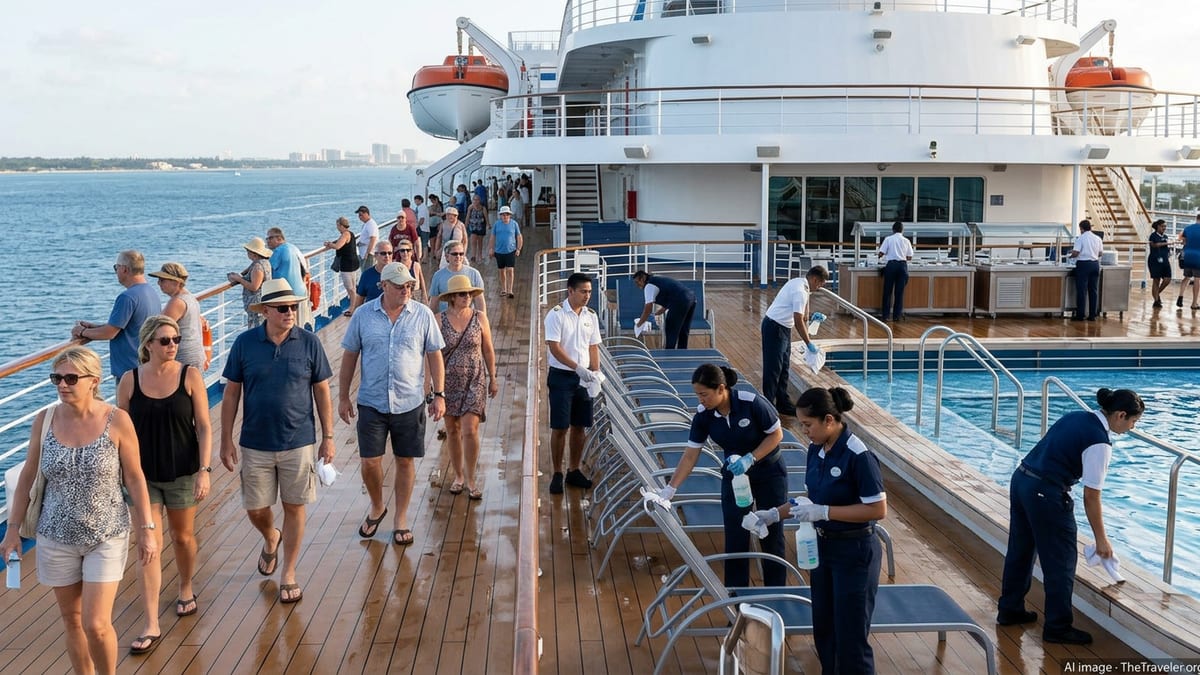
Passengers posting online from both the outbreak sailing and the subsequent cruise noted that crew were frequently wiping down railings, elevator buttons and dining room surfaces, and that hand sanitizer stations were prominent at the entrances to restaurants and lounges. Some guests remarked that buffet items were being served by staff instead of being fully self service, a common measure on ships during or following illness clusters.
Individuals commenting on cruise forums also discussed the challenges of completely interrupting transmission between back to back voyages. Several noted that even with deep cleaning during the turnaround in San Francisco, crew who had been on the affected cruise remained on board to serve the next wave of passengers, potentially allowing low level circulation of the virus if strict isolation and recovery protocols were not followed.
Public health agencies generally recommend that people who experience norovirus symptoms remain isolated for at least 48 hours after they stop vomiting or having diarrhea, to reduce the risk of ongoing spread. It is not clear from publicly available information how those guidelines were applied in detail to crew or guests on the Ruby Princess between the two sailings.
Passenger Reactions and Booking Decisions
The rapid succession of voyages has left some travelers weighing the appeal of an Alaska cruise against concerns about illness risk. In interviews quoted by regional broadcasters and in comments shared on social media, a portion of would be passengers indicated they felt reassured by cleaning protocols and chose to board as planned, sometimes emphasizing that norovirus can be found in many settings on land as well.
Others cited reports of multiple gastrointestinal outbreaks across the cruise industry this year and said they had postponed or cancelled trips. In online discussions, some travelers referenced the Ruby Princess specifically, expressing worry about being on the first or second sailing after a significant outbreak, when viral particles may still be present in cabins, shared bathrooms and dining venues despite disinfection efforts.
For passengers already on board the post outbreak sailing, anecdotal posts ranged from those who reported an uneventful vacation with no illness to those who mentioned cases in their vicinity and described a heightened focus on hygiene. Several contributors advised future guests to carry disinfecting wipes, wash hands frequently, avoid touching faces and consider using stairs instead of crowded elevators when possible.
Travel advisers monitoring the situation noted that norovirus events often receive intense attention when they occur at sea, even though the virus is more prevalent in community settings overall. Still, patterns of repeated outbreaks on the same brand in a short period can affect consumer perception, at least temporarily, and lead some guests to compare health records when choosing among cruise lines.
Scrutiny on Cruise Health Protocols in 2026
The Ruby Princess situation unfolds at a time when infectious disease events on cruise ships are under renewed scrutiny. In addition to several norovirus outbreaks reported to United States authorities this year, international health agencies have been tracking a separate cluster of Andes hantavirus infections linked to an expedition cruise vessel, highlighting the diversity of pathogens that can emerge in maritime travel.
Publicly available analyses of recent outbreaks note that large cruise ships combine high population density, shared dining and recreational spaces, and frequent international travel, all of which can facilitate the rapid spread of viruses. Lessons from earlier incidents, including the COVID 19 era, have led operators to update ventilation, onboard medical capacity and isolation protocols, but experts continue to emphasize the importance of basic measures such as hand hygiene and prompt reporting of symptoms.
As coverage of the Ruby Princess continues, regulators, cruise companies and potential passengers will be watching for further data from ongoing sailings, including whether illness reports decline in the coming weeks. For travelers planning Alaska voyages from San Francisco and other ports, the latest events serve as a reminder to review health advisories, understand cancellation and rebooking options, and consider personal risk factors before stepping on board.