


More news on this day
Residents in Bucyrus, a small city in northern Ohio, were ordered to leave their homes after a freight train derailed Sunday night with a tanker car carrying hydrochloric acid, triggering an emergency evacuation zone as hazmat teams moved in to secure the scene.
Get the latest news straight to your inbox!
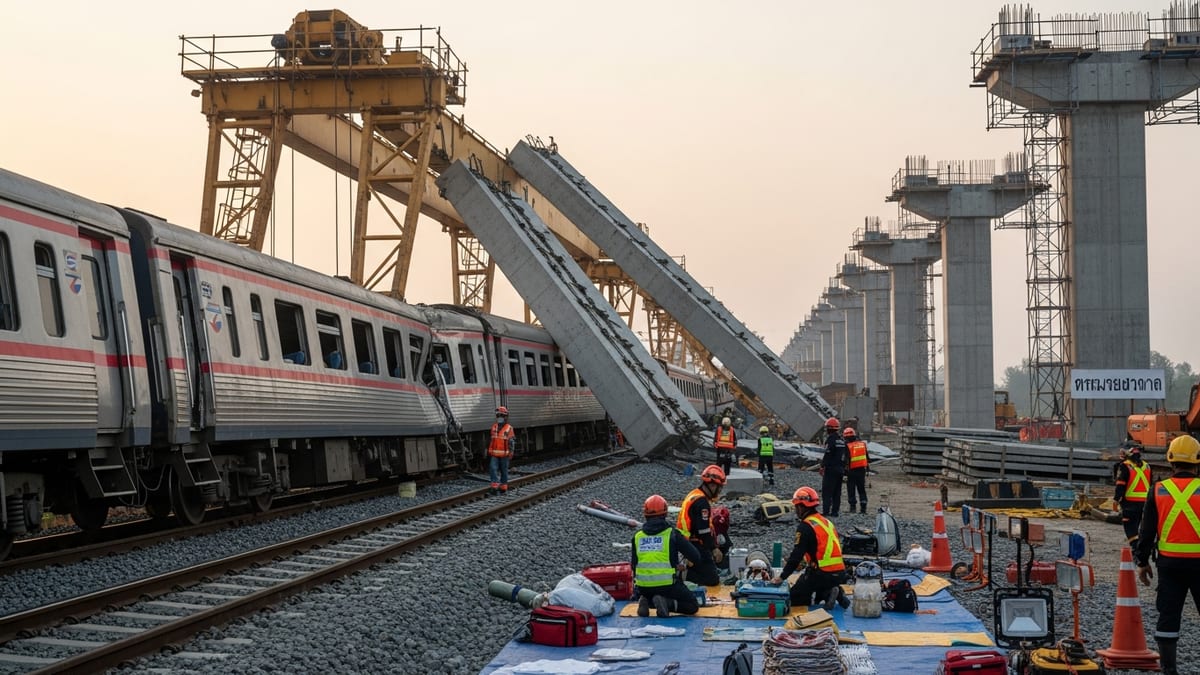
Derailment near neighborhood crossing prompts rapid response
Publicly available information from local outlets indicates that the derailment occurred shortly before 9 p.m. Sunday near a rail crossing in Bucyrus, in an area where residential streets sit close to the tracks. Several freight cars left the rails, including at least one tanker identified as carrying hydrochloric acid, a corrosive chemical widely used in industry.
Reports describe six cars derailing, with images from the scene showing overturned freight equipment resting beside the line. Early assessments raised concern that the acid tanker could be compromised, raising the risk of a leak that might release irritating fumes into nearby streets and homes.
Emergency alerts and local coverage indicate that an initial evacuation radius of about one mile was established as responders worked to understand the condition of the tanker and any potential release. The scale of that early safety zone reflected caution around the possible behavior of hydrochloric acid if it were to escape from the car.
Rail traffic through the corridor was halted while crews assessed track damage and secured the derailed cars. Nearby roads were also closed, disrupting local travel and blocking vehicle access to the immediate area while inspections were carried out.
Evacuation orders and shelter operations
Residents living closest to the derailment were asked to leave their homes as a precaution soon after the incident, according to published coverage from regional television and newspaper outlets. People within the original evacuation area were directed to move to friends’ or relatives’ homes outside the zone or to make use of an emergency shelter set up in the city.
Local reporting notes that Bucyrus High School was opened as a temporary shelter, giving displaced residents a staffed, indoor location to spend the night while responders worked along the tracks. Evacuees arriving there described leaving quickly with only essential belongings as word spread of a potentially hazardous chemical on board the train.
As monitoring data and site inspections accumulated through the night and into Monday morning, the evacuation footprint was gradually reduced. Updated guidance reported by Ohio news outlets indicated that the safety perimeter was scaled back from roughly one mile to about a quarter mile around the derailment site once tests did not show wider offsite impacts.
By late Monday morning, emergency management updates cited in regional coverage reported that the formal evacuation order had been lifted, with most residents allowed to return home, though some streets and properties closest to the tracks remained restricted while work continued.
Chemical risk and air monitoring efforts
Hydrochloric acid, also known as hydrogen chloride when in gas form, can cause severe irritation to the eyes, skin, and respiratory system at elevated concentrations. For that reason, early uncertainty around the integrity of the tanker car drove conservative evacuation decisions in Bucyrus, even in the absence of reports of a major visible release.
Information from local and national outlets indicates that hazmat teams and environmental contractors conducted air monitoring near the derailment and in surrounding neighborhoods. Published updates describe handheld and fixed monitors being used to check for any measurable levels of acid vapors downwind of the site.
As those readings remained within acceptable limits beyond the immediate derailment footprint, responders began shrinking the evacuation zone and allowing more residents to return. Reports from the scene noted that, while some odors were described near the tracks, widespread air quality concerns were not documented outside the closest blocks.
Cleanup plans also included securing and eventually rerailing or removing the derailed tanker and other cars. Standard protocols in incidents involving corrosive cargos call for a combination of product transfer, containment, and controlled handling of any residual materials, which can extend the duration of work long after residents are cleared to go back home.
Cleanup progress and impact on travel
Coverage from Ohio-based broadcasters on Monday described a busy work zone around the derailment, with cranes, heavy trucks, and rail maintenance crews operating along the damaged section of track. The goal is to remove the derailed equipment, repair rail infrastructure, and restore normal freight movements through the corridor.
Road closures around the site have affected local traffic patterns in Bucyrus, with some drivers detouring around barricaded crossings and intersections while crews remain in place. Reports indicate that access restrictions are expected to ease in stages as each segment of the response, from hazmat stabilization to track repair, is completed.
For residents, the most immediate disruption centered on the overnight evacuation and the uncertainty that followed. Returning home often involved checking for lingering odors, verifying that utilities were functioning, and resuming daily routines against the backdrop of continued activity along the rail line.
Local officials are expected to continue coordinating with the railroad and state agencies in the days ahead to document the response, track any follow up environmental sampling, and communicate ongoing work that could affect nearby neighborhoods or travel routes.
Broader rail safety concerns in Ohio communities
The Bucyrus derailment adds to a series of high profile rail incidents in Ohio in recent years that have drawn attention to the movement of hazardous materials through small towns and cities. Earlier events elsewhere in the state prompted wider national discussion about derailment prevention, tank car standards, and emergency preparedness in rail corridors.
Publicly available information on those prior incidents shows that questions frequently arise about how quickly communities are notified, the size of evacuation zones, and the availability of shelters and transportation for those asked to leave their homes. The latest derailment in Bucyrus is likely to renew that conversation at both local and regional levels.
For travelers and visitors, the episode highlights how closely many Midwestern rail lines run to residential areas, downtown districts, and roadways. Temporary closures, detours, and visible hazmat activity can become part of the landscape for days after an incident, even when monitoring does not point to a widespread chemical release.
As cleanup progresses and rail service resumes, Bucyrus will join a growing list of communities that have experienced the disruption of a hazardous materials derailment at close range, a reality that continues to shape how residents and travelers alike perceive the risks and responsibilities associated with freight traffic across the region.