


More news on this day
As cruise ships sail into another record year of demand, a growing cohort of repeat passengers is quietly reshaping life on board with habits that routinely surprise first-time and even seasoned cruisers.
Get the latest news straight to your inbox!
Refusing Drink Packages and Still Enjoying the Bar Scene
On many mainstream lines, beverage packages are marketed as a near-essential add-on, especially as daily gratuities and onboard charges rise. Yet a noticeable group of experienced passengers are declining these packages, doing the math on their own consumption and instead buying drinks à la carte. Industry comparisons for 2026 show that package prices and automatic service charges have climbed again, prompting more travelers to question whether these bundles actually save money over a seven-night sailing.
This approach can surprise tablemates who assume everyone at the bar is on a flat-rate package. Some cruisers report that they track spending through the line’s app, set a daily beverage budget and still participate fully in social life at lounges and pool bars. Others lean on included options such as brewed coffee, basic teas and self-serve water or juices, reserving paid beverages for select occasions rather than every round.
Publicly available advice from cruise specialists increasingly highlights that package value depends heavily on how many alcoholic or specialty drinks a traveler is likely to consume each day. Families and multigenerational groups in particular are adopting a mix-and-match strategy in which some cabin members forgo packages altogether. As onboard costs continue to inch upward, declining a drink package has become one of the more visible ways experienced cruisers quietly push back on the idea that add-ons are mandatory.
This shift plays into a broader trend toward value-conscious cruising. Research into traveler behavior for 2026 indicates that price-sensitive guests are willing to adjust how they spend once aboard if it means keeping the overall trip within budget. For many, that begins with skipping the one-size-fits-all bar bundle that once felt like part of the standard cruise script.
Traveling Carry-On Only and Skipping the Luggage Drama
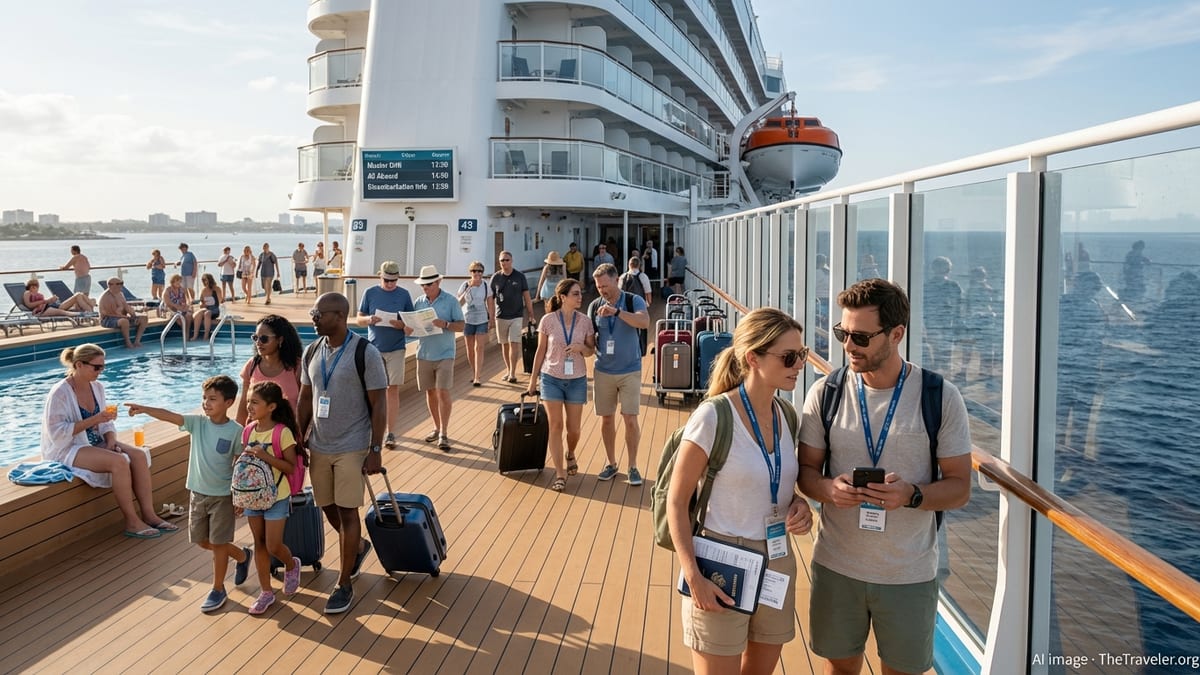
Another habit that often prompts double takes at the pier is the sight of cruisers boarding with only a backpack or small roll-aboard. While most passengers still check suitcases with porters, seasoned travelers are increasingly opting for carry-on-only cruising, even on weeklong itineraries. Packing lists shared across travel platforms emphasize versatile, quick-drying clothing, neutral color palettes and multipurpose shoes as ways to streamline.
The payoff is felt immediately on embarkation day. With no need to wait for luggage to appear in the corridor, carry-on travelers can change for dinner, head straight to the pool or unpack and settle in long before the first night’s show. They also avoid the end-of-cruise scramble to place bags outside the cabin door the night before disembarkation, a ritual that still surprises many first-time guests.
Security rules and prohibited-item lists published by major cruise brands reinforce that much of what people habitually pack is either unnecessary or not allowed on board. Repeat passengers who have experienced delayed or waylaid luggage are particularly likely to strip their wardrobes down to basics and rely on onboard laundry services or quick sink washes. Reports from frequent cruisers indicate that even a seven-day Caribbean itinerary can be managed comfortably with a single small bag if outfits are planned carefully.
While minimalist packing is far from universal, its visibility is growing in embarkation terminals. Travelers who arrive with multiple oversized suitcases sometimes express surprise that their cabin neighbors have managed with a single carry-on, and online discussions show rising interest in replicating the strategy for future sailings.
Booking Independent Shore Excursions Instead of Ship Tours
One of the most striking behavior shifts occurs in port. Many lines still promote ship-organized shore excursions as the default choice, emphasizing perceived convenience and schedule coordination. Yet a growing number of experienced passengers are declining those tours and arranging independent outings with local operators, shared taxis or self-guided walking routes.
Travel forums and social platforms are filled with step-by-step accounts of how cruisers compare prices, read recent reviews and book directly with providers at popular ports. Some travelers organize small-group tours that mirror line-run excursions at a lower cost, while others design entirely customized days focused on food, history or nature. First-time cruisers who learn that ship excursions are optional are often surprised by both the variety and the pricing of alternatives.
Published travel trends for 2026 highlight a broader appetite for “experience-led” travel in which guests seek more local flavor and flexibility ashore. Cruise passengers are applying that mindset by visiting neighborhoods beyond the immediate port area, using mobile mapping tools, or choosing attractions that are not featured in official excursion catalogs. In destinations with well-developed tourism infrastructure, independent touring has become especially common.
The practice is not without trade-offs; lines typically stress that independently arranged guests are responsible for getting back to the ship on time. Still, reports from seasoned cruisers show that with realistic timing and conservative planning, many feel comfortable exploring on their own. For new cruisers accustomed to all-inclusive packages, discovering that fellow passengers routinely skip ship tours can be one of the biggest surprises of the voyage.
Staying On Board in Port to Enjoy a Quieter Ship
Another unexpected habit is the deliberate choice to remain on the ship while most passengers go ashore. As cruise demand rises and vessels routinely sail full, public areas can feel crowded on sea days. For some repeat cruisers, port days have become an opportunity to enjoy amenities in relative calm, from nearly empty pools to quieter spas and lounges.
Accounts from frequent travelers describe port-day routines that include having breakfast later in the main dining room, enjoying unhurried time in thermal suites, or using the gym when it is virtually empty. Parents with young children sometimes opt for a half-day ashore followed by an afternoon back on board, trading one more beach visit for a less crowded water slide or ropes course.
This “ship-as-destination” mindset aligns with the way cruise lines have invested in new hardware and onboard attractions. Analysts tracking the sector note that as vessels add more features, some guests view remaining on board as a form of value maximization. Where first-time cruisers may feel pressure to disembark at every stop, veterans increasingly see skipping a port or shortening a visit as an acceptable, even desirable, way to pace the trip.
New cruisers encountering this behavior for the first time sometimes express surprise that fellow passengers would ignore a marquee port. Yet reports suggest that for those who have already visited certain destinations, a quiet ship day can feel like a different kind of upgrade, one that does not appear on any menu of paid extras.
Embracing Early Nights, Quiet Spaces and Screen-Free Time
With ever-larger ships offering late-night shows, themed parties and bustling casinos, many travelers assume that evenings at sea are meant to be packed from sunset onward. Even so, a noticeable slice of repeat cruisers is choosing early bedtimes, library visits and extended balcony reading over headline entertainment, a pattern that can surprise cabin neighbors expecting everyone to keep the same schedule.
Research into changing cruise demographics shows steady growth among younger adults and remote workers who see sailings as a chance to rest from digital overload. These travelers may log off from social media and spend long stretches away from their phones while at sea, making use of quiet lounges, promenades and adult-only sundecks. Some deliberately disconnect from the ship’s Wi-Fi, treating the cruise as a rare opportunity for screen-free days.
This slower rhythm extends to daytime choices as well. Rather than racing between trivia contests, dance classes and pool games, some passengers selectively attend only a few activities and leave more open time in their schedules. Travel commentary for the 2026 season notes a corresponding rise in demand for wellness programming, from yoga to mindfulness sessions, which often appeals to guests already prioritizing rest over constant stimulation.
For those more accustomed to the “do it all” mentality, meeting shipmates who regularly skip the late-night shows or choose a book over the nightclub can feel unexpected. Yet this quieter style of cruising is increasingly visible as ships welcome repeat guests eager to return, not for more noise and novelty, but for the chance to slow down at sea.