


More news on this day
Indian travellers are rapidly adopting artificial intelligence for trip planning, with new research indicating that 68 percent are likely to use AI tools for their future journeys, a shift expected to significantly influence tourism growth in 2026.
Get the latest news straight to your inbox!
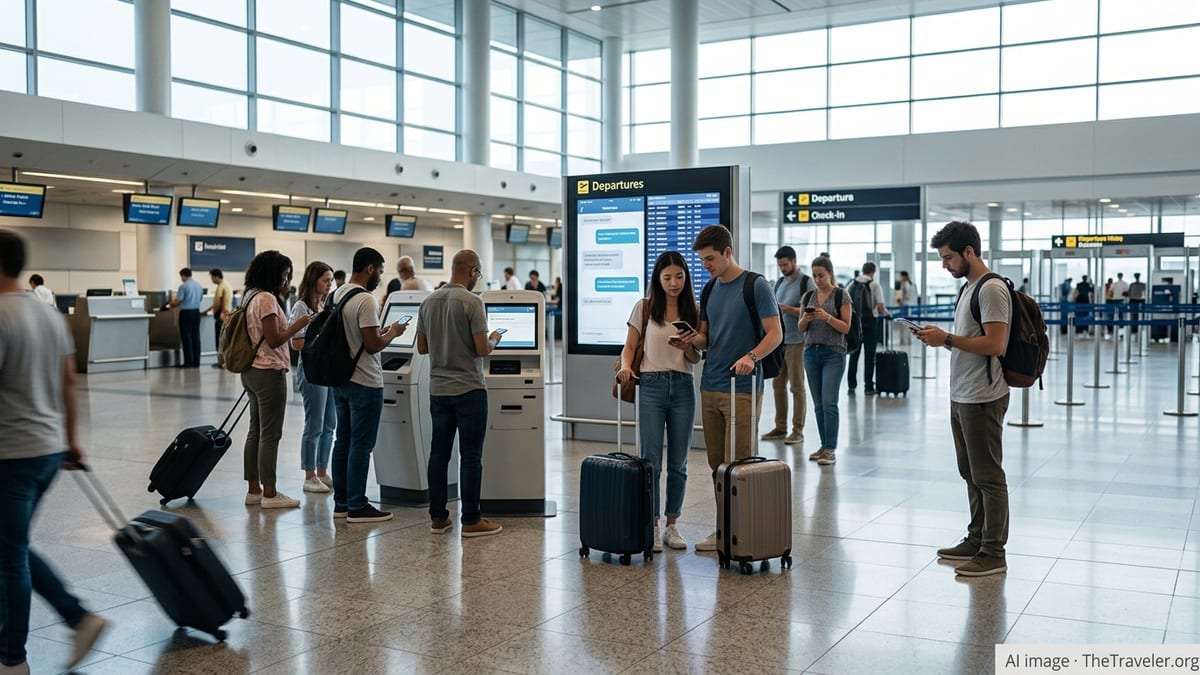
Survey Data Signals a Step-Change in Trip Planning Habits
The latest Agoda 2026 Travel Outlook Report highlights how quickly AI is moving into the mainstream of Indian travel planning. The study finds that 68 percent of Indian respondents are likely to use AI for their next trip, underscoring a marked jump from early experiments with chatbots and itinerary tools to a more widespread readiness to integrate AI into every stage of the journey.
The report indicates that Indian travellers are looking to AI for assistance across the full travel cycle, from destination discovery and price comparisons to on-trip decisions such as where to eat or which attractions to prioritise. While about a third of respondents already use AI for travel, the much larger share expressing future intent suggests that 2026 could be a tipping point for digital-first decision making.
Other recent consumer studies on AI in travel, including research published by McKinsey and industry trackers, point to a similar pattern globally, but India stands out for both its speed of adoption and the high satisfaction levels reported by users. Earlier survey work cited by ETTravelWorld shows that nearly all Indian travellers who have tried AI-based trip planning report being satisfied with the experience, reinforcing the momentum captured in the 2026 outlook data.
This surge in interest aligns with India’s broader embrace of consumer technology and digital payments over the past decade, where rapid smartphone penetration and low-cost data helped move entire segments of travel, from ticketing to hotel bookings, into online and mobile channels. AI now appears to be the next layer in that evolution.
Trust, Control and the Emerging AI Travel Workflow
While Indian travellers are increasingly open to AI-generated ideas, surveys suggest that most still want to retain control over final booking decisions. Research released in April by Expedia Group on the so-called AI trust gap found that travellers across the United States, United Kingdom and India widely prefer to complete purchases with established travel brands, even when conversational AI booking tools are available.
The findings indicate a clear division of labour emerging between recommendation and transaction. Many travellers are comfortable using AI to brainstorm destinations, refine itineraries and hunt for value, but remain cautious about allowing algorithms to complete bookings or make high-value choices without human review. Concerns about data privacy, recourse when plans change, and the reliability of real-time pricing all contribute to this hesitation.
Industry analysts describe this pattern as a hybrid workflow taking shape across markets, including India. Travellers increasingly begin with AI to narrow options, collect tailored suggestions or simulate different budgets and dates, then shift to trusted booking sites, airline apps or hotel platforms to finalise and pay. For travel providers, this separation creates both a challenge and an opportunity: they must show up inside AI planning environments while still giving customers a clear path back to branded channels.
Despite these reservations, new reports on AI-planned travel show a direct link between trusted AI recommendations and booking decisions. When travellers feel confident that an AI tool understands their preferences and local conditions, they are significantly more likely to convert a suggested property or experience into an actual reservation, reinforcing the commercial stakes around accuracy and transparency.
Economic Tailwinds and India’s 2026 Tourism Outlook
The growing reliance on AI sits against a broader backdrop of optimism about India’s tourism prospects in 2026. Forecasts from the Mastercard Economics Institute project India to be among the fastest-growing major economies in Asia Pacific next year, with solid domestic demand and rising outbound spending supporting travel-linked sectors.
As incomes rise and connectivity improves across Tier 2 and Tier 3 cities, industry observers expect more first-time and occasional travellers to look for digital tools that simplify research, cut through information overload and stretch budgets further. AI planning assistants, particularly those embedded within familiar travel apps and payment ecosystems, are well positioned to serve this next wave of travellers.
Policymakers and trade bodies have also been emphasising AI’s role in productivity and customer experience, as seen in recent national forums on artificial intelligence and digital public infrastructure. While these initiatives are not specific to tourism, they contribute to an environment where travel companies experiment more freely with AI-driven personalization, dynamic pricing, language support and customer service automation.
For India’s tourism economy, the combination of pent-up demand, rising disposable income and more intelligent digital tools could translate into longer trips, more varied itineraries and higher spend per traveller in 2026, both domestically and abroad. Regions and businesses that adapt quickly to AI-enabled discovery and planning are likely to capture a disproportionate share of this growth.
From Inspiration to On-Trip Decisions: How Indians Use AI Today
Recent survey details suggest that Indian travellers are not restricting AI use to early trip inspiration. Respondents to the Agoda 2026 outlook research and other industry studies report turning to AI at multiple decision points, including comparing neighbourhoods within a city, customising day-by-day itineraries and checking transport options that align with personal constraints such as travelling with children or older relatives.
On-trip, AI tools are increasingly consulted for real-time adjustments: finding alternative attractions when weather disrupts outdoor plans, identifying dining options near a hotel that fit dietary preferences, or assessing whether a detour to a lesser-known site is realistic within a day’s schedule. This behaviour reflects a shift from static, pre-planned itineraries to more fluid, responsive trips shaped by continuous digital assistance.
Travel technology providers are responding by integrating generative AI into chat-based interfaces, bundling local content, reviews and maps into a single conversation. Some hotel and hospitality platforms are experimenting with AI concierges that answer questions in multiple Indian languages, while online travel agencies are testing itinerary builders that can ingest broad requests such as a family-friendly, budget-conscious hill-station break and output a sequenced plan with indicative costs.
Although adoption is not yet universal, the pattern is clear: AI is moving from a novelty tool used by a subset of early adopters to a mainstream assistant that many Indian travellers expect to be available, especially when planning complex or multi-stop journeys.
Challenges Around Accuracy, Inclusion and Skills
Despite strong interest and satisfaction rates, significant hurdles remain before AI-based planning becomes a default for all Indian travellers. Industry reports and consumer commentary highlight ongoing concerns about the accuracy of AI-generated information, including outdated opening hours, mislabelled locations or recommendations that overlook local constraints such as seasonal closures, permit requirements or infrastructure gaps.
There are also questions of digital inclusion. While urban, higher-income travellers may be quickest to adopt AI tools, large segments of the population still face connectivity, language or skills barriers that limit their ability to benefit from these innovations. Ensuring that AI assistants work effectively in regional languages, respect data-use norms and align with varying levels of digital literacy will be critical if the technology is to support broad-based tourism growth rather than deepen existing divides.
Experts tracking labour and skills trends in India note that AI is also reshaping roles within the travel industry itself. Staff in travel agencies, hotels and tour operations are increasingly expected to work alongside AI systems, interpreting outputs, correcting errors and supplying the local nuance that purely automated tools might miss. Training and workforce development will therefore be central to ensuring that AI augments rather than displaces human expertise in tourism.
Nonetheless, the direction of travel appears set. With 68 percent of Indian travellers indicating they are likely to use AI for future trips and economic conditions pointing toward continued expansion in 2026, artificial intelligence is poised to become a defining feature of how Indians explore their own country and the wider world in the coming year.