


More news on this day
A residential cruise ship that had promised years of continuous world travel has left the Cambodian port of Sihanoukville carrying only crew, after suspending operations and forcing more than 200 long-term passengers to disembark on short notice, according to reports from multiple international outlets.
Get the latest news straight to your inbox!
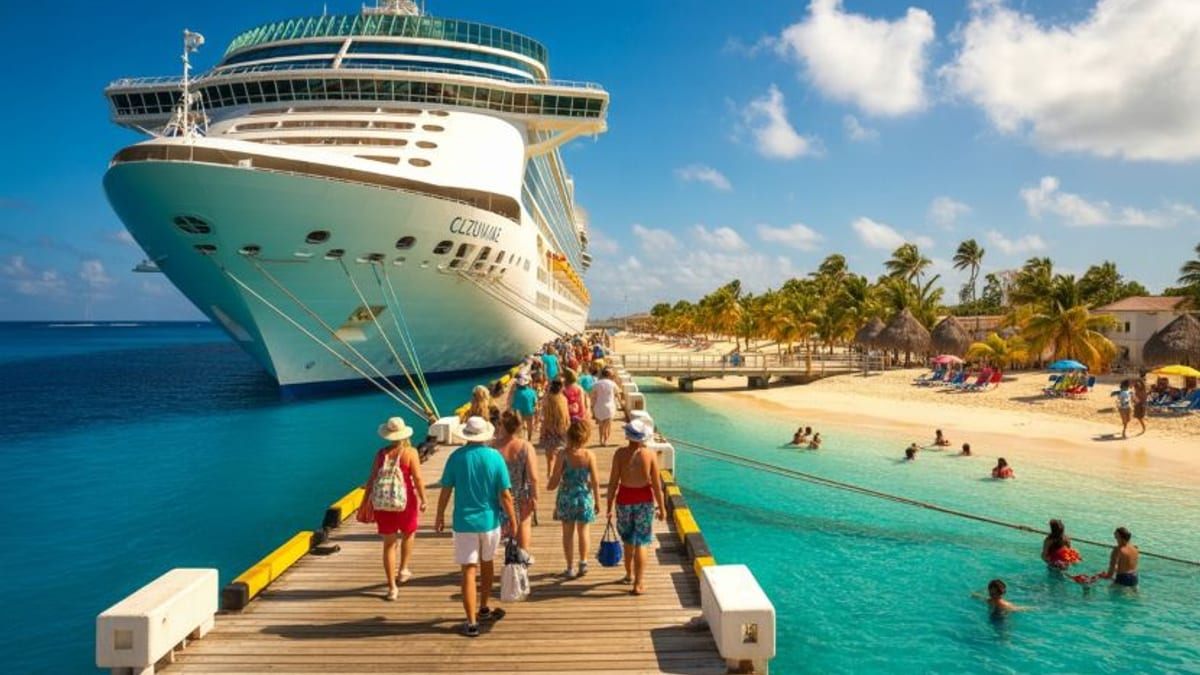
Residential “endless cruise” grinds to a halt in Cambodia
Publicly available information identifies the vessel as the MV Odyssey, a U.S.-operated residential cruise ship marketed as a floating community where travelers could live at sea for years while circling the globe. The concept appealed to retirees and remote workers who bought or leased cabins as semi-permanent homes, often committing significant savings for a multi-year voyage.
Reports indicate that the ship arrived in Sihanoukville, on Cambodia’s southern coast, in late October 2026 as part of a multi-year itinerary that had begun in 2024. Cambodian data cited in international coverage indicate that around 203 residents and 156 crew members were on board when the vessel entered port, although its design capacity was closer to 650 passengers.
Within days of the ship’s arrival, the operator announced that the voyage would be suspended in Cambodia. Passengers described being told to disembark with their belongings, effectively ending their life-at-sea plans while the vessel remained moored just off the country’s coast.
By Tuesday, November 3, the Odyssey had departed Cambodian waters with only crew on board, leaving former residents scattered in hotels and rented accommodation in Sihanoukville and Phnom Penh while they worked out next steps and onward travel.
Escalating fuel costs and financial strain end a three-year voyage
According to published coverage from outlets including Channel NewsAsia, the Washington Post and Reuters, the abrupt halt was linked to rising operational and fuel costs that undermined the business model of a continuous global cruise. Earlier reporting from late October noted that the company had already warned residents that high fuel prices were putting pressure on the planned three-year itinerary.
The Odyssey was part of a growing niche of residential cruises that sell cabins as long-term or even permanent residences. In this case, passengers reportedly paid tens of thousands of dollars, and in some cases significantly more, to join a round-the-world voyage marketed as a “never-ending” or multi-year journey. Some had sold homes or ended leases on land in order to relocate to the ship.
International business coverage and travel industry analysis describe a pattern in which residents were repeatedly asked to contribute additional funds for fuel and other operating expenses in the months leading up to the Cambodia stop. By the time the vessel reached Sihanoukville, the operator had suspended the trip and indicated that service could not continue as advertised.
Information carried by several news organizations suggests that the ship’s lender has since taken control of the vessel and that its next destination is expected to be Singapore, where it could be laid up or potentially placed in an auction process. Precise details of the financial restructuring have not been made public.
Hundreds of passengers stranded in Sihanoukville
While the Odyssey has now sailed away from Cambodia, the human impact of the sudden shutdown is most visible on shore. Coverage by Global News, the Associated Press and other outlets shows that more than 200 passengers were effectively left to re-start their lives in Sihanoukville with little advance notice.
Residents reported receiving only a few hours to pack their cabins and remove personal possessions before being escorted off the ship. Many had accumulated household goods over months at sea, turning their cabins into full-time homes. Video and social media posts show passengers wheeling large suitcases and plastic containers along Cambodian piers, symbolizing the abrupt end of a long-planned lifestyle.
Reports indicate that the operator initially arranged short-term hotel stays in Cambodia for some passengers, but that ongoing accommodation and flights have largely been at individuals’ own expense. Without a functioning voyage and with cabin contracts in limbo, many passengers face the dual challenge of recovering funds from the company while also paying for emergency travel and housing.
Those who chose to remain in Cambodia after disembarking have described navigating visa rules, securing longer-term accommodation and arranging storage or shipping for belongings that cannot easily be transported on commercial flights. Others have already departed for their home countries or for new travel plans elsewhere in Southeast Asia.
Cambodia’s role highlights port responsibilities in cruise disruptions
The Odyssey episode has drawn attention to Cambodia’s role as an unplanned end point for a global voyage. Publicly available information from government representatives and local media indicates that Cambodian authorities facilitated disembarkation in Sihanoukville and coordinated with foreign embassies to support travelers seeking consular assistance and onward tickets.
The situation echoes, in reverse, Cambodia’s earlier role during the early months of the COVID-19 pandemic, when the country allowed the cruise ship Westerdam to dock in 2020 after it had been turned away by several other ports in Asia over health concerns. In the current case, instead of providing a safe harbor for a ship seeking to land its voyage, Cambodia became the unexpected place where a residential cruise effectively came to an end.
For the port city of Sihanoukville, the incident has underscored both the opportunities and pressures that can come with hosting large cruise vessels outside traditional tourism seasons. Local businesses have seen a temporary influx of foreign visitors seeking hotels, restaurants and transport, even as many of those travelers grapple with uncertainty over their immediate futures.
Maritime analysts note that when long-duration cruises collapse mid-voyage, the port where the ship happens to be docked often becomes responsible for handling the humanitarian and logistical fallout, regardless of where the company is legally based. That dynamic can place unexpected demands on local infrastructure and consular networks.
What the collapse means for residential cruise travel
The Odyssey’s departure from Cambodia without passengers is being closely watched across the travel industry, particularly by companies that have launched or planned similar residential cruise projects. Trade publications and financial commentators suggest that the case may prompt closer scrutiny of how such ventures are financed and what protections exist for residents if an operator runs out of cash mid-journey.
Residential cruises differ from traditional sailings because many guests commit to months or years on board, often paying substantial sums in advance. When an itinerary is canceled in the middle of a multi-year plan, questions arise about refunds, contract terms, and responsibilities for repatriation and temporary housing. Legal and consumer-rights specialists quoted in international coverage have noted that these issues are often more complex than on conventional cruises.
Potential residents watching the Odyssey saga are likely to pay closer attention to details such as the ownership structure of ships, the financial backing behind operators, and the existence of escrow or trust accounts for prepaid cabin fees. Industry observers also point to global fuel markets and regional security risks as key variables that can quickly alter the economics of long-distance sea travel.
For now, publicly available reporting indicates that the MV Odyssey is headed away from Cambodia with only crew on board, while its former residents adjust to life back on land, many in a country they had never expected to call home, even briefly. The outcome of any refund efforts, legal actions or attempts to revive the project is likely to shape traveler confidence in the emerging residential-cruise niche for years to come.