


More news on this day
A CSX freight train derailed in South Charleston, spilling grain along the rail corridor but causing no reported injuries or hazardous-materials release, according to early local and industry reports.
Get the latest news straight to your inbox!
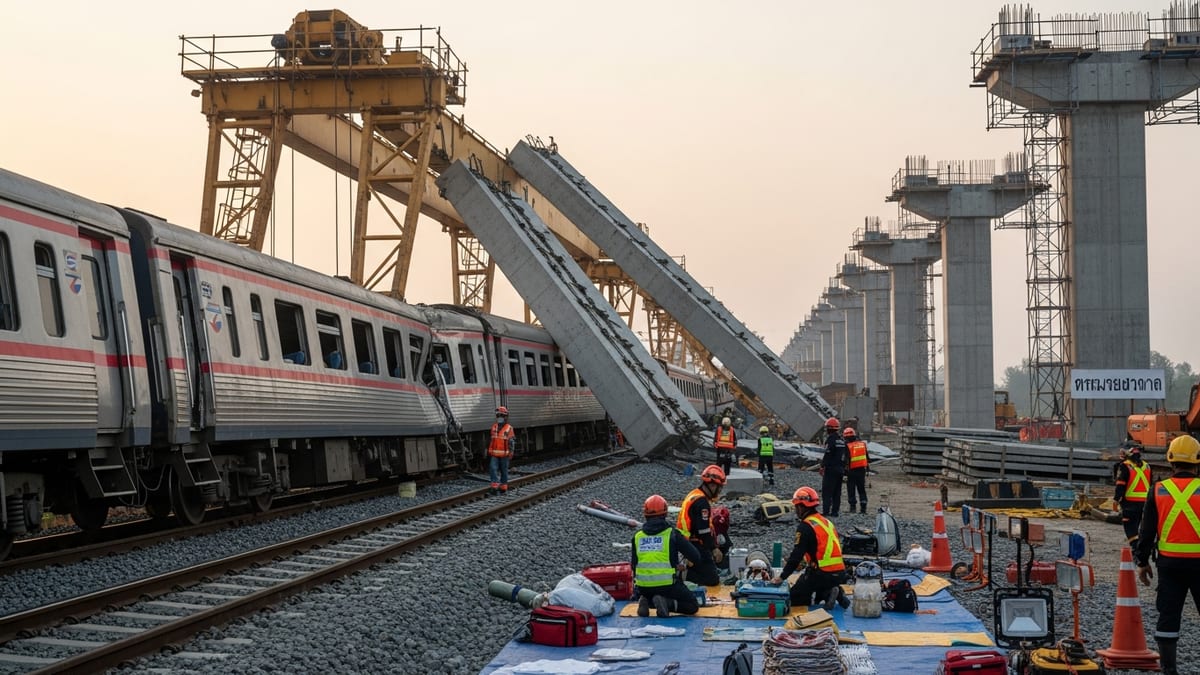
Grain cars leave tracks along industrial corridor
Initial information from local coverage and rail safety databases indicates that several freight cars carrying grain left the tracks in South Charleston, scattering their loads along an industrial stretch of railway. The incident involved a CSX-operated train that was moving through a mixed commercial and rail yard area when a portion of the consist derailed.
Images shared through regional media and social channels show covered hopper cars tilted or off the rails, with mounds of grain spilled onto ballast and adjacent ground. The derailed section appears to be confined to a relatively short segment of track, and early accounts suggest the locomotives remained upright.
Reports indicate that no tank cars or placarded hazardous-materials cars were directly involved in the derailment. That factor, combined with the cargo of grain, limited the immediate risk to nearby neighborhoods and businesses compared with incidents involving fuels or industrial chemicals.
Rail traffic through South Charleston is a routine feature of daily life, and trains carrying bulk commodities such as grain, coal, and aggregates regularly move along this corridor connecting industrial customers and regional hubs.
No injuries and no hazardous-materials threat reported
According to published coverage referencing CSX and local emergency dispatch information, there were no injuries among the train crew or people in the surrounding area. Emergency responders were dispatched as a precaution and coordinated with railroad personnel, but there were no reports of fires, leaks, or secondary collisions.
Publicly available information shows that the derailed cars were loaded with grain, a nonhazardous commodity. While any derailment can raise concerns among residents, the nature of the cargo significantly reduced the potential for chemical exposure, air-quality issues, or long-term contamination of nearby waterways.
Travelers passing through the area by road or rail experienced only limited disruption. Nearby streets reportedly remained open or were subject to short-term, localized restrictions while crews assessed the scene and positioned heavy equipment for recovery.
The absence of injuries and hazardous releases places this incident among the less severe category of rail accidents, though it still highlights the operational and logistical challenges that accompany any derailment on an active freight corridor.
Cleanup and track repairs focus on rapid reopening
Following the derailment, rail company response teams and contractors moved in to stabilize the site, drawing on standard industry procedures for nonhazardous bulk spills. Heavy machinery is typically used to re-rail equipment where possible, clear damaged cars, and remove spilled grain from the track structure and drainage areas.
Rail safety records and prior similar incidents indicate that spilled grain is usually collected and trucked away or, if contaminated, disposed of under local waste-handling regulations. In some cases, grain is salvaged if conditions allow and if it has not been mixed with ballast, soil, or fuel residues from equipment.
Track repair crews are expected to focus on inspecting ties, rail, and ballast in the affected segment, replacing or tamping materials as needed to restore a level, stable roadbed. Publicly accessible data from previous CSX derailments involving bulk commodities suggest that single-track freight routes can sometimes reopen within hours, while more heavily damaged segments may require a day or longer.
For rail travelers and motorists, the principal impact is likely to be temporary delays as trains are rerouted or held and as roadway access around work zones is managed. Once repairs are complete and inspections signed off, the line is typically returned to service at reduced speed before resuming normal operations.
Derailment renews focus on rail safety near communities
The South Charleston derailment, while relatively minor in terms of injuries and environmental danger, is likely to add to ongoing national discussion about rail safety and infrastructure reliability. In recent years, a series of higher-profile derailments involving hazardous materials has drawn attention to maintenance practices, train length, and inspection routines across the United States.
Rail safety analyses published by federal agencies and academic researchers note that most freight movements occur without incident, yet any derailment near populated areas can heighten public concern, regardless of the cargo. Bulk grain trains are common on CSX and other major railroads, and while their contents are not toxic, derailments can still disrupt local business, tourism, and everyday travel.
For travelers passing through South Charleston, visible cleanup activity and work trains along the corridor may be a reminder of the extensive freight network that underpins regional supply chains. Rail corridors often run close to highways, rivers, and pedestrian paths, intersecting with the spaces visitors use to move between attractions, hotels, and transport hubs.
Industry observers suggest that each nonhazardous derailment still provides data for improving inspection technology, track monitoring, and train-handling practices. Publicly available summaries of prior CSX incidents involving grain and other bulk commodities indicate that findings from investigations are typically folded into broader safety programs and infrastructure upgrades.
Travel considerations for visitors and commuters
For visitors to the South Charleston area, the immediate travel impact from this derailment appears limited. Local reports describe a confined work zone around the affected tracks, with routine city life continuing nearby. Hotels, restaurants, and attractions remain accessible, and primary highways serving the region are not reported to be significantly affected.
Commuters who rely on roads intersecting the rail corridor may encounter occasional lane closures or brief detours as heavy equipment is moved into and out of the site. Travelers are generally advised, based on past incidents of this type, to allow a little extra time when driving near active cleanup operations and to follow posted instructions from road crews.
For those traveling by rail through the broader region, freight derailments can lead to schedule adjustments as dispatchers reroute traffic around the affected segment. Passenger services operating on separate lines or different carriers are often able to continue with minimal impact, although travelers sometimes experience minor delays when freight congestion ripples across interconnected networks.
As grain is cleared and track repairs progress, the visible signs of the South Charleston derailment are expected to diminish quickly. For many travelers, the incident may register only as a passing glimpse of work crews along the tracks, underscoring how much of the national freight system operates in close proximity to everyday routes and destinations.