


More news on this day
Travelers across the United States are facing another day of disrupted plans as a wave of delays and cancellations linked to operations at Dallas Love Field spreads through the domestic networks of Southwest Airlines, Delta Air Lines and JSX, contributing to roughly 185 delays and at least five cancellations affecting major hubs including Dallas, Houston, Atlanta, Las Vegas, Phoenix, Denver, Chicago and New York.
Get the latest news straight to your inbox!
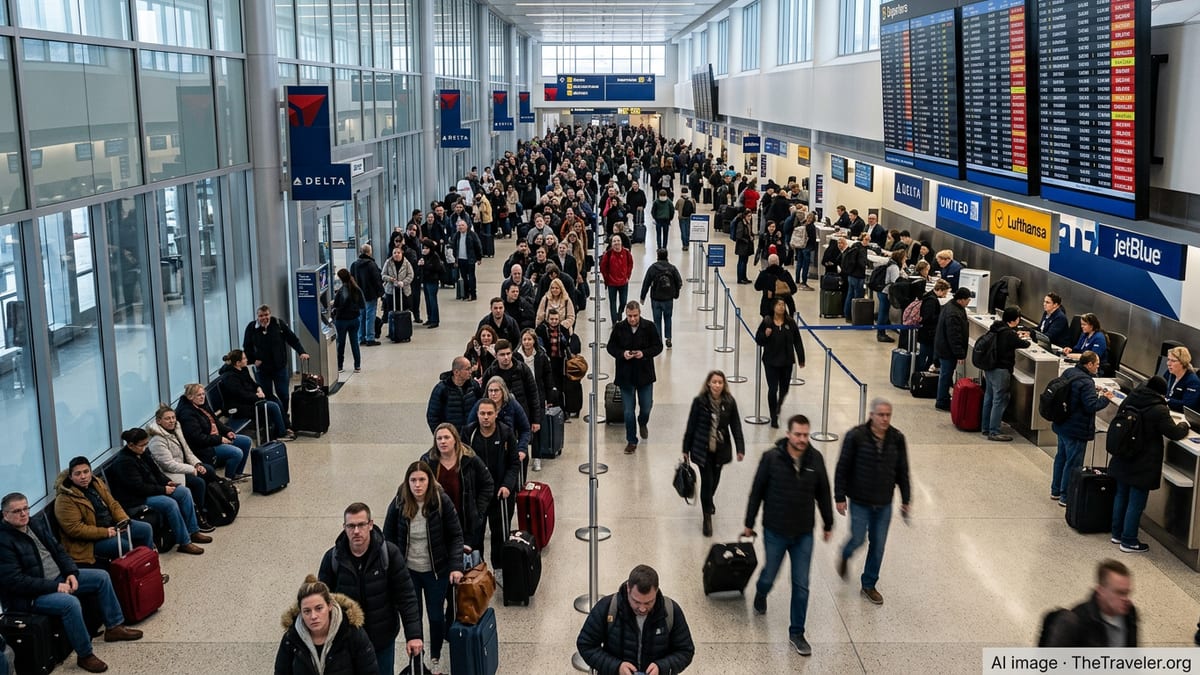
Operational Strain at Dallas Love Field Triggers Wider Disruptions
Publicly available tracking data points to Dallas Love Field as a significant pressure point in Monday’s domestic travel picture, with congestion around peak departure banks for Southwest, Delta and JSX causing knock-on delays across their networks. While Love Field is smaller than Dallas Fort Worth International Airport, it is a dominant base for Southwest and an important niche gateway for Delta and JSX, meaning even modest schedule disruptions can quickly cascade.
Recent patterns show that once Love Field departures begin to stack up, subsequent rotations on the same aircraft are pushed behind schedule, increasing the number of delayed flights through the day. This dynamic can turn a localized issue at one airport into an interstate problem as aircraft cycle through busy corridors linking Texas with the Southeast, Mountain West and both coasts.
Travel tools that monitor wait times at Dallas Love Field indicate that security screening and gate areas are experiencing elevated volumes during the early morning and late afternoon peaks, aligning with banks of Southwest and Delta departures. When combined with tight turnaround times and summer weather risks, these conditions are contributing to longer-than-normal gate holds and late arrivals at downline airports.
Southwest, Delta and JSX Routes Most Affected
Southwest Airlines, which operates the majority of departures at Dallas Love Field, appears to account for a substantial share of the 185 delays, as aircraft cycling through Dallas encounter rolling schedule slippage. High-frequency routes to Houston, Denver, Las Vegas and Phoenix are particularly vulnerable, as any disruption to one leg can quickly impact several more throughout the day.
Delta Air Lines’ more limited presence at Love Field does not insulate it from the wider impact. Delta flights linking Dallas with Atlanta and key coastal gateways such as New York and Los Angeles rely on tight connections at its hubs. When an inbound leg from Texas arrives late, passengers and crews can miss onward flights, compounding the delay statistics even if those later flights are not directly tied to Dallas Love Field.
JSX, which offers semi-private flights from Love Field on routes such as Dallas to Houston, also faces challenges when the main airport operation slows. Although JSX flights typically use separate facilities and aim for a streamlined experience, they still depend on the broader air traffic system and available runway capacity at Love Field. Any ground or airspace constraints can force small carriers to adjust schedules, contributing to the overall count of delays and a handful of cancellations.
Major Markets See Knock-On Effects
The ripple effects from Dallas Love Field are being felt across a wide swath of the domestic network, including Houston, Atlanta, Las Vegas, Phoenix, Denver, Chicago and New York. These cities sit on some of the country’s busiest business and leisure corridors, and many are heavily served by Southwest and Delta, making them particularly sensitive to disruptions in Texas.
In Houston, where Love Field flights feed into both the city’s primary airports, passengers are reporting late arrivals and missed evening connections on popular commuter and energy-industry routes. Atlanta, Delta’s primary hub, is seeing schedule pressure as delayed Dallas-originating flights arrive off-slot, leaving less room to absorb additional weather or air traffic control restrictions in the Southeast.
Farther west, Las Vegas, Phoenix and Denver are experiencing rolling hold-ups as aircraft arriving from Texas miss their planned departure windows and are reassigned to later slots. These cities function as pivotal transfer and leisure gateways, and when they back up, late-night flights to secondary markets in the Mountain West and Pacific time zones can be pushed into the early hours or, in a minority of cases, canceled outright.
Chicago and New York, both heavily trafficked year-round, are also absorbing the impact. Their tight runway and gate capacity mean that delayed arrivals from Dallas can easily spill into subsequent banks, forcing schedule revisions and contributing to congestion at already busy terminals.
Weather, Congestion and Network Complexity Under Scrutiny
Weather in North Texas and along key flight paths often plays a central role in travel disruption, and current forecasts and aviation bulletins point to periods of storms and gusty winds in the broader Dallas area. Even when Love Field itself remains open, routing aircraft around storm cells, reducing arrival and departure rates or enacting temporary ground delays can significantly slow the flow of traffic into and out of the region.
Beyond weather, congestion at peak periods and the complexity of airline schedules are compounding today’s difficulties. Airlines routinely operate aircraft on tight, back-to-back rotations to maximize utilization. When an early-morning departure from Dallas leaves late, each subsequent leg often departs behind schedule as well, gradually increasing the count of delayed flights throughout the network.
Analysts frequently note that, for carriers with strong point-to-point networks such as Southwest, disruptions can spread widely across cities that may have no direct meteorological or infrastructure issues of their own. Delta’s hub-and-spoke model, meanwhile, can concentrate the impact of a delay at one spoke, such as Dallas Love Field, into its main hubs, where knock-on effects can be magnified by already busy operations.
Advice for Travelers Navigating Today’s Disruptions
Publicly available travel guidance suggests that passengers scheduled to depart from or connect through Dallas Love Field, as well as major affected cities such as Houston, Atlanta, Las Vegas, Phoenix, Denver, Chicago and New York, should treat today as a high-risk travel day for delays. Same-day itinerary changes may be more limited than usual, particularly on peak morning and evening departures.
Travel planners recommend that passengers monitor their flight status frequently through airline apps and departure boards, rather than relying solely on original itinerary times. In many recent disruption events, gate information and departure estimates have shifted multiple times within a short period, leaving little margin for those arriving close to boarding time.
For travelers yet to depart, arriving early at airports is strongly advised, especially at Dallas Love Field, where security wait times and crowded gate areas can lengthen the pre-boarding process. Passengers with tight connections through large hubs such as Atlanta, Denver or Chicago may wish to explore alternative routings or consider later flights that offer a greater buffer between legs.
Those already affected by cancellations or severe delays are generally encouraged, according to consumer travel resources, to document expenses and keep records of communications with their airline. While compensation policies vary by carrier and by cause of disruption, having clear documentation can be useful when seeking rebooking assistance, vouchers or reimbursements once operations begin to normalize.