


More news on this day
Rail operators across several extreme heat zones in Europe and North America are urging passengers to avoid non-essential journeys as a record-breaking heatwave disrupts services, slows trains and heightens safety risks on already stressed networks.
Get the latest news straight to your inbox!
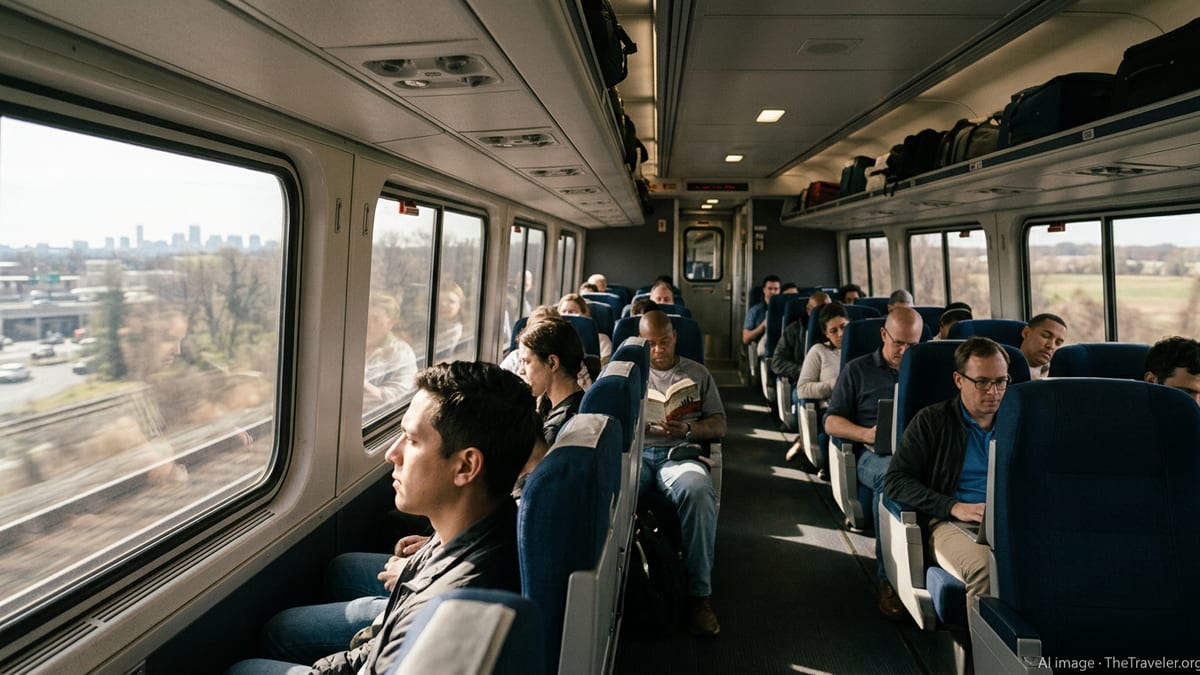
Record heatwave strains rail networks in multiple countries
A powerful heat dome is driving temperatures well above seasonal norms across large parts of western and southern Europe, with meteorological agencies warning of highs around or above 40 degrees Celsius in parts of France, Spain and Italy. Recent coverage indicates that more than half of France is now under top-tier heat alerts, with temperatures in some inland areas reported above 40 degrees. In neighbouring countries, forecasters describe conditions as comparable to or worse than notable past heatwaves.
According to published reports, this heat is already disrupting rail services. In France, long-distance Intercité trains have been cancelled on selected routes to limit the risk of air-conditioning failures and heat-related damage to rolling stock. Regional commuter services around Paris and other cities are advising passengers to check schedules closely, with operators warning of short-notice alterations as temperatures climb.
Elsewhere in Europe, national weather agencies in Spain and Italy are flagging prolonged high temperatures that are expected to persist through much of the week. Urban areas popular with summer visitors, including Barcelona, Madrid, Rome and Florence, are preparing for hotter-than-usual conditions on station concourses and in trains, particularly where older rolling stock has limited or no air conditioning.
North America is also seeing rail impacts from extreme heat. In the Pacific Northwest, where a multi-day heatwave is forecast to challenge local records, public transport agencies around Portland and Vancouver are already warning of slower trains and potential delays on light-rail and commuter lines as temperatures approach or exceed 38 degrees Celsius.
Why high temperatures are so disruptive for rail travel
Technical studies on railway resilience indicate that steel rails and overhead power lines are highly sensitive to temperature swings. When steel track heats up, it expands; if the expansion is restrained, the rails can bend sideways in a phenomenon known as track buckling or “sun kinks.” Industry analyses from Europe and North America note that this risk increases sharply once rail temperatures rise well beyond ambient air temperatures, especially on older infrastructure or where track foundations are less robust.
To reduce the likelihood of buckling, infrastructure managers often introduce heat-related speed restrictions, sometimes referred to as “heat orders.” Fact sheets from the rail freight sector in the United States describe how trains are required to operate at reduced speeds over specified sections of track during extreme heat, cutting the chance of derailment but significantly lengthening journey times. Similar mitigation measures are now widely applied on busy passenger corridors in Europe during hot spells.
Overhead catenary systems, which provide power to electric trains, also suffer in extreme heat. Technical guidance from passenger and intercity rail operators notes that high temperatures can cause these wires to sag, increasing the risk of damage and forcing additional speed limits or suspensions while engineers inspect and adjust the equipment. Signal systems and station infrastructure can likewise be affected, leading to cascading delays even when the tracks themselves remain intact.
These operational responses, while essential for safety, mean that timetables rapidly become unreliable once temperatures reach critical thresholds. Passengers can face slower journeys, missed connections, and sudden cancellations, particularly on long-distance routes where heat impacts accumulate over many kilometres of exposed track.
Operators ask travellers to defer or rethink journeys
Against this backdrop, rail companies and transport agencies are increasingly shifting from simple “check before you travel” messages to more explicit calls to avoid non-essential journeys during peak heat. Recent advisories published by national rail information services in the United Kingdom, for example, highlight hot weather alerts and warn that services across England and Wales may be altered at short notice, with passengers urged to allow extra time and consider whether their trip is strictly necessary when temperatures are at their highest.
In France, recent press coverage notes that rail managers are focusing particularly on passengers most vulnerable to heat, such as older people or those with underlying health conditions. Public statements have highlighted the risk of spending prolonged periods in hot, crowded carriages or on exposed platforms during disruption, recommending that those at higher risk plan travel for cooler periods of the day or postpone trips where possible.
Urban transit agencies are sharing similar messages. In Portland, Oregon, the regional transit provider has issued guidance explaining that trains may run more slowly and less frequently during triple-digit Fahrenheit heat in order to protect equipment. Passengers are being encouraged to plan ahead, carry water, and, where feasible, avoid travelling in the middle of the afternoon when temperatures and crowding are most intense.
Advisories from rail passenger watchdogs and safety bodies also stress that avoiding discretionary travel helps to keep space available for those who must travel, including key workers, people with medical appointments and travellers reconnecting from already disrupted flights. Fewer non-essential trips can reduce crowding on platforms and trains, supporting both safety and comfort during unavoidable delays.
What passengers in extreme heat zones should expect
Travellers heading into or through current heat-affected regions are being told to prepare for a different kind of journey from what they might expect at this time of year. Public information from European railway agencies warns that air conditioning on older or heavily loaded trains may struggle to keep interior temperatures comfortable, particularly on services without sufficient turnaround time between trips. In some cases, operators are reducing the number of carriages or adjusting train formations to concentrate functioning air-conditioned stock on priority routes.
Infrastructure managers in several countries are also bringing forward inspections and deploying additional patrols along vulnerable sections of track. Technical reports on climate resilience prepared for European rail regulators outline how targeted monitoring, including the use of temperature sensors and aerial inspections, can help spot early signs of stress on rails, ballast and overhead equipment. While these measures strengthen safety, they can also necessitate temporary line closures or single-track working, further constraining capacity.
For international passengers, disruption may not be limited to a single country. Coverage of recent heatwaves shows that when one network introduces sweeping speed restrictions or cuts services, cross-border trains can miss slots on neighbouring systems, causing knock-on delays. Travellers combining multiple rail legs across borders, such as journeys linking France, Belgium and Germany, are being advised to build in longer connection times and consider overnight stays rather than tight same-day transfers.
Some operators are offering more flexible ticketing during extreme heat events, including options to travel earlier or later in the day or to rebook for cooler dates when severe alerts are in place. However, published reports suggest that the extent of flexibility varies by operator and route, so passengers are urged to consult the latest conditions for their specific ticket rather than assuming blanket change policies.
Safety guidance for essential rail travel in a heatwave
For those who must travel, transport agencies and passenger advocacy groups emphasise basic preparation. Public-facing guidance typically recommends carrying sufficient water, wearing light, breathable clothing and allowing extra time in case slow-running trains or temporary shutdowns extend the journey. Passengers are encouraged to seek shade on platforms where possible and to be mindful that indoor areas at older stations may not be significantly cooler than the outside air.
Technical and policy reports on extreme heat impacts underline that even modest delays can become hazardous when passengers are confined in hot carriages or stranded on exposed infrastructure. With that in mind, several national rail information sites suggest travelling earlier in the morning or later in the evening to avoid the hottest part of the day, particularly for vulnerable passengers and those travelling with children.
Experts in climate resilience point out that this year’s heatwave is part of a broader pattern of more frequent and intense hot spells affecting transport systems. A recent European assessment of climate-related rail disruption highlights escalating costs from weather-linked damage and argues for accelerated investment in heat-resilient track, overhead power systems and rolling stock. Such upgrades are expected to reduce the need for severe speed restrictions in future, but they will take years to implement across extensive national networks.
In the meantime, with temperatures forecast to remain exceptionally high in many regions over the coming days, the clearest message emerging from publicly available information is that anyone planning to travel by rail into, out of, or within current extreme heat zones should carefully reconsider whether their journey is essential. Those who do need to travel are advised to plan conservatively, expect slower and potentially crowded services, and prioritise personal safety over tight schedules.