


More news on this day
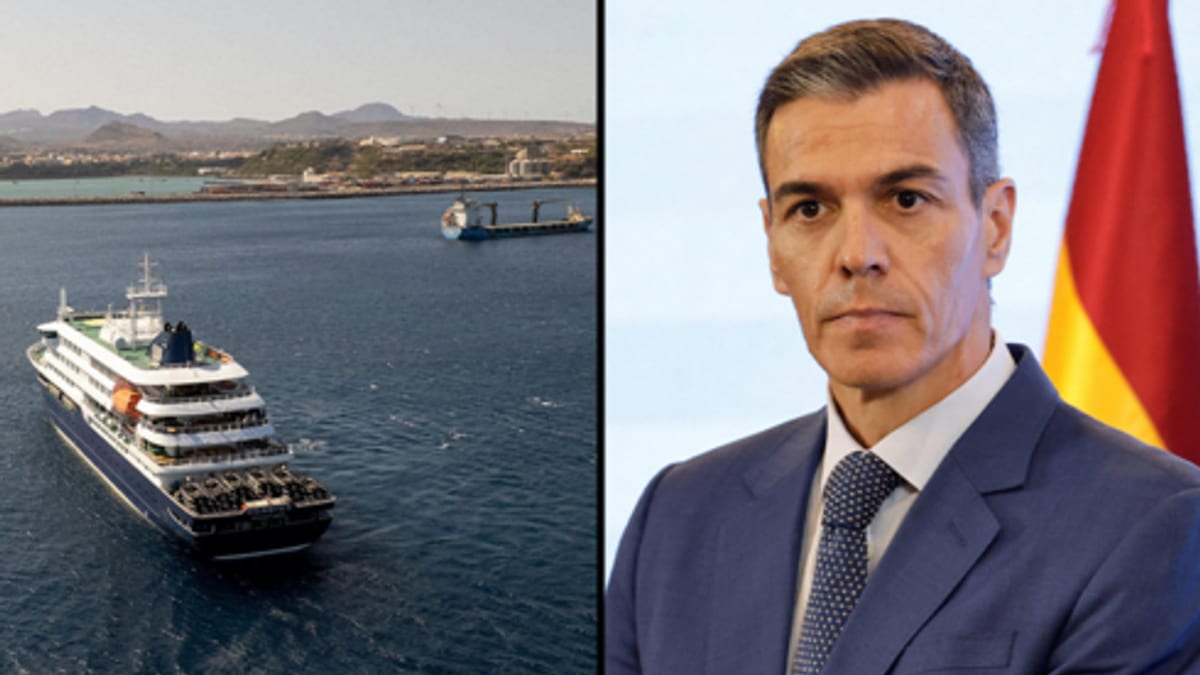
A lethal hantavirus outbreak aboard the Dutch-flagged expedition cruise ship Hondius has left nearly 150 people stranded off West Africa, as political tensions mount over plans to send the vessel to Spain’s Canary Islands and the ship’s own doctor falls critically ill.
Get the latest news straight to your inbox!
Deadly voyage from Antarctica to the Atlantic
According to publicly available information from the cruise operator, health agencies and ship-tracking data, the Hondius left Ushuaia, Argentina, on 1 April for an expedition itinerary taking in Antarctica and remote South Atlantic islands before crossing toward West Africa. Around 150 passengers and crew from more than 20 countries were on board.
Reports indicate that the first known passenger, an elderly Dutch man, became seriously ill in the South Atlantic and died on 11 April while the ship was at sea. His wife disembarked later at the British territory of St Helena and died in Johannesburg on 26 April, where testing subsequently confirmed hantavirus infection. Another passenger was evacuated to South Africa on 27 April after developing severe symptoms.
By early May, at least three passengers, including a Dutch couple and a German national, had died after falling ill during the voyage. World Health Organization updates and national health briefings cited by international media describe a growing cluster of suspected and confirmed hantavirus cases linked to the ship, raising concerns over possible limited human to human transmission of a virus more commonly associated with rodent exposure.
The Hondius reached the waters off Cape Verde on 3 May but remained at anchor as health officials assessed the situation from shore. Passengers were largely confined to their cabins, with on board activities curtailed and meal service adapted to limit contact as illness continued to spread among a small number of people on the vessel.
Canary Islands push back as Spain agrees to receive ship
As the outbreak evolved, the ship’s operator, working with international health agencies, identified Spain’s Canary Islands as a potential destination where passengers could be screened and repatriated. Spanish national authorities have signaled readiness to receive the vessel under controlled conditions at a Canary Islands port after medical evacuations from Cape Verde.
Regional leaders in the archipelago have, however, publicly opposed the plan. Statements reported by Spanish and European media show the Canary Islands government questioning the rationale for bringing the ship to the islands, arguing that if passengers are stable enough to travel they could be flown home directly from Cape Verde’s international airport rather than disembarking in the Canaries.
Coverage by outlets including Al Jazeera, Euronews and local Canary Islands newspapers highlights a rare public split between Spain’s central government and the islands’ authorities over a high profile health and travel incident. Regional officials have stressed the need to protect local health services and residents, pointing to the islands’ experience managing imported infections in the past and their dependence on tourism.
The disagreement has left the Hondius caught between jurisdictions, with its next port of call uncertain even as preparations continue for further medical evacuations and for a potential onward voyage to Spanish territory once health authorities give approval.
Ship’s doctor among the critically ill
Adding to the alarm, publicly available reports indicate that the ship’s own doctor is among the most seriously affected by the outbreak. Multiple news outlets describe the physician as a British national who had been providing intensive care to sick passengers and crew before developing symptoms consistent with hantavirus infection.
Travel and maritime industry coverage notes that arrangements were made for the doctor to be flown by medical aircraft to the Canary Islands for urgent hospital treatment. The case has drawn particular attention from infectious disease specialists, as onboard medical staff are usually trained to minimize occupational exposure even during outbreaks.
Analyses shared by health journalists and subject matter commentators point out that the doctor’s illness, along with a small number of affected crew, may support concerns that this cluster involves a hantavirus strain capable of limited person to person spread. At the same time, World Health Organization risk assessments cited by global media continue to rate the threat to the wider public as low, given the confined setting and the relatively small number of confirmed cases.
The loss of the ship’s primary medical officer has left remaining health care responsibilities to other staff under remote guidance from shore based experts, complicating onboard outbreak management at a moment when passengers are seeking clear information and reassurance.
Stranded passengers face uncertainty and isolation
Reports from passengers shared with international outlets and on social media describe a growing sense of isolation as the Hondius remains at sea. Many travelers are confined to their cabins except for brief periods, with crew delivering meals to doors and enforcing distancing measures in corridors and shared spaces.
Publicly available accounts indicate that several passengers who disembarked earlier in the voyage have since tested positive or are under investigation for hantavirus infections in their home countries, contributing to anxiety among those still on board. Some describe struggling with the emotional toll of being at the center of a global health story while unable to disembark or return home.
At the same time, coverage in travel press notes that the ship’s operator has continued to provide regular updates and has worked with international agencies to prioritize evacuations for the most seriously ill. For the majority of passengers, the focus is on monitoring for symptoms during the virus’s relatively long incubation period, which government health advisories say can extend from a few days to several weeks.
While experts cited across various outlets emphasize that the overall risk of infection for each individual on board remains low, the combination of a confined environment, a rare virus and uncertain travel plans has left many travelers facing a prolonged and unsettling end to what began as a bucket list expedition cruise.
Health and travel authorities weigh next steps
The Hondius outbreak has quickly become a test case for how governments and the cruise sector handle rare but high impact infectious diseases at sea. Health agencies are using the incident to examine how quickly emerging symptoms were recognized, how cases were reported across borders and whether faster laboratory confirmation might have changed the ship’s trajectory.
Public information from the World Health Organization indicates that, despite the severity of illness among a small group of people, the broader public health risk is considered contained as long as strict isolation, protective equipment and disinfection protocols are followed. Officials are also working to trace contacts in several countries where former passengers have sought care.
For Spain and Cape Verde, the case raises complex questions about balancing humanitarian responsibilities toward sick travelers with local capacity and political considerations. The Canary Islands leadership has publicly pressed for clearer criteria on when potentially infectious vessels should be allowed to dock in small island territories where health systems can be quickly stretched.
Within the cruise industry, the Hondius incident is likely to prompt renewed scrutiny of medical capabilities on smaller expedition ships and contingency plans for dealing with rare pathogens. Analysts in maritime and travel media suggest operators may face pressure to strengthen pre departure health screening, onboard surveillance and agreements with destination ports to avoid future scenarios in which passengers find themselves stranded at sea while governments argue about where a ship should go.