


Access to international schooling is a decisive factor for many globally mobile families considering relocation to Italy. The country hosts a diverse set of English medium and bilingual schools, concentrated in major urban and corporate hubs. Tuition levels are significant by local standards and vary widely by city, curriculum and school positioning. Understanding locations, fee levels and cost structures is critical for realistic relocation budgeting and employer policy design.
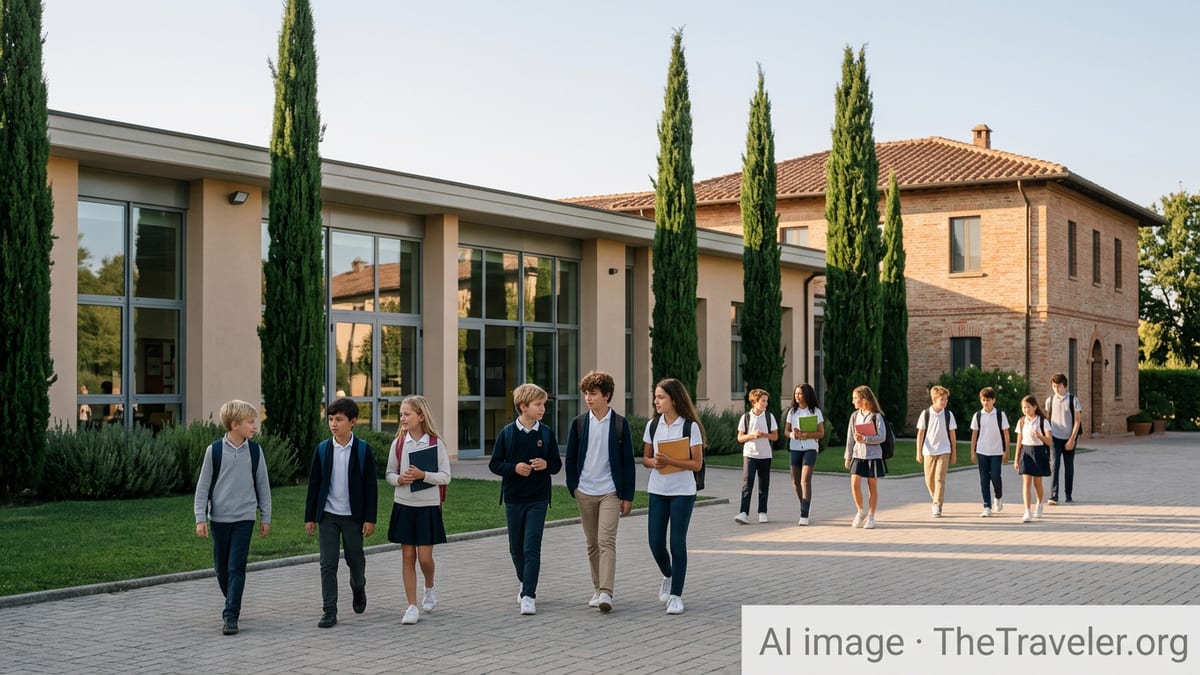
Overview of International Schooling in Italy
Italy hosts a mature but relatively compact international school market, with provision concentrated in and around major cities such as Milan, Rome, Florence, Turin, Bologna and selected regional centers in the north and center of the country. Provision is more limited in the south and smaller provincial towns, where families may find no full international option within daily commuting distance and must instead consider national schools or weekly boarding elsewhere.
Most international schools in Italy are day schools that follow Anglo American or international curricula, including International Baccalaureate, British curricula leading to IGCSE and A levels, and American high school programs with Advanced Placement or IB options. A smaller number of schools offer bilingual Italian English pathways aligned with the Italian system, which can be relevant for long term residents planning eventual reintegration into the national education system.
Tuition levels fall into a broad band that places Italy below the very highest cost global hubs but substantially above local public and parochial schooling. Published fee schedules for prominent schools in Milan, Rome, Florence and Brescia for the 2024 25 and 2025 26 academic years typically show upper secondary tuition in the approximate range of 18,000 to over 30,000 euro per year, depending on school and whether corporate or private rates apply.([nyongesasande.com](https://www.nyongesasande.com/wp-content/uploads/2025/09/American-School-of-Milan-Tuition-Fees-and-Building-Fund-SY-2025-26-FEES.pdf?utm_source=openai))
For relocation decision making, it is important to recognize that published annual tuition usually excludes one time enrollment charges, building levies, transport and ancillary costs, all of which can materially increase the first year cost of education for newly relocated families.
Geographic Distribution and City Level Patterns
The highest concentration of international schools in Italy is found in the greater Milan and Rome metropolitan areas. Milan, as the country’s primary corporate and financial hub, offers multiple long established international schools with American, British and IB programs, located in suburban campuses south and west of the city as well as in northern commuter zones. Rome hosts several British and American heritage schools as well as Catholic international institutions serving diplomatic, NGO and multinational communities.([en.wikipedia.org](https://en.wikipedia.org/wiki/St._George%27s_British_International_School?utm_source=openai))
Florence and Tuscany form a smaller but significant cluster, with schools serving both expatriate families and internationally mobile Italian households. The International School of Florence, for example, operates campuses in the city and nearby countryside and publishes tuition for the IB Diploma years in the approximate range of 26,000 to 30,000 euro per year for 2025 26, indicating cost levels similar to top tier Milan and Rome schools.([isfitaly.org](https://www.isfitaly.org/apply/tuition-fees?utm_source=openai))
Other northern and central cities such as Turin, Bologna, Modena, Parma, Verona and Brescia have at least one international or broadly international style school, often part of a group that operates across multiple Italian locations. Fee schedules from such regional schools, including the International School of Brescia, suggest upper secondary tuition broadly in the mid teens to low twenties thousands of euro per year for 2024 25, generally somewhat lower than flagship institutions in Milan or Rome but still a major cost factor.([isbrescia.com](https://isbrescia.com/wp-content/uploads/2024/01/Fees-2024-2025.pdf?utm_source=openai))
Provision is thinner in southern Italy, islands and smaller provincial towns. Families assigned to locations without proximate international schools may need to factor in lengthy daily commutes, weekly boarding at a school in another city, or alternative schooling strategies such as bilingual Italian schools or online curricula. This geographic unevenness is a central practical consideration in location selection and in evaluating the feasibility of certain regional assignments for families with school age children.
Typical Tuition Ranges by Education Level
Although fee levels vary by institution, city and whether a corporate rate structure applies, available fee schedules for 2024 25 and 2025 26 point to broadly consistent ranges across Italian international schools. At the early childhood and primary level, annual tuition in major cities often starts around 10,000 to 14,000 euro per year at more moderately priced schools and can reach or exceed roughly 18,000 to 20,000 euro at premium institutions. Schools commonly publish separate fee bands for nursery, kindergarten and early primary, with incremental increases at each stage.([nyongesasande.com](https://www.nyongesasande.com/wp-content/uploads/2025/09/American-School-of-Milan-Tuition-Fees-and-Building-Fund-SY-2025-26-FEES.pdf?utm_source=openai))
At the lower and middle secondary levels, annual tuition in international schools in Milan, Rome, Florence and regional northern centers typically moves into the 15,000 to mid 20,000 euro range. Published schedules from the International School of Florence show middle school tuition around the low to mid 20,000 euro level, while regional schools such as International School Brescia show mid teen to low twenty thousand euro figures for middle and early high school.([isfitaly.org](https://www.isfitaly.org/apply/tuition-fees?utm_source=openai))
At upper secondary and IB Diploma level, which is often marketed as the flagship phase of education, fee levels increase further. The International School of Florence lists IB Diploma tuition for 2025 26 at approximately 26,000 to just over 30,000 euro depending on rate category, while high profile schools in Milan and Rome publish corporate rates of similar or slightly higher magnitudes.([isfitaly.org](https://www.isfitaly.org/apply/tuition-fees?utm_source=openai))
For benchmarking, some international commentators and discussion forums reference approximate figures of around 20,000 to 23,000 euro per year for IB programs at certain Italian schools, which aligns with mid market providers and confirms that while Italy is not at the extreme top of global fee tables, international education represents a substantial annual outlay relative to typical local household incomes.([reddit.com](https://www.reddit.com/r/Internationalteachers/comments/1dscsqe?utm_source=openai))
Corporate Versus Private Tuition Structures
A notable feature of the Italian international school market is the distinction some schools make between corporate and private tuition rates. Prominent institutions such as the American School of Milan publish separate fee schedules for students whose tuition is paid or subsidized by an employer, often branded as corporate rates, and for families who pay privately. Corporate rates are typically higher, reflecting an assumption of employer sponsorship and the additional administrative and service requirements associated with corporate accounts.([asmilan.org](https://www.asmilan.org/admissions/tuition-and-fees/?utm_source=openai))
This dual structure has several implications for relocated families and mobility policies. Where an employer is the fee payer, total invoiced amounts can be materially higher than the headline private tuition rates that families might observe when researching independently. This can significantly increase the education component of an assignment cost estimate and may trigger tax gross up implications where school fees are treated as a taxable benefit.
Conversely, some schools provide modest discounts or more flexible payment terms to private fee paying families, recognizing that not all international students are supported by corporate packages. In a few cases, scholarships or means tested assistance exist, but these are usually limited and should be considered exceptional rather than standard in a relocation planning context.
Families and HR teams should clarify with each target school whether different rate structures apply, whether the school considers the payer to be a corporate entity, and under what conditions families might access private rates if the employer provides only partial reimbursement or an education allowance cap rather than direct payment.
Ancillary Fees and One Time Costs
Headline tuition is only one element of the overall cost of attending an international school in Italy. Published fee schedules from schools in Florence, Milan, Brescia and Rome show a range of additional charges, many of which are mandatory for newly enrolling families. Common examples include non refundable application fees, one time admission or enrollment fees, and multi year building or capital fund contributions that apply for the first several years of attendance. At one Florence school, for example, an entrance fee of around 7,800 euro is payable upon initial enrollment regardless of grade level, while Milan schools such as the American School of Milan apply a building and maintenance fund of approximately 2,500 euro per year for the first four years.([isfitaly.org](https://www.isfitaly.org/apply/tuition-fees?utm_source=openai))
In Rome, British curriculum schools such as St George’s British International School and other international institutions reference one time registration fees that can reach several thousand euro, plus recurring re enrollment charges. Reported figures from recent school guides mention registration fees on the order of 4,000 euro and annual re enrollment costs in the mid hundreds of euro, in addition to tuition.([st-georges.britishinternationalschool.com](https://st-georges.britishinternationalschool.com/admissions/fees?utm_source=openai))
Transport, meals, extracurricular activities and exam fees represent additional recurring costs that can vary widely by school and student profile. Some fee schedules list bus transport around a few thousand euro per year, while lunches, technology levies, uniforms where required and IB or external examination charges add further costs. For IB programs, exam registration and subject fees may be billed separately and can amount to several hundred euro per subject when school administrative surcharges are included, according to experiences reported by families in European IB schools.([nyongesasande.com](https://www.nyongesasande.com/american-school-of-milan-leading-international-education-in-italy/?utm_source=openai))
When assessing affordability or preparing assignment cost estimates, it is therefore advisable to treat first year total education cost as significantly higher than the annual tuition alone. For many newly arriving families, the combination of tuition, entrance fees, capital levies and ancillary charges pushes the initial year cost to a level materially above the ongoing annual cost in subsequent years.
Curriculum Types and Their Impact on Fees
International schools in Italy typically offer one of several curriculum frameworks, and this choice can influence both fee levels and perceived value. IB continuum and IB Diploma schools often position themselves at the premium end of the market, reflecting the cost of maintaining authorization and training as well as the international recognition of the qualification. Tuition data from IB offering schools in Florence and regional centers such as Brescia support the pattern that IB Diploma years command the highest tuition bands within a school’s structure.([isfitaly.org](https://www.isfitaly.org/apply/tuition-fees?utm_source=openai))
British curriculum schools in Rome and other cities, which prepare students for IGCSE and A level examinations, generally occupy a similar or slightly lower fee band compared to IB focused institutions of comparable reputation. For example, public commentary on St George’s British International School in Rome describes tuition as relatively high even within the Italian context, and official fee schedules indicate that costs for upper years align with mid to upper levels of the national international school market.([st-georges.britishinternationalschool.com](https://st-georges.britishinternationalschool.com/admissions/fees?utm_source=openai))
American curriculum schools, including the American School of Milan and similar institutions, offer US style high school programs with options such as Advanced Placement or combined IB. Their fee structures in Milan and other major cities lie at the upper end of the Italian market, comparable with top IB and British schools, particularly at the high school level and under corporate rate schedules.([asmilan.org](https://www.asmilan.org/admissions/tuition-and-fees/?utm_source=openai))
Bilingual Italian English schools and those aligned more closely with the Italian national curriculum can sometimes offer lower tuition levels, particularly outside Milan and Rome, although this is not uniform. For relocation planning, curriculum choice should therefore be assessed both in terms of educational fit and cost implications over the full schooling horizon.
Strategic Considerations for Relocating Families and Employers
For families evaluating a move to Italy, the distribution and cost of international schools should be treated as a core feasibility factor rather than a secondary consideration. In practical terms, this means checking for realistic commuting distances from likely residential areas to potential schools in each target city and understanding application timelines, wait list dynamics and age specific class capacities, particularly in high demand entry years.
From a financial perspective, families should calculate total expected outlay for at least the first two to three years, including one time entrance and building fees, possible tuition increases and probable ancillary costs such as transport and exam fees. Many Italian international schools adjust tuition annually, and while recent increases have generally been moderate, even small percentage rises compound over a full schooling cycle.
For employers managing international assignments, Italy’s international school landscape suggests the need for context specific education policies. In Milan and Rome in particular, corporate tuition rates and high ancillary costs can significantly increase the overall cost of supporting school age dependents. Some organizations respond by defining education allowance caps benchmarked against mid market rather than top tier schools, while others limit eligibility by age or number of children.
Clear communication with both schools and relocating employees is essential so that assumptions about what is covered by the employer align with actual school invoices. Where possible, early engagement with schools before assignment acceptance can reduce uncertainty around admissions, wait lists and potential need for alternative options such as bilingual Italian schools or remote programs if international places are not available.
The Takeaway
International schools in Italy are heavily concentrated in Milan, Rome, Florence and selected northern regional centers, with far more limited provision in the south and smaller towns. This geographic pattern can heavily shape viable residential choices and in some cases determine whether certain locations are feasible for families requiring international curricula.
Fee data from multiple schools show that annual tuition in major Italian cities typically ranges from the low teens to more than 30,000 euro per student, with upper secondary and IB Diploma years at the top of that band. Corporate rate structures, one time entrance and building fees, transport, meals and exam costs all add materially to the total cost, especially in the first year of enrollment.
For both families and employers, decision grade relocation planning to Italy should include a detailed review of specific schools in the relevant city, confirmation of published 2024 25 and 2025 26 fee schedules and explicit budgeting for all ancillary costs. When approached systematically, this allows realistic assessment of affordability and helps avoid later pressure on family finances or corporate education policies.
FAQ
Q1. How much do international schools in Italy typically cost per year?
Across major cities, annual tuition at international schools generally ranges from around 10,000 to over 30,000 euro per student, with upper secondary and IB Diploma years at the top of this band.
Q2. Which Italian cities have the strongest concentration of international schools?
The highest concentration is found in Milan and Rome, followed by Florence and a number of northern and central cities such as Turin, Bologna and Brescia. Provision is more limited in the south and smaller towns.
Q3. Are international school fees in Italy lower than in other major expat hubs?
Italy is usually somewhat less expensive than the most costly global hubs but remains a high fee market relative to local schooling, especially in Milan and Rome where flagship schools price at the upper end of European norms.
Q4. Do schools in Italy charge extra fees beyond tuition?
Yes. Many schools levy application and enrollment fees, multi year building or capital contributions, transport charges, meal plans, technology fees and exam fees in addition to annual tuition.
Q5. What is the difference between corporate and private tuition rates?
Some schools publish higher corporate rates when an employer pays all or part of fees and slightly lower private rates for families paying directly. This distinction can significantly affect total education cost on an assignment.
Q6. How do IB schools in Italy compare in price to British or American curriculum schools?
IB Diploma years often sit at the highest tuition levels within each school. British and American curriculum schools of similar reputation typically charge comparable upper secondary fees, especially in Milan, Rome and Florence.
Q7. Are there more affordable international schooling options in regional Italian cities?
Regional schools in cities like Brescia or other northern centers sometimes publish slightly lower fees than top tier Milan or Rome schools, but costs still normally fall in the mid to high five figure euro range per year.
Q8. How should families estimate the first year cost of international schooling in Italy?
Families should add one time entrance and building fees, application charges, transport, meals and exam costs to tuition. In many cases, this lifts total first year spend well above the published annual tuition alone.
Q9. How far in advance should applications to Italian international schools be submitted?
Many schools operate with limited capacity in key grades and encourage applications up to a year in advance. Late applications may face wait lists, especially in popular age groups and in Milan and Rome.
Q10. Are scholarships or discounts commonly available at international schools in Italy?
Some schools offer limited scholarships or discounts, but these are typically modest and competitive. For planning purposes, families should not assume that financial aid will significantly reduce standard fee levels.