

More news on this day
Hundreds of travelers were left in limbo at Chicago Midway International Airport on Friday as at least 151 delays and 20 cancellations affecting Southwest, Frontier and Delta flights disrupted travel between Chicago, Dallas, Denver, Atlanta and a web of other US cities.
Weather and Operational Strains Converge on Busy Travel Day
The disruptions unfolded on March 6 as a combination of unsettled weather across the Midwest and operational strains on several carriers converged on one of the nation’s most delay-prone airports. Chicago aviation officials reported mounting schedule changes through the morning, with Midway’s departure and arrival boards filling with notices of late flights and scrubbed departures.
While Chicago O’Hare bore the brunt of early ground stops tied to low visibility and storms, Midway quickly saw knock-on effects as aircraft and crews arriving from other disrupted hubs failed to turn around on schedule. Southwest, which dominates Midway’s operations, was particularly affected, joined by low-cost rival Frontier and network carrier Delta on key domestic routes.
By midday, the patchwork of delays and cancellations had created a cascade of missed connections and rebookings, stretching the impact far beyond Chicago to airports in Texas, Colorado, Georgia and other states. Travelers attempting to depart for business, family visits and weekend getaways found themselves facing hours-long waits and uncertain arrival times.
Ripple Effects on Routes to Dallas, Denver, Atlanta and Beyond
Southwest’s dense schedule at Midway meant even small timing issues quickly multiplied across its network. Flights connecting Chicago with Dallas Love Field and Denver International were among the hardest hit, with multiple departures showing extended delays as aircraft repositioning and crew availability lagged behind the published timetable.
Frontier flights linking Midway with cities in Texas and the Mountain West also experienced knock-on delays as a weather-related slowdown at Denver squeezed turnaround times. Passengers reported departure times repeatedly sliding back in 30 to 60 minute increments before some services were ultimately canceled, forcing last-minute rebookings and overnight stays.
Delta’s operations were affected primarily on connecting services through Atlanta, with several Midway departures delayed long enough to put onward connections at risk. Travelers aiming to reach smaller Southern and East Coast markets via Atlanta reported being offered reroutes through other hubs or pushed to flights departing a day later.
The intricate web of point-to-point and hub-and-spoke routes meant that the 151 delays and 20 cancellations at Midway translated into widespread schedule disruptions across dozens of US airports. Even travelers whose flights were technically operating found themselves arriving too late to make planned connections onward.
Scenes of Frustration as Travelers Seek Alternatives
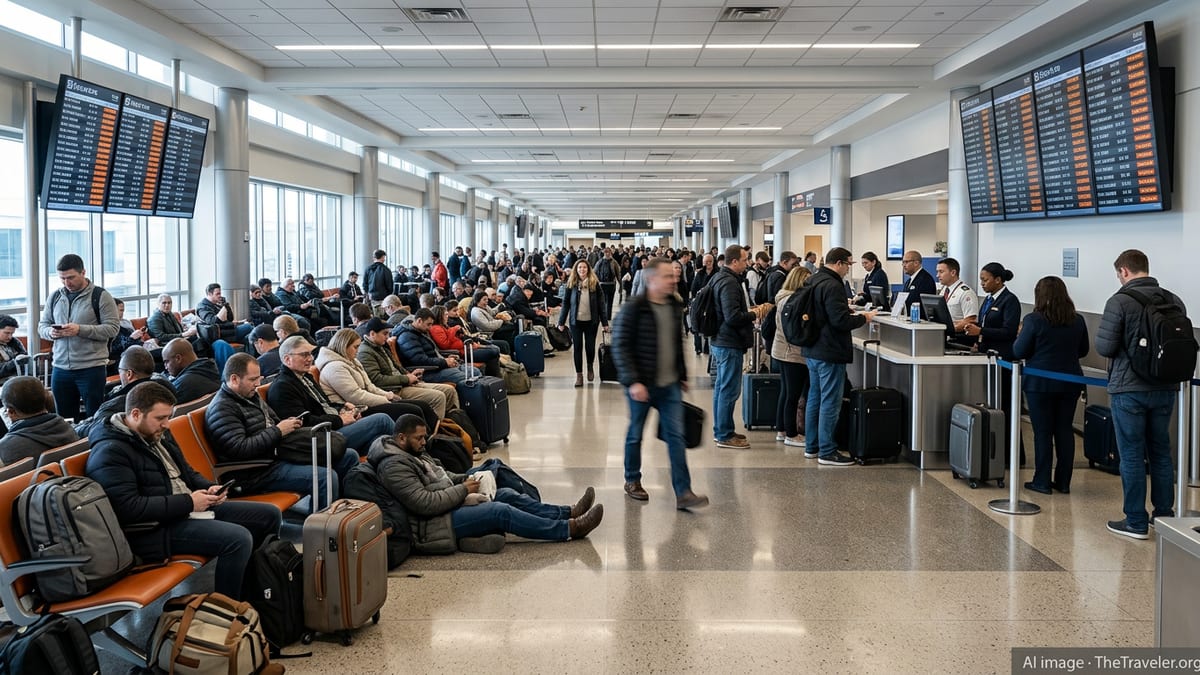
Inside Midway’s concourses, long lines quickly formed at airline service desks as passengers sought new itineraries, meal vouchers and hotel rooms. Screens showed blocks of departures tagged with new estimated times, while gate agents made repeated announcements urging travelers to monitor airline apps for the latest updates.
Families with young children sprawled across terminal seating areas as they waited on revised departure times, while business travelers crowded around power outlets to charge devices and reschedule meetings. Some passengers with time-sensitive commitments, such as weddings or international connections, weighed the cost of last-minute tickets on competing carriers at nearby O’Hare.
Airport concessionaires reported brisk business as the delays stretched into the afternoon. Cafes and quick-service restaurants saw steady lines, and airport vendors noted rising demand for travel essentials such as phone chargers, neck pillows and toiletries from unexpectedly stranded travelers.
For those whose flights were canceled outright, options varied widely. Some were accommodated on later same-day departures or rerouted through alternate hubs, while others were told the first available seats would not be until Saturday or Sunday, further lengthening already stressful journeys.
Airlines Emphasize Safety While Urging Passengers to Monitor Status
Southwest, Frontier and Delta each pointed to safety and required spacing in the national air traffic system as key reasons for the day’s disruptions, reiterating that flight crews and dispatchers must comply with strict weather and operational standards before dispatching aircraft. Airline representatives stressed that decisions to delay or cancel flights, while frustrating for customers, are made with safety as the overriding priority.
Carriers urged passengers traveling through Chicago, Dallas, Denver and Atlanta to check flight status frequently through airline apps or text alerts, noting that conditions and schedules could continue to evolve throughout the day. They also encouraged customers to consider self-service rebooking tools on mobile devices and websites, which can often provide faster alternatives than waiting in line at airport counters.
Consumer advocates reminded travelers that in the United States, airlines are generally not required to compensate passengers for weather-related delays, though they may offer meal vouchers or hotel accommodations in some circumstances when disruptions are within the carrier’s control. Passengers were advised to retain receipts for any out-of-pocket expenses and to review the fine print of both airline policies and travel insurance coverage.
With forecasts calling for unsettled weather across portions of the central and eastern United States into the weekend, airlines signaled that additional schedule adjustments were possible, particularly on tightly scheduled evening and early-morning departures.
What Travelers Can Do If Their Midway Flight Is Hit
Travel experts recommend that passengers scheduled to fly through Chicago Midway build in extra time and flexibility on days marked by widespread disruption. Those with critical same-day commitments may want to consider earlier departures or even alternate routings through less congested hubs when available.
Once a delay or cancellation occurs, specialists advise acting quickly through mobile apps to secure new seats before available inventory disappears, then following up in person with gate agents if further adjustments are needed. In cases where delays stretch into many hours, travelers can ask airline staff about available meal vouchers, hotel discounts or transportation assistance, particularly when disruptions are linked to crew or maintenance issues rather than severe weather.
For now, passengers at Midway and on connecting routes to Dallas, Denver, Atlanta and other cities are facing another reminder of how quickly a bad day in the national airspace system can upend the best-laid travel plans. As Friday’s disruptions played out, the experience underscored the importance of real-time information, backup itineraries and patience for anyone flying through Chicago’s secondary airport during periods of strain.